



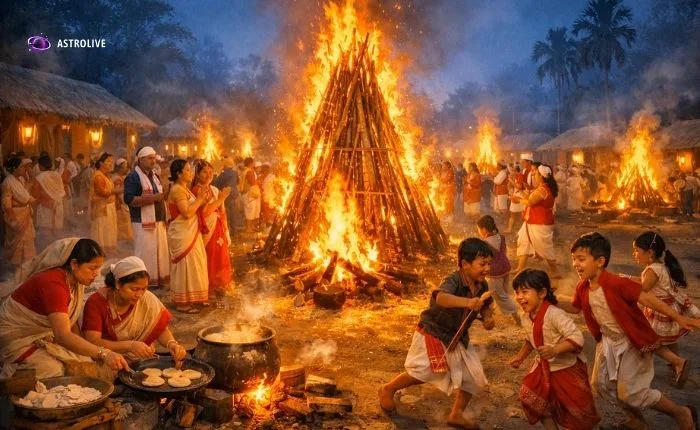
Magh Bihu, also known as Bhogali Bihu, is one of Assam’s most cherished harvest festivals, marking the end of the harvesting season. Celebrated with immense joy and enthusiasm, this festival brings together families and communities to express gratitude for a bountiful harvest.
Unlike the other Bihus celebrated in Assam, this winter festival is all about feasting, celebration, and communal bonding. As the cold January mornings embrace the state, the aroma of traditional delicacies fills the air, and the warmth of bonfires lights up the night sky.
The festival typically takes place in mid-January and lasts for several days, with each day holding its own significance and customs. From building towering mejis to preparing mouth-watering pithas, every aspect of the celebration reflects Assamese culture’s rich heritage and agricultural roots. This year, the festival aligns with Shattila Ekadashi 2026, adding another layer of spirituality to the already vibrant celebrations.
The Origins and Historical Significance:
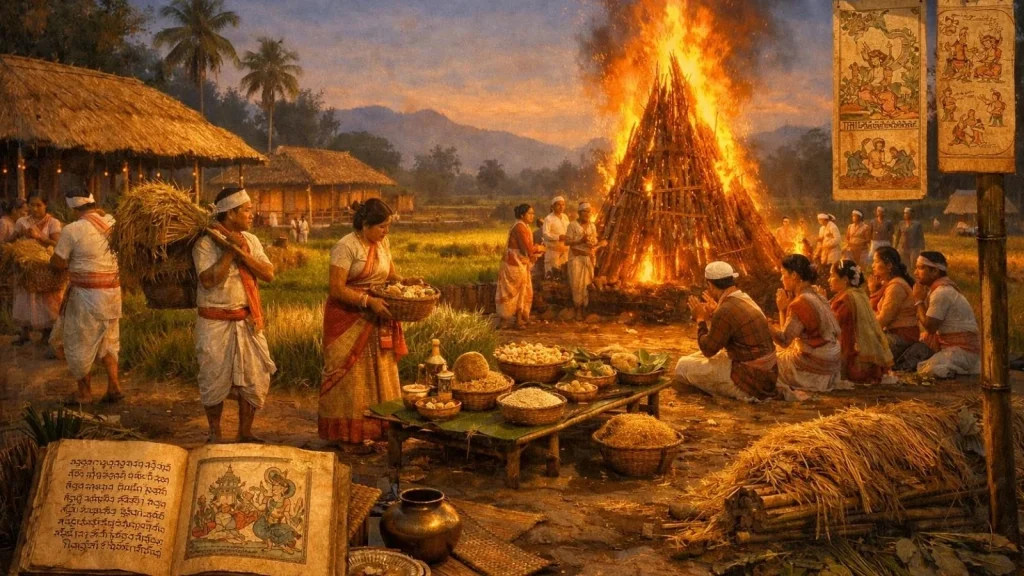
The history of this beloved festival dates back centuries and is deeply rooted in Assam’s agrarian culture. Magh Bihu’s significance lies in its celebration of abundance and prosperity following the harvest of winter crops.
Farmers, after months of hard work in their fields, finally get to enjoy the fruits of their labor during this time. Historically, this festival has been a way for communities to come together, share their harvest, and strengthen social bonds.
The name “Bhogali” comes from the word “Bhog,” meaning feasting, which perfectly captures the essence of this celebration. Ancient texts and folklore suggest that the festival has been celebrated for over a thousand years, evolving with time while maintaining its core values of gratitude and community spirit.
Traditional Rituals and Customs:
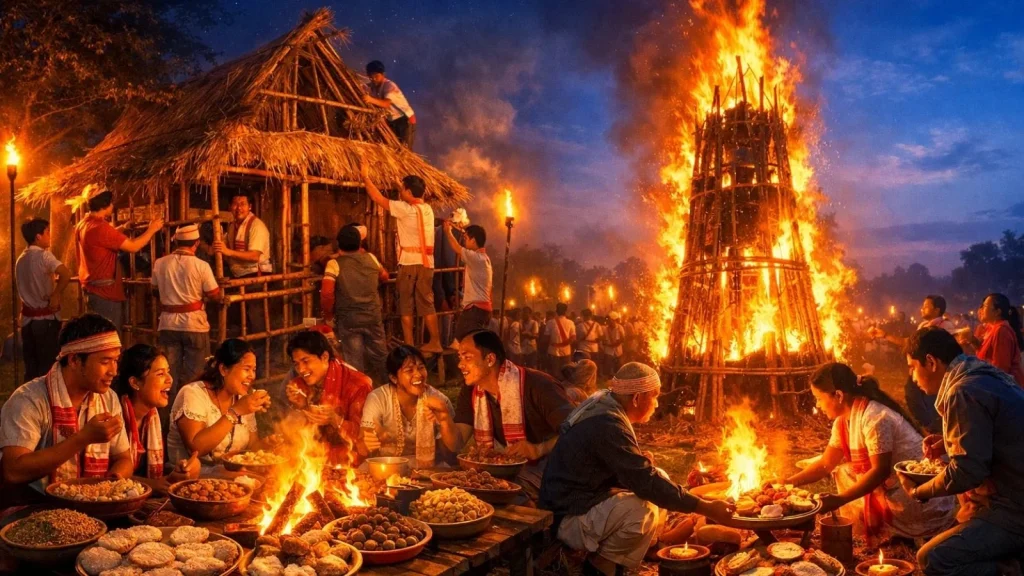
Magh Bihu rituals begin a day before the main festival with “Uruka,” the most exciting evening of the celebration. On this night, young men and boys gather in the fields to build temporary huts called “Bhelaghar” using bamboo, hay, and thatch.
These structures serve as community spaces where people gather, share meals, and enjoy each other’s company throughout the night. The highlight of Uruka is the communal feast where traditional Assamese dishes are prepared and shared.
People sing traditional songs, play games, and stay awake the entire night, creating memories that last a lifetime. As dawn breaks, the community gathers to set fire to the mejis, tall structures made of bamboo and hay that have been carefully constructed over several days.
The lighting of the meji is accompanied by prayers and offerings to the fire god, Agni. People throw pithas and other food items into the fire as offerings, believing it will bring prosperity and good fortune.
Another important ritual involves preparing special delicacies early in the morning. Families wake up before sunrise to cook traditional breakfast items like chira, doi, cream, jaggery, and various types of pithas.
The Spectacular Meji: Symbol of the Festival:
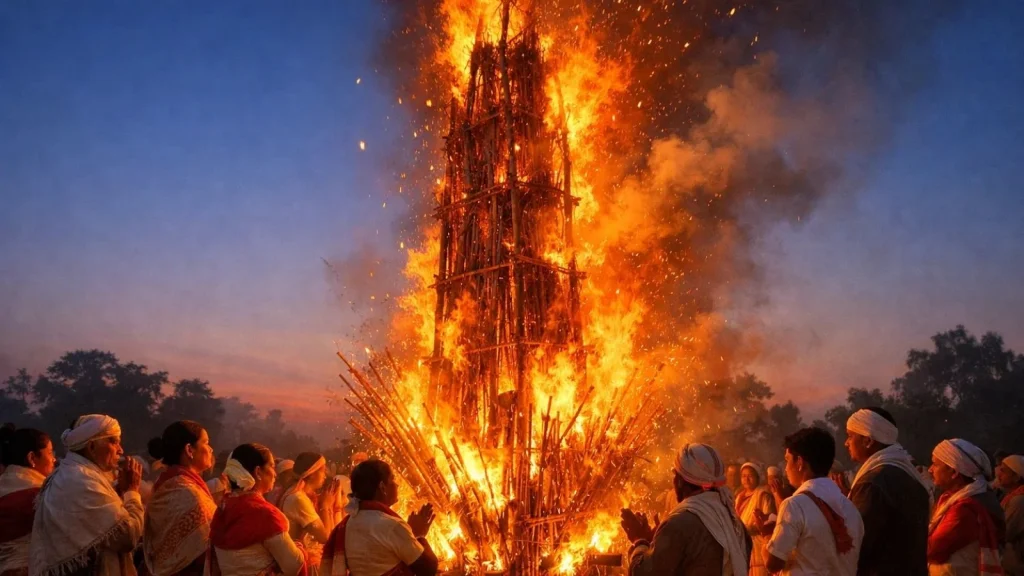
The meji is undoubtedly the most iconic symbol associated with this harvest celebration. These pyramidal structures can reach impressive heights, sometimes towering up to 20-30 feet. Constructing a meji is a community effort that begins weeks before the festival, with people collecting bamboo, hay, and wood.
The base of the meji is wide and filled with green bamboo, which creates spectacular crackling sounds when set ablaze. The sound of exploding bamboo is believed to ward off evil spirits and bring good luck. Watching the meji burn is a mesmerizing experience, with flames rising high into the morning sky as people gather around, warming themselves and celebrating together.

Traditional Foods: The Heart of Celebration:
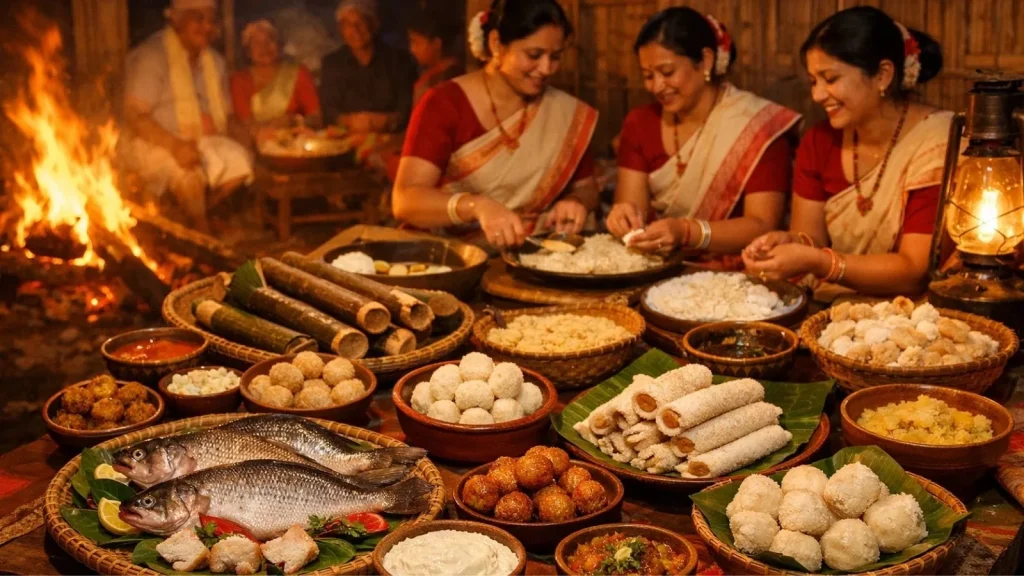
Food plays a central role in making this festival truly special. The variety and richness of traditional Assamese cuisine come alive during this time. Pithas, traditional rice cakes, are prepared in dozens of varieties, each with its unique flavor and preparation method.
Some popular pithas include til pitha (made with sesame seeds), ghila pitha (fried rice cakes), sunga pitha (rice cake cooked in bamboo), and tekeli pitha (steamed rice cakes). Each family has its own secret recipes passed down through generations, and the preparation of these delicacies often becomes a bonding activity for women in the household.
Besides pithas, the feast includes laru (sweet balls made from rice and jaggery), curd, cream, and various meat dishes. Given that this is a harvest festival celebrating abundance, the meals are elaborate and plentiful.
Fish, especially fresh catches from Assam’s rivers, feature prominently in the festivities. The communal aspect of eating is equally important, with families inviting neighbors and friends to share meals, strengthening community ties.
Also Read: Navgrah Shanti Pooja at Home: Steps and Benefits
Modern Celebrations and Cultural Evolution:
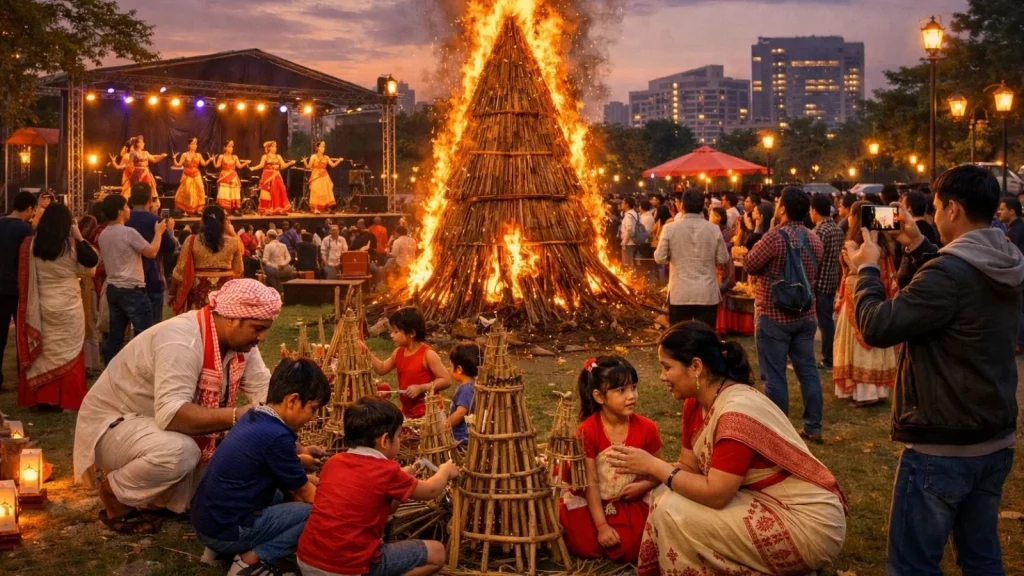
While the core traditions remain unchanged, the way people celebrate has evolved with time. Urban celebrations of Magh Bihu 2026 might look slightly different from those in rural areas, but the spirit remains the same. City dwellers often organize community events in parks or designated areas where mejis can be safely lit.
Many organizations and cultural associations host programs featuring traditional Bihu dances, music performances, and cultural competitions. These events help preserve Assamese culture while making it accessible to younger generations. Social media has also transformed how people share their celebrations, with photos of elaborate meals and traditional food spreads reaching audiences far beyond Assam.
Despite modernization, many families ensure their children participate in traditional activities, teaching them to make pithas, helping construct mejis, and explaining the significance behind each ritual. This intergenerational knowledge transfer is crucial for keeping the festival’s authentic spirit alive.
Also Read: Shattila Ekadashi 2026: Meaning, Importance, And How To Perform Puja
Get Astrological Guidance with AstroLive:

As you celebrate this auspicious harvest festival, understanding the cosmic energies and astrological significance of the timing can enhance your spiritual experience. AstroLive offers you instant access to expert astrologers who can provide personalized guidance during this festive season.
Why Choose AstroLive for Your Spiritual Journey:
1. Instant Consultation: Connect with verified astrologers through video, voice, or chat, no waiting, no appointments needed. Get answers to your questions about auspicious timings, rituals, and personal horoscope readings right when you need them.
2. Expert Astrologers: Access a diverse panel of experienced astrologers specializing in Vedic astrology, numerology, tarot reading, and more. Each expert brings years of knowledge to help you navigate life’s important decisions.
3. Personalized Recommendations: Receive customized advice based on your birth chart, current planetary positions, and specific concerns. Whether you’re seeking guidance about career, relationships, health, or spiritual growth, get insights tailored to your unique astrological profile.
4. Festival-Specific Guidance: During important festivals like this harvest celebration, understand the best times for conducting rituals, making offerings, and starting new ventures. Astrologers on AstroLive can guide you about muhurat (auspicious timings) specific to your personal horoscope.
5. Privacy and Convenience: Enjoy completely confidential consultations from the comfort of your home. No need to travel to meet astrologers, get spiritual guidance while you’re preparing pithas or celebrating with family.
Whether you’re seeking blessings for the new harvest season, want to understand your personal prosperity forecast, or need guidance for important life decisions, AstroLive brings ancient wisdom to your fingertips. Start your spiritual journey today and celebrate this auspicious time with cosmic clarity.
Regional Variations Across Assam:
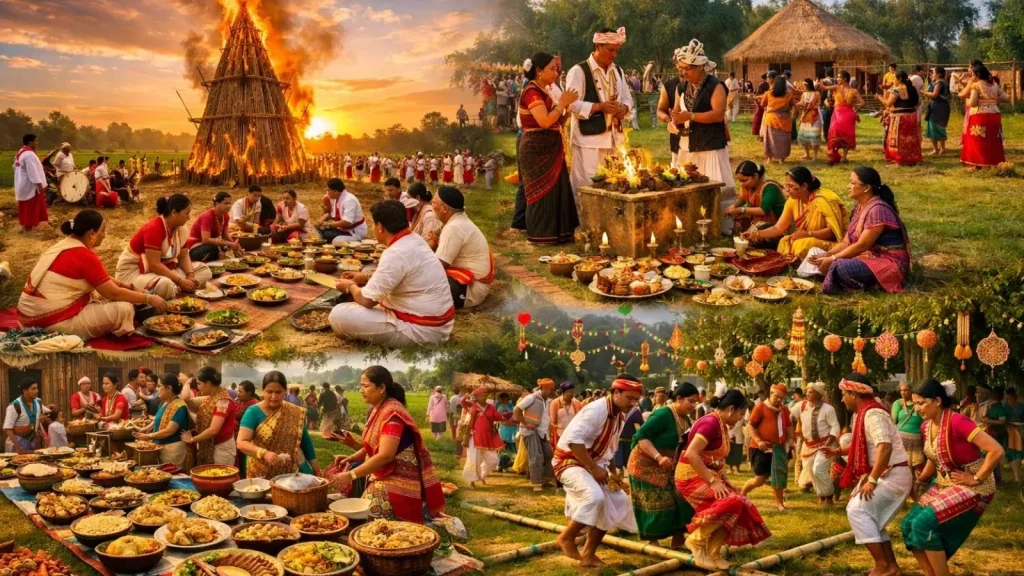
While the festival is celebrated throughout Assam, different regions add their own unique flavors to the festivities. In upper Assam, the celebrations tend to be more traditional with elaborate mejis and grand community feasts. The Lower Assam region incorporates its own local dishes and customs into the celebration.
The Bodo community celebrates its version called “Maghor Domashi” with distinctive rituals and traditional activities. The Mising tribe has its own celebration called “Ali Aye Ligang,” which coincides with the same period and shares similar harvest celebration themes. These regional variations showcase the diversity within Assamese culture while maintaining the common thread of gratitude, community, and celebration.

Conclusion:
Magh Bihu represents the beautiful amalgamation of gratitude, community, and cultural heritage that defines Assamese identity. This harvest festival is not just about celebrating abundance; it’s about honoring the relationship between humans and nature, acknowledging the hard work of farmers, and strengthening social bonds that hold communities together. As Assam welcomes another year of festivities, the spirit of this celebration continues to thrive, adapting to modern times while staying rooted in tradition.
FAQ’s:
Q1: When is Magh Bihu celebrated?
Ans: The festival is typically celebrated on January 14th or 15th each year, coinciding with Makar Sankranti. The exact date follows the Assamese calendar.
Q2: What is the difference between Magh Bihu and other Bihus?
Ans: Assam celebrates three Bihus, Rongali (spring), Kongali (autumn), and Bhogali or Magh (winter). While Rongali marks the beginning of the Assamese New Year, this winter festival celebrates the harvest and is characterized by feasting.
Q3: What are the main foods prepared during this festival?
Ans: Traditional foods include various pithas (rice cakes), laru (sweetballs), fish preparations, meat dishes, curd, cream, and rice-based delicacies made from freshly harvested ingredients.
Q4: Can tourists participate in the celebrations?
Ans: Absolutely! Assamese people are known for their hospitality and warmly welcome visitors to participate in the festivities. Many cultural organizations organize special programs for tourists during this time.