



balanced living. One such important festival is sheetala ashtami, a sacred day dedicated to Goddess Sheetala, who is believed to protect devotees from diseases and negative energies.
Devotees worship the goddess with devotion and pray for the well-being of their families. The festival also highlights the importance of cleanliness, discipline, and mindful living. Even today, sheetala ashtami holds strong cultural relevance across many parts of India.
In 2026, devotees will celebrate the festival with great devotion, perform rituals, offer prayers, and follow traditional practices to seek Goddess Sheetala’s blessings.
Sheetala Ashtami 2026 Date And Festival Timing
According to the Hindu calendar, sheetala ashtami falls on the Ashtami tithi of Krishna Paksha in the Chaitra month. In 2026, this auspicious festival will be celebrated on 11 March 2026.
Many devotees often search for sheetala ashtami kab hai to plan their prayers and rituals in advance. Knowing the correct date helps families prepare for the festival and observe it with proper devotion.
Devotees observe fasting, offer prayers, and seek blessings from Goddess Sheetala for protection against illnesses. Many households prepare food a day before and offer it to the goddess on the festival day as part of the traditional ritual.
Knowing the exact sheetala ashtami 2026 date helps devotees prepare for the rituals in advance and observe the festival with proper spiritual discipline.
What Is The Religious Significance Of Sheetala Ashtami?
Devotees celebrate sheetala ashtami to honor Goddess Sheetala, the divine protector against infectious diseases, fever, and epidemics. In ancient times, people believed that worshipping the goddess protected communities from diseases like smallpox.
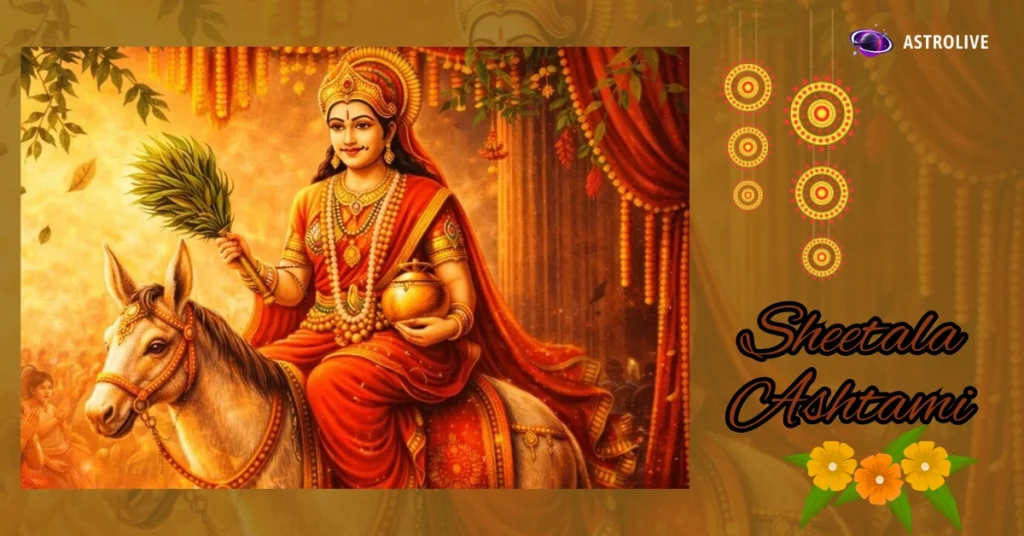
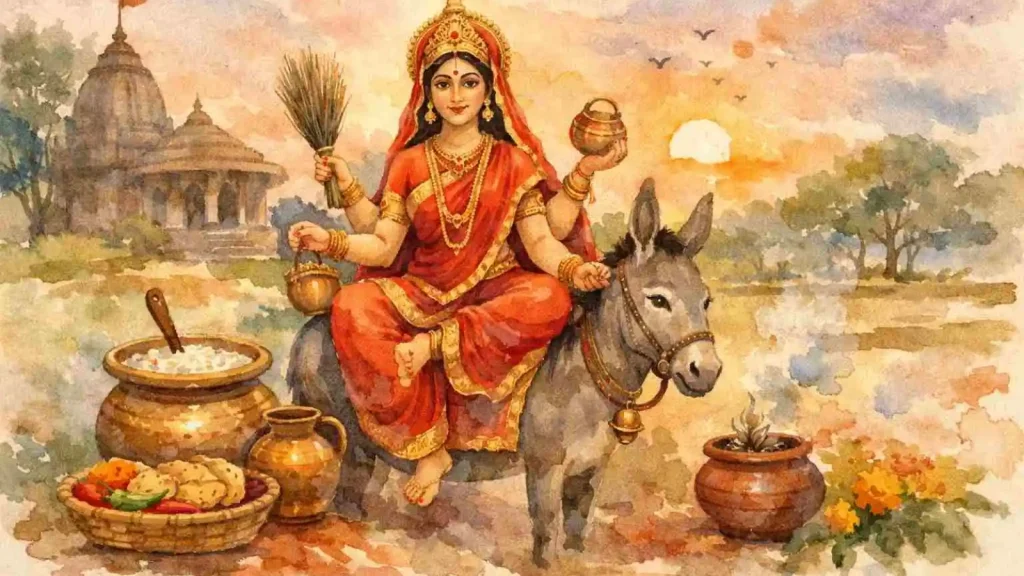
Goddess Sheetala is traditionally depicted riding a donkey and holding a broom, a pot of healing water, and a winnowing fan. Each of these elements carries symbolic meaning. The broom represents cleansing negativity and impurities, while the pot symbolizes healing and purification.
By observing sheetala ashtami with devotion, devotees pray for good health, harmony, and protection for their loved ones.
Also Read: Chaitra Navratri 2026: How To Do Chaitra Navratri Puja At Home (Vidhi)
The Story And Mythological Background
Like many Hindu festivals, sheetala ashtami is associated with mythological stories that highlight the importance of faith and cleanliness.
According to one popular legend, a village once ignored the worship of Goddess Sheetala and neglected hygiene practices. As a result, diseases began to spread among the people. When the villagers realized their mistake, they prayed to the goddess and promised to maintain cleanliness and devotion.
After sincere prayers and worship on sheetala ashtami, the village gradually recovered from the illness. Since then, devotees celebrate the festival every year with devotion and respect for the goddess.
What Are The Main Rituals And Traditions Of Sheetala Ashtami?
The rituals of sheetala ashtami are unique and deeply symbolic. Unlike many Hindu festivals where fresh meals are prepared on the same day, this festival follows a special tradition that focuses on offering cool food to Goddess Sheetala.
Below are the key rituals and traditions devotees usually follow:
Food Prepared a Day Earlier:
Families cook traditional dishes such as puri, halwa, rice, and other homemade foods one day before the festival.
Offering Cold Food to the Goddess:
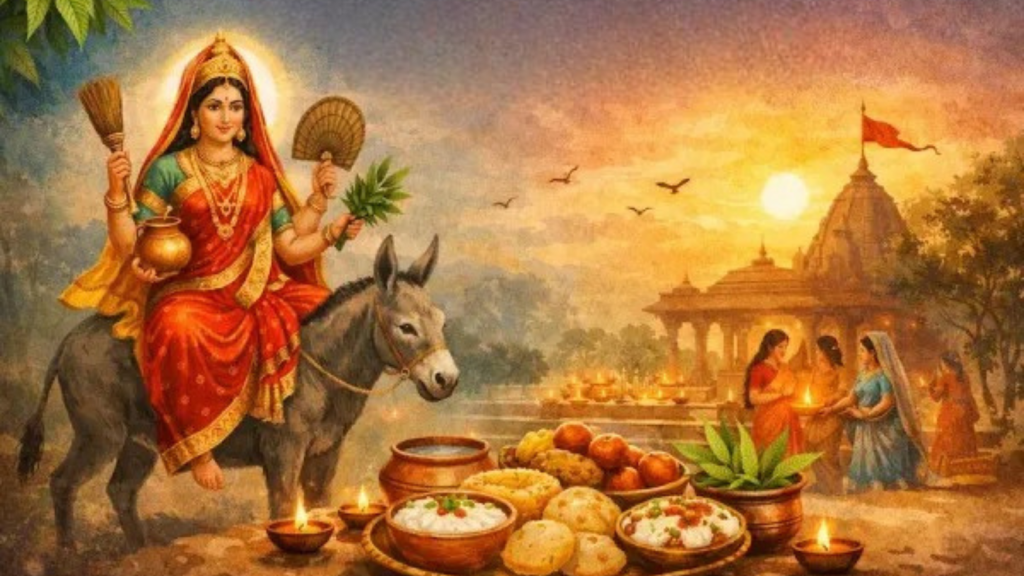
On the festival day, the previously prepared food is offered to Goddess Sheetala as prasad.
Avoiding the Stove:
Devotees traditionally avoid lighting the stove or cooking fresh food on the day of the festival.
Maintaining Cleanliness at Home:
Homes and worship spaces are cleaned thoroughly to welcome the blessings of the goddess.
Family Prayers and Devotion:
Many families gather together to offer prayers and seek health and protection for their loved ones.
These traditions of sheetala ashtami help devotees stay connected to cultural values and preserve spiritual practices across generations.
How To Perform Sheetala Ashtami Pooja At Home Step By Step?
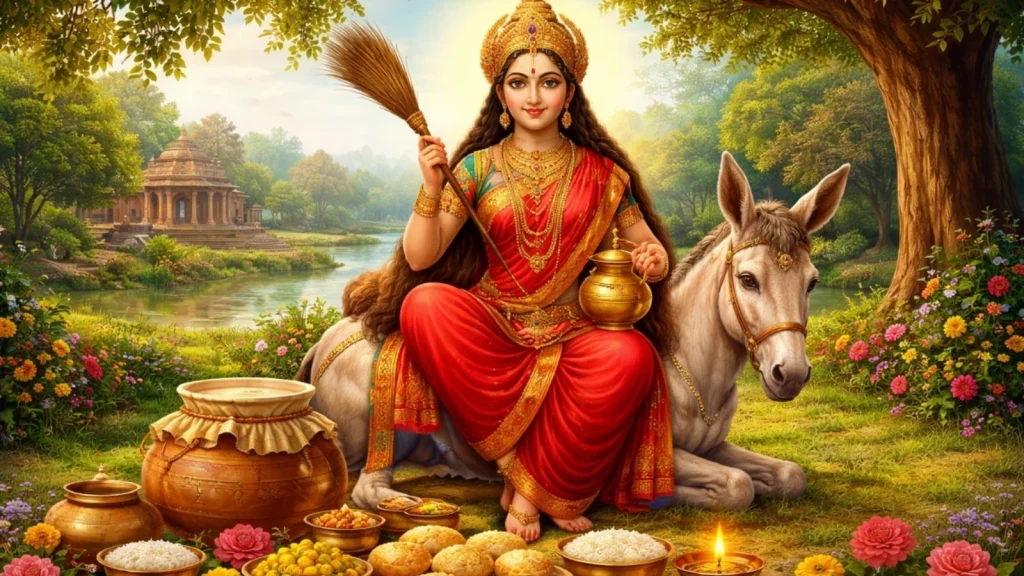
Performing the sheetala ashtami pooja correctly is considered essential to receive the blessings of Goddess Sheetala. Devotees usually begin the day with early morning prayers.
Simple Pooja Steps:
- Wake up early and take a bath to begin the day with purity.
- Clean the house and prepare the worship area.
- Place an image or idol of Goddess Sheetala on a clean altar.
- Offer cold food prepared the previous day as prasad.
- Light incense sticks and a diya.
- Offer flowers and chant prayers dedicated to the goddess.
- Recite or listen to the Sheetala Mata Katha.
- Pray for health, happiness, and protection for your family.
By performing sheetala ashtami rituals with faith and devotion, devotees believe they can attract divine blessings and positive energy into their lives.
If you want to ensure that the rituals are performed according to proper traditions and auspicious timings, you can also seek guidance from experienced astrologers. Platforms like AstroLive allow you to consult experts, check the Panchang for accurate muhurat, and even book online pooja services for special occasions.
Check Auspicious Timings With Today’s Panchang
This can help devotees follow the rituals with greater clarity and confidence.
Why Devotees Avoid Cooking On Sheetala Ashtami?
One of the most interesting traditions of sheetala ashtami is the practice of not cooking fresh food on the festival day.
This practice has both spiritual and practical significance. From a religious perspective, it reflects the belief that Goddess Sheetala prefers cool offerings. From a traditional lifestyle perspective, it also encouraged rest and reduced exposure to heat during warmer seasons.
Even today, many families continue this tradition while celebrating sheetala ashtami with devotion and cultural pride.
Rules To Follow On Sheetala Ashtami
To observe sheetala ashtami properly, devotees follow certain traditional guidelines. These practices help maintain the spiritual essence of the festival.
Important Rules
- Avoid lighting the stove: Cooking fresh food is generally avoided on this day.
- Maintain cleanliness: Clean surroundings are considered essential because the goddess represents purification and healing.
- Offer cold food to the goddess: Food prepared the previous day is offered during the worship.
- Observe fasting or simple meals: Many devotees keep a partial or full fast while worshipping Goddess Sheetala.
Following these practices enhances the spiritual significance of sheetala ashtami and strengthens devotion.
Also Read: What Is Gudi Padwa? Meaning, History, And Significance
Mistakes To Avoid During Sheetala Ashtami
While celebrating sheetala ashtami, devotees should also avoid certain mistakes to ensure that the rituals remain respectful and meaningful.
Avoid cooking fresh meals on the day of the festival, as it goes against the traditional customs.
Do not neglect cleanliness, since hygiene plays an important role in the worship of Goddess Sheetala.
Avoid negative emotions or arguments during the festival, as spiritual harmony is considered essential for receiving blessings.
By remaining mindful of these aspects, devotees can observe sheetala ashtami in the most respectful and spiritually fulfilling way.
How AstroLive Helps You Follow Festivals Correctly?

Understanding the correct dates, rituals, and spiritual significance of festivals like sheetala ashtami can sometimes feel confusing. This is where platforms like AstroLive become extremely helpful.
AstroLive is a modern astrology platform that provides reliable spiritual guidance and traditional knowledge in one place.
On the AstroLive platform, users can:
- Check the daily Panchang for accurate festival timings
- Talk to experienced astrologers for personalized guidance
- Book online poojas for important occasions
- Explore detailed information about Hindu festivals and rituals
If you want to know the exact muhurat or details for sheetala ashtami, you can easily check the Panchang section on AstroLive and stay updated with authentic information.
Why Is Sheetala Ashtami Still Relevant In Modern Times?
In today’s fast-paced world, traditional festivals still play an important role in reminding people about balance, mindfulness, and community values.
The celebration of sheetala ashtami highlights the importance of hygiene, discipline, and respect for nature. These values remain just as relevant today as they were centuries ago.
By celebrating sheetala ashtami, families also pass down cultural traditions and spiritual wisdom to younger generations.
Conclusion
The festival of sheetala ashtami represents devotion, health, and spiritual protection. Dedicated to Goddess Sheetala, this sacred day encourages devotees to pray for the well-being of their families and maintain cleanliness and harmony in their lives.
In 2026, the festival will be celebrated on 11 March, giving devotees an opportunity to honor ancient traditions and seek divine blessings.
By observing sheetala ashtami with faith, performing the rituals correctly, and maintaining spiritual discipline, devotees believe they can invite peace, prosperity, and protection into their homes.
For those who want to follow the festival according to authentic traditions, platforms like AstroLive can provide accurate Panchang details, expert astrology guidance, and easy access to spiritual services.
FAQs
1. Which goddess is worshipped during Sheetala Ashtami?
Devotees worship Goddess Sheetala on this day. Many people consider her the divine protector against infectious diseases, fevers, and epidemics. Devotees pray to her for the health and safety of their families.
2. Why is cold or stale food offered to the goddess on this festival?
Offering cold food symbolizes calmness and healing energy. Traditionally, food is prepared a day earlier and offered the next day as a sign of respect for the goddess who represents cooling and disease relief.
3. Is fasting mandatory for devotees on Sheetala Ashtami?
Fasting is not compulsory for everyone. Some devotees keep a full-day fast, while others consume simple meals prepared the previous day. The main focus remains devotion, prayer, and maintaining cleanliness.
4. Can the festival be observed at home without visiting a temple?
Yes, devotees can easily observe sheetala ashtami at home. Installing an image of the goddess, offering prayers, lighting a diya, and presenting traditional food offerings are sufficient for the worship.
5. Which regions of India celebrate this festival the most?
People widely celebrate the festival in North and Western India, especially in states like Rajasthan, Gujarat, Uttar Pradesh, and Madhya Pradesh. In some regions, people also call it Basoda or Basora.