



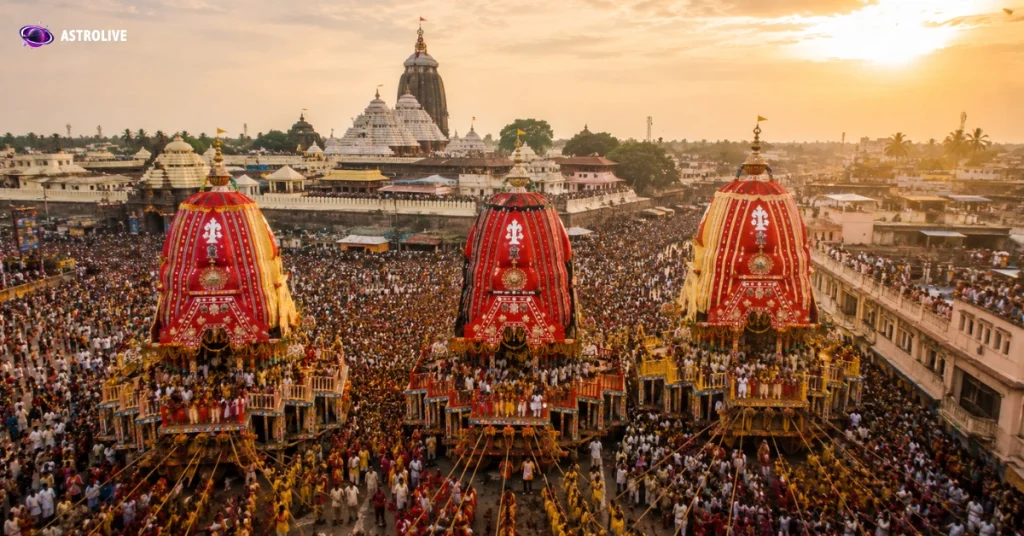
Every year, Jagannath Rath Yatra transforms the streets of Puri into a sea of devotion. Massive wooden chariots roll forward, thousands of hands pull the ropes, and millions gather to witness a tradition that has endured for centuries.
What makes this festival so remarkable is not just its scale. Unlike most religious traditions, where devotees travel to seek blessings, here the deity steps outside the temple and comes among the people. That simple idea gives the celebration a powerful meaning that continues to inspire generations.
Jagannath Rath Yatra in One Minute
Jagannath Rath Yatra is an annual chariot festival held in Puri, Odisha. It celebrates Lord Jagannath, his brother Balabhadra, and sister Subhadra as they travel from the Jagannath Temple to the Gundicha Temple. The festival symbolizes divine accessibility, equality, and the belief that spiritual blessings should be available to everyone, regardless of background or status.
Why Millions Wait for This Festival Every Year
Many religious events focus on rituals performed inside sacred spaces. This festival follows a different path.
During Rath Yatra, the deities leave the temple and travel through the city. People who may never enter the temple still receive an opportunity to see and honor the divine. For many devotees, this public appearance represents compassion and inclusiveness.
Puri also becomes a gathering place for people from different regions, languages, and cultures. The atmosphere combines devotion, celebration, music, and tradition. Few festivals create such a strong sense of collective participation.
The History Behind Jagannath Rath Yatra
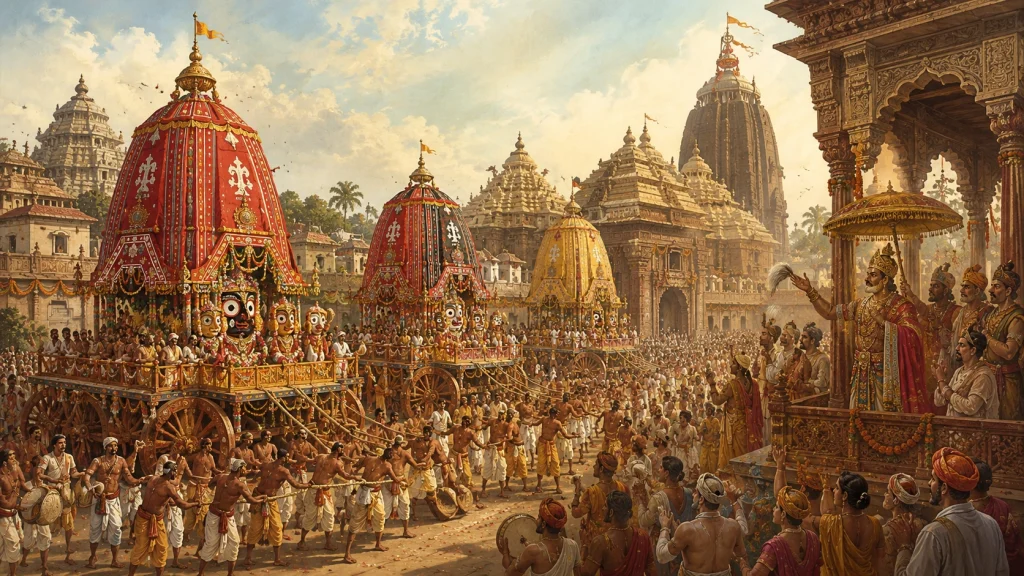
Ancient legends link the festival to Lord Jagannath’s desire to visit the Gundicha Temple, believed to be his aunt’s home. This symbolic journey forms the foundation of the annual procession.
Historical records suggest that the tradition has been observed for many centuries in Odisha. Over time, local customs, temple rituals, and royal patronage helped shape the festival into the grand event known today.
As travel became easier and awareness spread globally, the celebration expanded far beyond India. Variations of Jagannath Rath Yatra are now organized in many countries, allowing devotees around the world to participate in the tradition.
What Happens During the Sacred Journey?
The festival unfolds through a series of carefully observed rituals. Each one carries spiritual meaning beyond its ceremonial appearance.
Pahandi: The Procession Begins
The deities are carried from the temple to their chariots in a rhythmic and celebratory manner. Devotees watch with excitement as the journey officially begins.
The ritual represents movement, transition, and the idea that spiritual growth often requires stepping beyond familiar boundaries.
Chhera Pahanra: A Lesson in Humility
One of the most memorable moments occurs when the Gajapati King ceremonially sweeps the chariots with a golden broom.
The message is simple yet powerful. No matter how high a person’s status may be, everyone stands equal before the divine.
The Chariot Pulling Ceremony
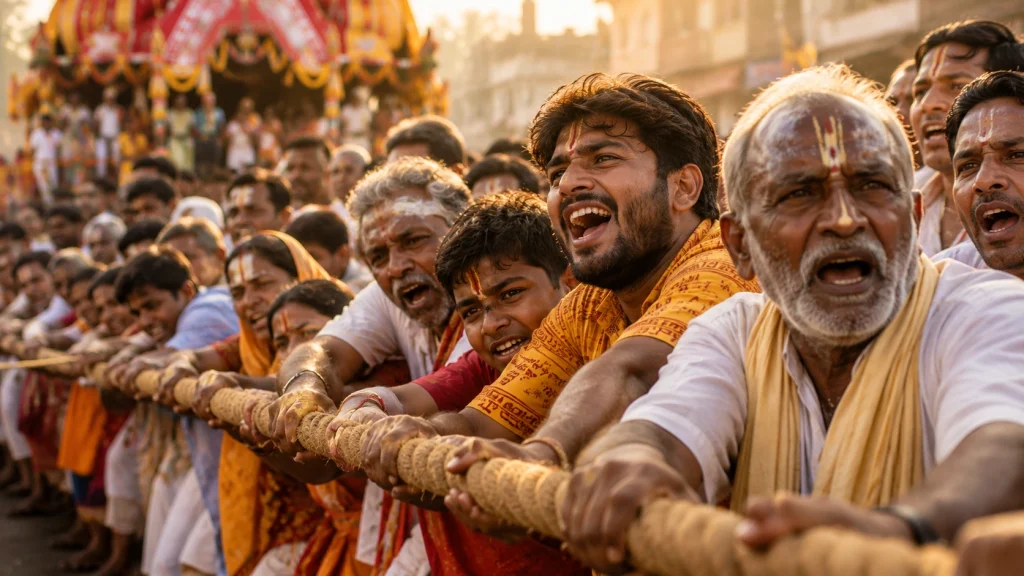
Thousands of devotees pull the ropes attached to the chariots. Participation is considered highly auspicious.
Rather than viewing this act as a physical task, many see it as a symbolic effort to draw themselves closer to spiritual understanding.
Arrival and Return
After reaching Gundicha Temple, the deities remain there for several days before beginning the return journey known as Bahuda Yatra.
This cycle of departure and return reflects the rhythms of life, reminding devotees that every journey eventually brings a new perspective.
Meet the Three Magnificent Chariots
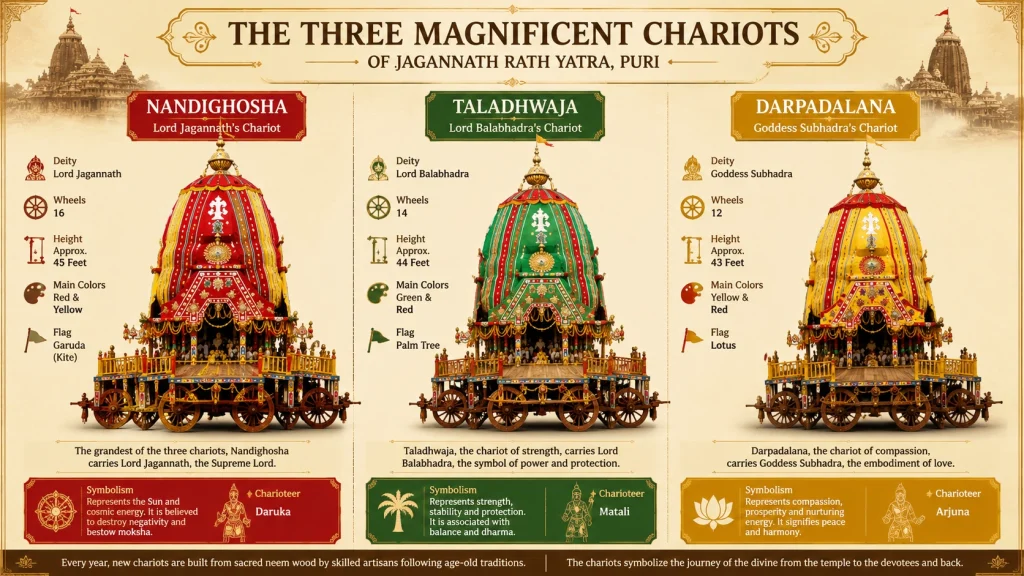
One of the most fascinating aspects of Jagannath Rath Yatra is the construction of new chariots each year.
Nandighosha
Built for Lord Jagannath, Nandighosha is the largest chariot. It traditionally features sixteen wheels and vibrant red and yellow coverings.
Taladhwaja
Lord Balabhadra’s chariot is known as Taladhwaja. It has fourteen wheels and symbolizes strength, protection, and stability.
Darpadalana
Subhadra travels in Darpadalana, a smaller but equally significant chariot with twelve wheels. It is often associated with balance and compassion.
The annual rebuilding of these chariots reflects an important spiritual lesson. Even sacred traditions embrace renewal and change.
The Spiritual Significance of Jagannath Rath Yatra
The festival’s deeper meaning extends beyond the visible procession.
A central aspect of Jagannath Rath Yatra significance lies in accessibility. The deity does not remain distant or restricted to a select group. Instead, divine grace is brought directly to the people.
The festival also emphasizes equality. Wealth, caste, profession, and social standing lose importance when thousands gather with the same purpose.
For many devotees, pulling the chariot represents surrendering ego and accepting that spiritual progress requires humility. The ropes become a symbol of the connection between human effort and divine guidance.
Hidden Symbolism Most People Miss
Many visitors focus on the grand visuals, but the symbolism behind the festival offers even deeper insight.
Some spiritual teachers compare the chariot to the human body. The journey represents life’s movement through challenges, choices, and growth.
The destination matters, but so does the process. Every stage of the procession highlights patience, faith, and perseverance.
There is also a lesson in letting go. The deities leave the temple, travel outward, and eventually return. This cycle reflects the reality that growth often requires temporary separation from comfort and routine.
Jagannath Rath Yatra 2026: Important Dates
For those planning ahead, Jagannath Rath Yatra 2026 is expected to be observed on July 16, 2026.
The festival season includes several connected events:
- Snana Purnima
- Gundicha Marjana
- Hera Panchami
- Bahuda Yatra
- Suna Besha
- Niladri Bijay
Each ritual contributes to the broader narrative of the festival and carries its own cultural and spiritual significance.
Planning to Attend the Festival in Puri
Experiencing Jagannath Rath Yatra Puri in person can be unforgettable. The scale of the gathering is difficult to appreciate until you witness it firsthand.
Choosing a viewing location early is essential because crowds grow quickly. Main roads near the chariot route offer excellent views, though they become densely packed.
Comfortable clothing, hydration, and awareness of crowd movement are equally important. Visitors should prepare for long periods of standing and significant walking.
First-time attendees are often surprised by the emotional energy of the event. The combination of chanting, devotion, and shared excitement creates an atmosphere unlike most public celebrations.
Common Misconceptions About Rath Yatra
Several myths continue to circulate about the festival.
One common misunderstanding is that only Hindus can appreciate or attend the event. While the tradition is rooted in Hindu belief, many visitors attend to learn about its cultural and historical importance.
Another misconception is that pulling the chariot is mandatory. Participation is voluntary, and simply witnessing the procession is meaningful for many devotees.
Some people also assume the celebration exists only in Odisha. While Puri remains the spiritual center, versions of Jagannath Rath Yatra are now organized in cities around the world.
Understanding the Festival Through Astrolive

Many devotees seek additional guidance when preparing for important religious occasions. Astrolive helps bridge traditional knowledge and modern accessibility.
The platform offers:
- Festival date updates
- Panchang information
- Spiritual guidance resources
- Astrology-based insights
- Religious calendar support
For people who want a deeper understanding of rituals and observances, these resources can make participation more meaningful and informed.
Why This Ancient Festival Still Matters
Despite its centuries-old origins, the message behind Jagannath Rath Yatra remains surprisingly relevant.
Modern life often encourages separation, competition, and individual achievement. This festival emphasizes connection, service, and shared purpose instead.
The sight of thousands of people pulling a single chariot offers a reminder that communities achieve more when moving together. That lesson resonates just as strongly today as it did generations ago.
Read More!
Rinmukteshwar Mahadev: Your Path To Financial Freedom
4 Gemstones That Bring Luck and Success to March-Born People
The Lasting Message of Jagannath Rath Yatra
At its heart, Jagannath Rath Yatra is a celebration of connection. It reminds people that spirituality is not reserved for a privileged few. The divine reaches outward, meeting people where they are.
Its lessons remain timeless: humility matters, community matters, and every meaningful journey requires movement. Perhaps that is why millions continue to gather year after year, not only to witness a procession, but to experience a message that still speaks to the human heart.
Frequently Asked Questions
Why is Jagannath Rath Yatra celebrated?
It commemorates the annual journey of Lord Jagannath, Balabhadra, and Subhadra from the Jagannath Temple to the Gundicha Temple.
Where does the festival take place?
The most famous celebration takes place in Puri, Odisha, though similar events are held worldwide.
What is the significance of pulling the chariot?
Many devotees believe it symbolizes devotion, humility, and spiritual participation.
Who are the three deities?
The festival honors Lord Jagannath, Lord Balabhadra, and Goddess Subhadra.
What are the names of the three chariots?
They are Nandighosha, Taladhwaja, and Darpadalana.
How long does the festival last?
The broader celebration spans several days and includes multiple connected rituals.
Can non-Hindus attend?
Yes. Public processions can be viewed by visitors from all backgrounds.