



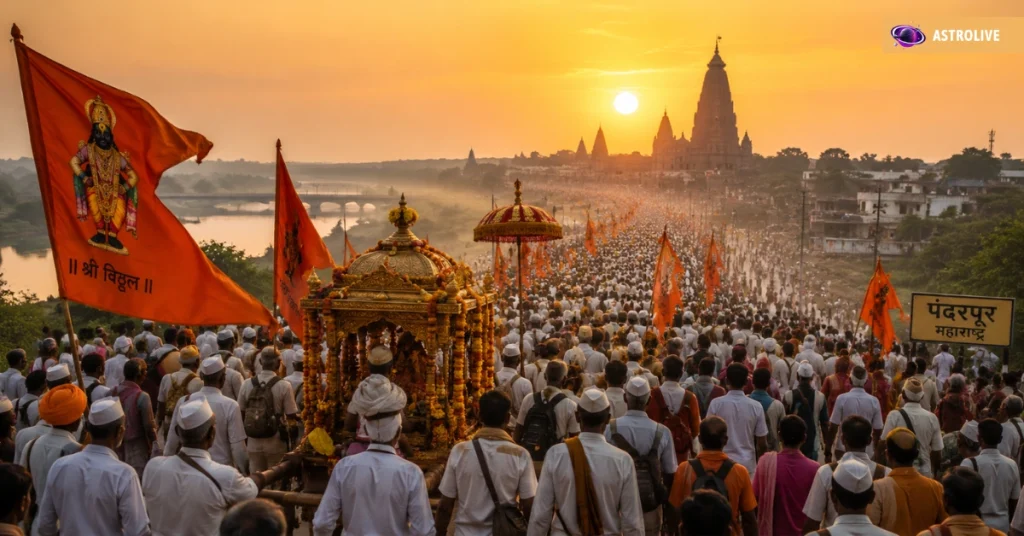
Every year, millions of devotees wake before dawn, skip their meals, and walk hundreds of miles – all for a single sacred occasion. Ashadhi Ekadashi is not just a festival. It is one of the most spiritually significant days in the Hindu calendar, believed to carry the power to cleanse the soul and draw devotees closer to the divine.
In 2026, Ashadhi Ekadashi will be observed on Saturday, June 27. The sacred observance falls on the Ekadashi tithi of the Shukla Paksha (waxing phase of the moon) in the Hindu month of Ashadha. Also known as Devshayani Ekadashi or Shayani Ekadashi, it marks the beginning of Chaturmas, the four-month period during which Lord Vishnu is believed to enter Yoga Nidra.
For millions of devotees, this day is more than a religious observance. It is an opportunity to embrace devotion, self-discipline, and spiritual renewal while seeking the blessings of Lord Vishnu.
Ashadhi Ekadashi at a Glance
Ashadhi Ekadashi, also known as Devshayani Ekadashi, is a sacred Hindu observance dedicated to Lord Vishnu. It falls on the eleventh day (Ekadashi) of the bright fortnight in the Hindu month of Ashadha, typically in June or July.
This day marks the beginning of Chaturmas – a four-month period during which Lord Vishnu is believed to enter Yoga Nidra, a state of divine cosmic rest. Devotees observe fasting, perform special prayers, and engage in devotional practices to seek spiritual growth and divine blessings.
The Meaning Behind Ashadhi Ekadashi
What Does “Ashadhi” Mean?
The name comes directly from the Hindu lunar month of Ashadha. In the traditional calendar, months are named after the nakshatra (lunar mansion) that the full moon occupies. Ashadha falls during the monsoon season – a time of renewal, growth, and natural transformation.
That seasonal symbolism is not coincidental. The rain that nourishes the earth mirrors the spiritual nourishment that this day offers to sincere devotees.
Why Is It Called Devshayani Ekadashi?
“Dev” means divine or god, and “shayani” means one who sleeps. So Devshayani Ekadashi literally translates to “the Ekadashi on which the gods sleep.” It refers specifically to Lord Vishnu entering his state of Yoga Nidra, a form of conscious divine rest rather than ordinary unconscious sleep.
Both names refer to the same sacred observance. The difference is largely regional. In Maharashtra, the festival is commonly known by its Ashadha-month association, while Devshayani Ekadashi is the more widely used name in many other parts of India.
The Beginning of Chaturmas
Chaturmas literally means “four months.” Starting from this auspicious day and ending on Prabodhini Ekadashi (also called Devuthani Ekadashi), this period is considered highly auspicious for spiritual practice. Monks, saints, and wandering ascetics traditionally stay in one place during these months to avoid harming insects that emerge in the rainy season. Householders are encouraged to take up additional vows, reduce indulgences, and deepen their devotion.
Why Is Ashadhi Ekadashi Celebrated?
The Story of Lord Vishnu’s Cosmic Rest
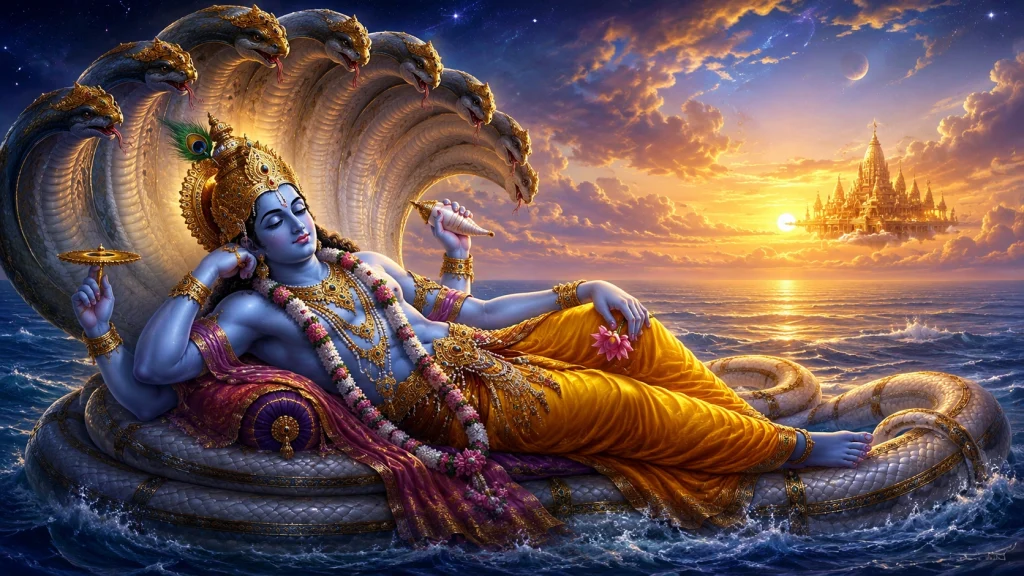
According to Puranic tradition, Lord Vishnu rests on the cosmic serpent Shesha in the Kshirasagara (ocean of milk) for four months. This rest is not absence – it is a withdrawal into a deeper cosmic state. Creation continues, the universe sustains itself, and Vishnu’s divine consciousness permeates everything even while he rests.
Think of it like the earth during winter – quiet on the surface, deeply alive within. That is the symbolism Yoga Nidra carries. It signals a pause in the external and an invitation to turn inward.
The Spiritual Significance of Ashadhi Ekadashi
The spiritual significance of the sacred fast lies in what it asks of the devotee – not grand gestures, but sincere restraint. Fasting is not punishment. It is practice in detachment, a deliberate step back from the physical to make room for the spiritual. When you reduce the body’s demands, the mind often becomes quieter. That quiet is where reflection lives.
This day also marks the beginning of a season of heightened devotion. Many Hindus use Chaturmas to read sacred texts, attend discourses, or commit to a daily prayer practice they sustain through the four months.
The Sacred Legend Behind Ashadhi Ekadashi
The Padma Purana contains one of the most referenced legends. A king named Mandhata was once troubled by a prolonged drought that caused immense suffering in his kingdom. Seeking counsel, he approached the sage Angira, who guided him to observe this sacred fast with deep sincerity and devotion to Lord Vishnu.
The king and his subjects observed the fast wholeheartedly. Rain came. The land revived. The story is not simply about rainfall – it illustrates a deeper teaching: that collective intention, self-discipline, and devotion have the power to transform circumstances. That principle holds as much meaning today as it did in ancient times.
Pandharpur Wari: The Heartbeat of Ashadhi Ekadashi
Why Millions Walk to Pandharpur
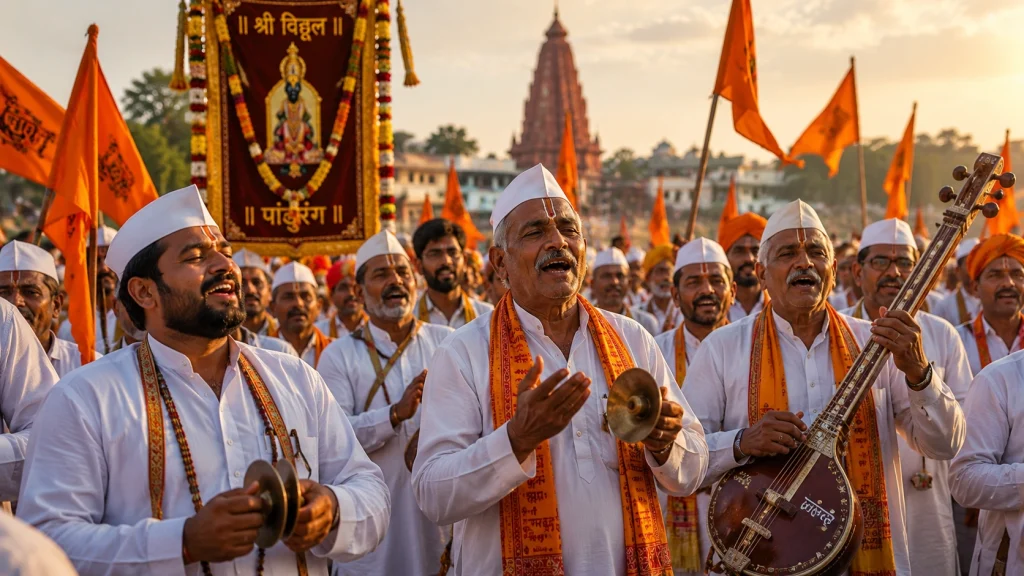
In Maharashtra, this sacred observance reaches its most visible expression through the Pandharpur Wari – a centuries-old pilgrimage in which hundreds of thousands of devotees, called Warkaris, walk to the town of Pandharpur to seek the blessings of Lord Vitthal. Some travel for weeks, covering distances of hundreds of kilometers on foot.
The Wari is not a march. It is a moving community of faith, filled with devotional songs (abhangas), chanting, and collective joy. People from all walks of life, all castes and backgrounds, walk together.
Lord Vitthal and the Warkari Tradition
Lord Vitthal (also called Vithoba or Pandurang) is a form of Lord Vishnu worshipped primarily in Maharashtra. The Warkari sampradaya (tradition) draws its spiritual lineage from poet-saints like Sant Dnyaneshwar, Sant Tukaram, and Sant Namdev – figures who composed devotional poetry that still forms the soul of the pilgrimage.
What the Wari Teaches About Faith and Community
The Wari offers a living lesson: that devotion is not a private, isolated act. It thrives in community. Walking with thousands of others toward a shared purpose creates a sense of spiritual solidarity that no solitary ritual can fully replicate. For many participants, the journey itself is the destination.
Ashadhi Ekadashi Rituals and Fasting Practices
Preparing for the Fast
Preparation typically begins a day before, on Dashami (the tenth day). Devotees eat a light, sattvic (pure) meal in the evening and avoid non-vegetarian food entirely. Many take a vow of silence or reduce unnecessary activity to cultivate mental readiness.
Puja Rituals Performed on This Day
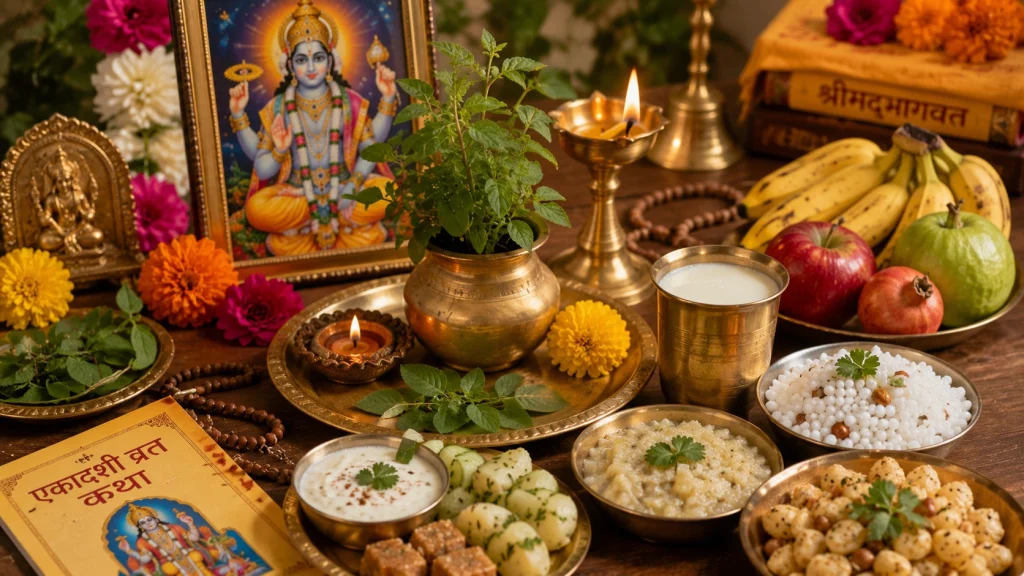
On the morning of this auspicious day, devotees wake early, bathe, and offer prayers to Lord Vishnu. The puja includes offering tulsi (holy basil) leaves, which hold special significance for devotees of Vishnu. Many recite the Vishnu Sahasranama (thousand names of Vishnu) or sing devotional bhajans throughout the day.
Foods Allowed During the Fast
The fast permits fruits, milk, nuts, sendha namak (rock salt), and foods made from water chestnut flour (singhare ka atta), sabudana (sago), or amaranth. Grains, legumes, regular salt, and certain vegetables like onion and garlic are avoided. The intention is lightness – both physical and mental.
How the Fast Is Concluded
The fast ends on Dwadashi (the twelfth day), ideally after offering morning prayers and performing the puja. Devotees break the fast with a simple, sattvic meal. Many also offer food to Brahmins or the underprivileged as an act of charity before eating themselves.
Spiritual Benefits of Observing Ashadhi Ekadashi
Tradition holds that observing this fast with sincere devotion can wash away accumulated karma, grant spiritual merit, and bring one closer to moksha (liberation). These are not claims to be taken literally by skeptics – but the underlying principles carry real wisdom.
Fasting sharpens attention. When hunger is a constant, mild presence, the mind cannot drift entirely into distraction. Prayer and chanting anchor thoughts. The combination creates a mental clarity that many devotees describe as unusually peaceful. Science increasingly validates what tradition long observed: periods of fasting support mental alertness, and meditative practice reduces stress hormones.
Beyond the body, the Ekadashi observance strengthens devotion. Choosing to observe a fast in the middle of a busy week – navigating work, family, and obligations – is itself an act of prioritization. It says something to the self: this matters more than convenience.
Ashadhi Ekadashi vs Devshayani Ekadashi: Is There Any Difference?
No. They are the same observance, just called by different names in different regions. Ashadhi Ekadashi is the Marathi name, used prominently in Maharashtra and associated with the Pandharpur Wari. Devshayani Ekadashi is the Sanskrit name used more widely across North India and by ISKCON communities globally. Same date, same fasting rules, same devotional significance.
Read More!
Nakshatra Calculator: What Does Your Birth Star Mean?
Gayatri Jayanti 2026: Date, Significance, Puja Vidhi, and Celebration
Common Misconceptions About Ashadhi Ekadashi
Is it only about fasting?
No. Fasting is one component, but the day is equally about prayer, devotion, charity, and reflection. Someone who fasts without engaging in any devotional activity misses the point. Someone who cannot fast but prays sincerely does not.
Must everyone observe a strict fast?
Not necessarily. Children, the elderly, pregnant women, and those with medical conditions are traditionally exempt from strict fasting. The spirit of the observance matters more than its exact physical form.
Is this observance relevant only to Vaishnavites?
While it is most deeply embedded in Vaishnava traditions, this devotional celebration is observed across many Hindu communities. Its themes of restraint, devotion, and spiritual renewal have broad appeal.
Does missing the fast bring bad luck?
This is a misconception. Traditional texts emphasize intent and sincerity over mechanical compliance. Missing one Ekadashi is not a spiritual catastrophe – it is simply an opportunity deferred.
How Modern Devotees Observe Ashadhi Ekadashi Today
Urban life has changed how many people observe this day – but not their desire to observe it. Online darshans from Pandharpur temple now attract millions of viewers who cannot make the physical journey. Virtual satsangs, livestreamed bhajans, and digital reminders for puja timings have become common tools.
Families gather for morning prayers before heading to work. Some observe a partial fast – skipping one meal or avoiding grains – as a middle path between full observance and none. The intention remains the same: to pause, reflect, and reconnect with something larger than the daily routine.
Deep Spiritual Insight: What Lord Vishnu’s Divine Sleep Symbolizes
Yoga Nidra is not ordinary sleep. In yogic philosophy, it refers to a state of consciousness poised between waking and dreaming – aware, but deeply still. When scripture says Lord Vishnu enters Yoga Nidra, it is pointing to a cosmic principle: that sustenance and preservation do not always require active intervention. Sometimes, stillness is the most powerful action of all.
For the devotee, this becomes a personal invitation. Chaturmas, beginning with Ashadhi Ekadashi, is a season to turn the gaze inward. Less outward achievement, more inner cultivation. That might mean reading sacred texts, practicing daily meditation, or simply becoming more mindful of choices and words. The divine rest is a mirror – what would it mean for you to enter a season of inner renewal?
How Astrolive Can Help You Celebrate More Meaningfully
For devotees seeking a more informed and meaningful spiritual experience, Astrolive provides access to expert guidance tailored to individual needs. Whether you’re observing this sacred occasion for the first time or looking to deepen your practice, the platform helps you navigate rituals, timings, and devotional traditions with greater clarity.
How Astrolive Can Help:
- Personalized guidance from experienced astrologers and spiritual advisors
- Accurate festival dates, auspicious muhurtas, and puja timings
- Support with fasting rules and ritual procedures
- Insights based on your personal birth chart and spiritual goals
- Easy access to devotional and astrology-related consultations
- Festival reminders to help you stay connected to important observances
- Practical answers to spiritual and religious questions whenever needed
What Ashadhi Ekadashi Teaches Beyond Rituals
Strip away the fasting rules and the puja schedules, and what remains is a set of timeless teachings. Faith – not blind faith, but committed, practiced faith that shows up even when it is inconvenient. Patience, in a season that deliberately slows down. Self-discipline, not as punishment but as care for one’s inner life.
And community – the Wari makes this undeniable. Devotion shared is devotion multiplied. Ashadhi Ekadashi, at its deepest, is not just about one day. It is about what kind of person you choose to be across the four months that follow.
Conclusion: A Day That Marks the Beginning of a Spiritual Journey
Ashadhi Ekadashi is not about performing a perfect ritual. It is about showing up – with sincerity, with stillness, and with a genuine desire to grow. The fast matters less than the intention behind it. The pilgrimage matters less than the transformation it catalyzes.
Whether you observe with a full fast, a quiet prayer, or simply a moment of reflection, this day invites you into a four-month journey of spiritual renewal. Lord Vishnu rests. The world slows. And within that pause, something essential in the seeker can finally be heard.
Frequently Asked Questions About Ashadhi Ekadashi
What is the significance of Ashadhi Ekadashi?
It marks the beginning of Chaturmas and Lord Vishnu’s Yoga Nidra. Devotees observe fasting and prayer to seek spiritual merit, inner clarity, and divine blessings.
What happens during Chaturmas?
Chaturmas is a four-month period of heightened spiritual observance. Auspicious ceremonies like weddings are traditionally avoided. Devotees take additional vows, increase prayer, and focus on spiritual study.
What foods are allowed during the fast?
Fruits, milk, nuts, sabudana, singhare ka atta, amaranth, and rock salt are permitted. Grains, legumes, regular salt, onion, and garlic are avoided.
What is the importance of Pandharpur Wari?
The Pandharpur Wari is a centuries-old pilgrimage to the temple of Lord Vitthal in Maharashtra. It represents devotion in motion – a community of faith walking together, singing, and seeking divine grace.
Is Ashadhi Ekadashi dedicated to Lord Vishnu?
Yes. All Ekadashis are dedicated to Lord Vishnu. Ashadhi Ekadashi carries special significance because it marks the beginning of his divine rest period.