



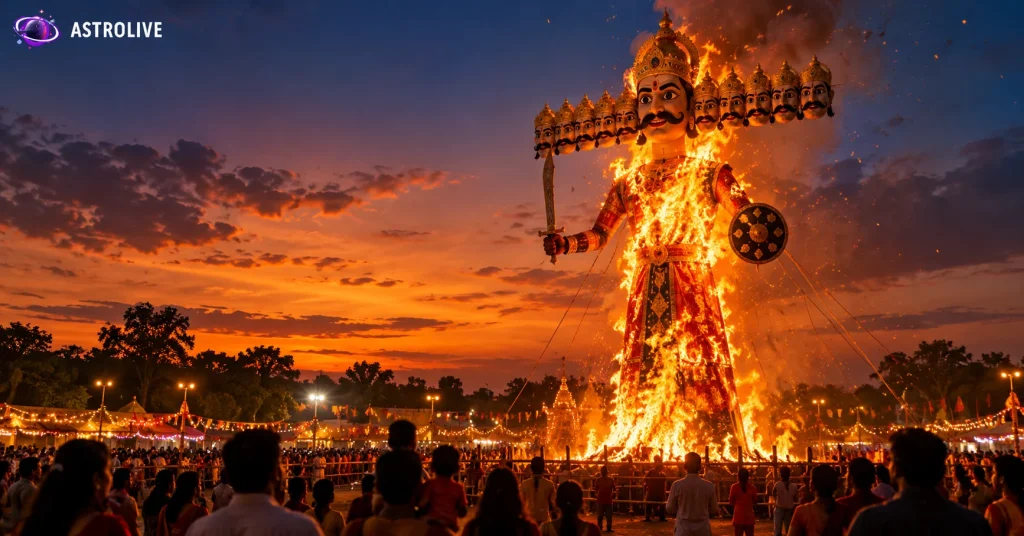
Every autumn, Dussehra turns ordinary streets into stages. Marigold garlands hang from doorways, drums echo through neighbourhoods, and children climb onto shoulders to watch a tall effigy catch fire. We know the festival so well that we rarely ask what it is actually teaching us.
Yes, it celebrates good over evil. But the stories, the rituals, and even the position of the Moon carry far more meaning than that single line. This guide explains why the festival is celebrated, what each custom stands for, how regions differ, and how astrology shapes its timing.
What Is Dussehra? Meaning and Significance
Dussehra, also known as Vijayadashami, is a Hindu festival that celebrates the victory of good over evil. It falls on the tenth day of the Ashwin period, right after Navratri. The festival honours Lord Rama’s victory over Ravana and Goddess Durga’s victory over Mahishasura.
The name offers a clue. “Vijaya” means victory and “dashami” means the tenth day. In many regions, the day closes Navratri, and in eastern India it also closes Durga Puja.
The Vijayadashami significance runs deeper than one battle. It reminds us that truth, courage, and righteousness tend to prevail, even when the road is long and the opponent looks unbeatable.
Astrology adds another layer. Dashami is regarded as an especially auspicious tithi, so many families treat Dussehra as a day when new ventures, purchases, and lessons can begin without hunting for a separate muhurat.
The Stories Behind the Festival: Rama, Ravana, and Goddess Durga
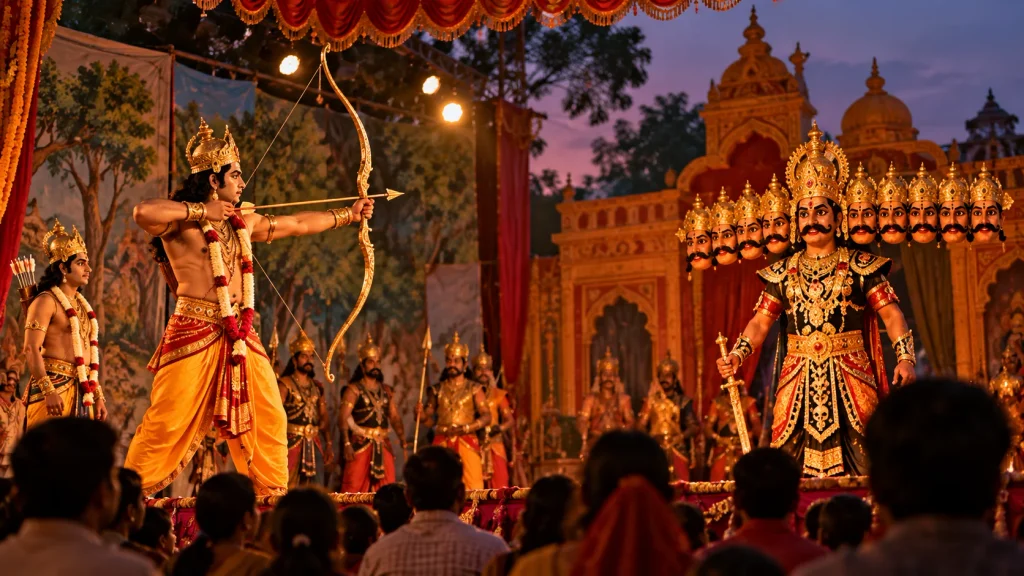
Two narratives sit at the heart of the festival. They share a theme, but they are distinct religious traditions, not one event told two ways.
Lord Rama’s Victory Over Ravana
In the Ramayana, Ravana abducts Sita and carries her to Lanka. Rama sets out to bring her home, supported by Lakshmana, Hanuman, and an army of vanaras. After a long war, Rama defeats Ravana.
Ravana was learned and powerful, yet arrogance brought him down. That is why the story is often read as a lesson on duty, justice, and the cost of unchecked ego.
Goddess Durga’s Victory Over Mahishasura
The Devi Mahatmya describes Mahishasura, a buffalo demon who terrorised the gods after gaining a boon that protected him from men. The gods combined their energies to create Durga. She fought him for nine nights and defeated him on the tenth.
This is why the day matters so much in Durga Puja. It celebrates Shakti, the divine feminine power, overcoming destructive forces.
Rituals and Their Meaning
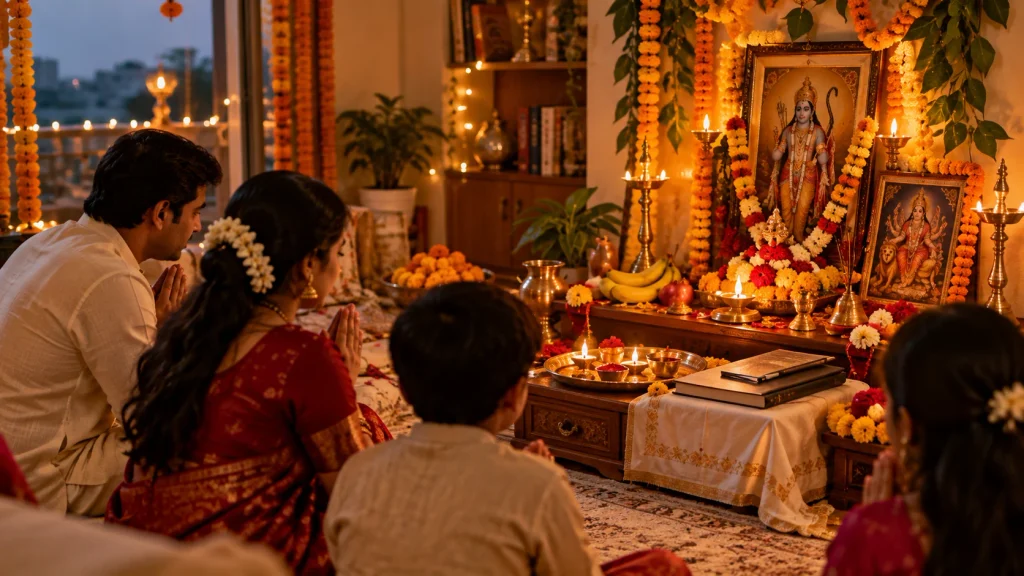
Vijayadashami rituals vary from home to home, and not every custom is followed in every region. Still, three practices appear again and again.
Ravan Dahan and Ramlila
Ramlila is a dramatic retelling of the Ramayana, staged over several nights before the festival. On the final evening, tall effigies of Ravana, and often Kumbhakarna and Meghnad, are set alight. The fire stands for ego, anger, and injustice turning to ash.
Shastra Puja and Worship of Tools
Many families worship weapons, tools, vehicles, or work equipment. A mechanic may garland his spanners, and a student may place books before the deity. It is a way of thanking the things that earn our living and wishing for safe, productive work ahead.
Shami Leaves, Prayers, and Offerings
In parts of western and southern India, people exchange Shami or Apta leaves as a symbol of goodwill. They are often called “gold” and given with greetings. Temple visits, aarti, and family prayers round out the day, linking it with prosperity and fresh starts.
Read More!
What Is Nadi Dosha? How to Remove Nadi Dosha Naturally?
Magha Nakshatra Lord in Vedic Astrology: Traits, Power and Destiny
Celebrations Across India: One Day, Many Traditions
North India: Ramlila and Ravan Dahan
In Delhi, Varanasi, and across the Hindi belt, Ramlila grounds fill with crowds, food stalls, and fairs. Giant effigies burn at dusk while fireworks crackle overhead.
West India: Tool Worship and Apta Leaves
In Maharashtra, people worship their tools and exchange Apta leaves. Many also begin new work or buy something auspicious. In Gujarat, the morning often starts with fafda and jalebi, a snack pairing that has become a tradition of its own.
East India: Vijaya Dashami and Durga Visarjan
In Bengal, Odisha, and Assam, the tenth day ends Durga Puja. Married women apply sindoor on each other in Sindoor Khela, and the idols are then immersed in rivers or ponds. Joy and sadness mix, like seeing off a daughter after a short visit.
South and Central India: Mysuru Dasara and Bastar Dussehra
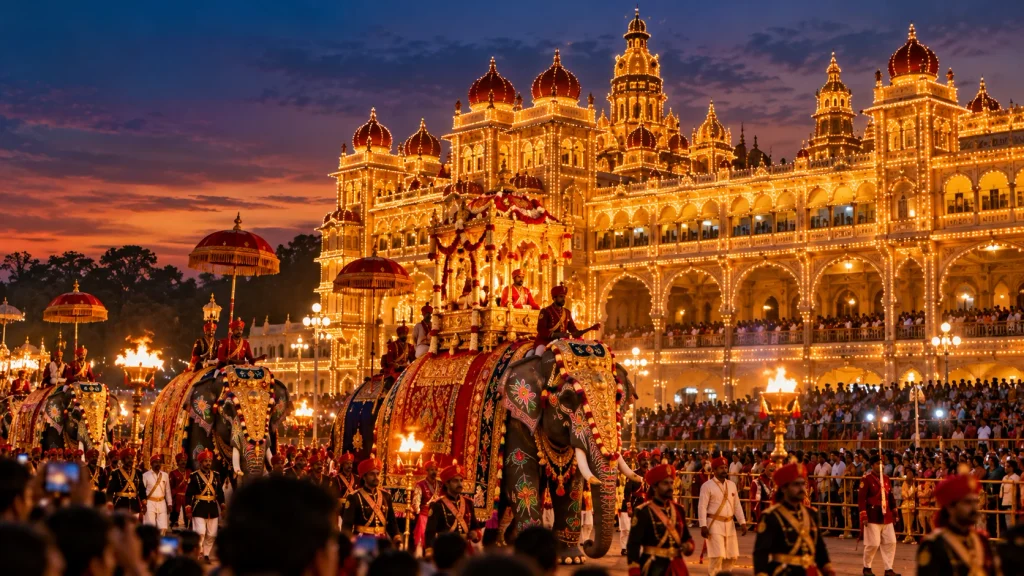
Mysuru hosts a royal procession in which the deity travels on a decorated elephant, with the palace glowing at night. Bastar Dussehra in Chhattisgarh looks entirely different. It stretches over many weeks, centres on local deities and tribal traditions, and has no Ravana effigy burning.
Bastar is a useful reminder that this festival has no single script.
Meaningful Ways to Celebrate at Home
You do not need an elaborate setup. Try this simple sequence:
- Begin with a prayer at home or a visit to a nearby temple.
- Share sweets or a festive meal with your family.
- Retell a story from the Ramayana or the Durga tradition.
- Attend a local cultural event if you can.
- Pick one habit to improve, such as impatience or resentment.
The goal of Dussehra is meaningful participation, not perfection. Follow what your family does, and let the rest be optional.
Astrology and Dussehra: Why Timing Matters
In Vedic astrology, the date is never random. The festival falls on Shukla Dashami of Ashwin, when the Moon is waxing, and energy is considered constructive. Many Panchang traditions favour the afternoon window called Aparahna, along with the Vijay Muhurat, for worship and new beginnings.
Some almanacs also note Shravana Nakshatra, linked with listening and learning, when it coincides with Dashami. When it does not, the day is still seen as auspicious.
This is why people often start a business, sign an agreement, or enrol a child in lessons on Dussehra. The belief is that efforts begun on a “victory day” carry that momentum forward.
A word of caution helps here. Astrology guides timing, but it does not replace faith or family custom. Think of the Panchang as a map, not a rulebook.
Dussehra 2026: Date, Muhurat, and Planning
Government tourism listings place the festival on October 20, 2026. Tithi calculations differ by city, so some regions may observe it a day earlier or later.
With the date about a week away, now is a good time to check your local Panchang. Confirm the exact puja window and the Ravan Dahan schedule in your area before you plan the day.
Planning Festival Prayers With AstroLive

Planning Dussehra prayers often means checking the right tithi and muhurat for your city. AstroLive helps families find relevant Panchang details and explore spiritual guidance in one place.
Key features of AstroLive include:
- Daily Panchang: Check tithi and other daily Panchang details.
- Shubh and Ashubh Muhurat: Review auspicious and inauspicious timings for planning rituals.
- Live Astrologer Consultations: Seek guidance for personal questions and festival-related decisions.
- e-Puja Services: Explore online puja services for added convenience.
AstroLive can make it easier to review festival timings before planning your prayers. Use it as a reference, verify location-specific details, and follow your family’s traditions.
The Deeper Lesson: Victory Begins Within
Ravana burns every year, yet arrogance, dishonesty, and anger keep returning. That suggests the real battle is closer to home.
Honesty, self-control, humility, and responsibility are the weapons worth sharpening. Traditions read Ravana in different ways, but the call for self-reflection stays relevant to almost everyone.
Try a simple exercise this week. Choose one habit you want to drop and one positive action you will practice daily. Small, steady choices make Dussehra last well beyond a single evening.
Conclusion: Carry the Message Forward
Dussehra brings together mythology, devotion, regional identity, and quiet self-reflection. Whether you watch a Ramlila, immerse an idol, or simply share sweets at home, the festival invites the same question. What is one thing in you worth conquering? Carry that answer into tomorrow, and the victory stays real.
Frequently Asked Questions About Dussehra
Why is the festival celebrated?
It marks the victory of good over evil, through Rama’s defeat of Ravana and Durga’s defeat of Mahishasura.
What does Vijayadashami mean?
It means the tenth day of victory, the day that closes the nine nights of Navratri.
Why is Ravana’s effigy burned?
It symbolises the destruction of arrogance, anger, and injustice. The act reminds us to confront those qualities within ourselves.
How is it different from Durga Puja?
They overlap on the tenth day. Durga Puja centres on the Goddess, while Ramlila traditions centre on Rama.
Why are tools and vehicles worshipped?
It expresses gratitude for livelihood and hope for safe, productive work.
When is it observed in 2026?
Official tourism listings give October 20. Confirm exact timings with your local Panchang.