



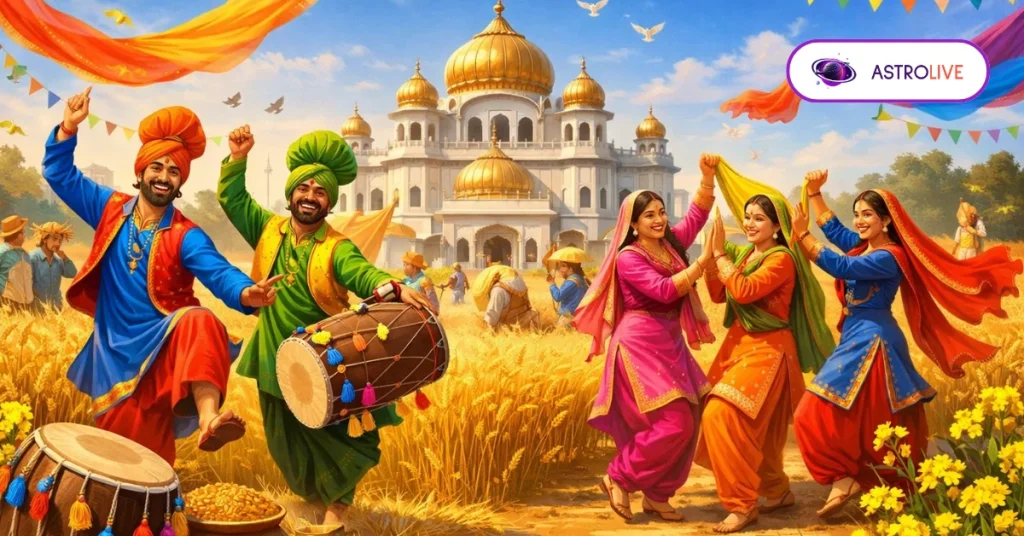
Baisakhi is one of the most vibrant and meaningful festivals celebrated in India, especially in the state of Punjab. The festival marks the end of the harvest season and holds deep cultural and religious importance for millions of people. For farmers, Baisakhi is a time of joy and gratitude, as it celebrates the successful harvesting of the Rabi crops, particularly wheat. Fields turn golden during this time, and communities come together to celebrate the fruits of their hard work.
Apart from its agricultural importance, Baisakhi also has great religious significance for the Sikh community. The day commemorates the historic moment in 1699 when Guru Gobind Singh Ji established the Khalsa Panth, giving a distinct identity and spiritual direction to Sikhs. Because of this, Baisakhi is considered one of the most important festivals in Sikhism and is celebrated with great devotion and enthusiasm.
Baisakhi is also linked to the solar eclipse new year in the traditional Indian calendar, as it marks the beginning of the month of Vaisakh when the Sun enters the zodiac sign of Aries. Across India, different regions celebrate this time as the Hindu solar new year, though the names of the festivals may vary. From prayers in gurdwaras to colorful fairs, energetic bhangra performances, and community meals, the celebrations truly reflect the spirit of unity, gratitude, and new beginnings.
Baisakhi 2026 Date And Timing In India
In 2026, Baisakhi will be celebrated on Tuesday, 14 April 2026. The festival usually falls on April 13 or April 14 every year, depending on the movement of the Sun in the traditional solar calendar. Unlike many Indian festivals that follow the lunar calendar, Baisakhi is based on the solar calendar, which is why its date remains almost fixed every year.
Baisakhi marks the beginning of the month of Vaisakh in the Hindu and Sikh calendars. The festival coincides with Mesha Sankranti, the moment when the Sun enters the zodiac sign Aries (Mesh). This astronomical transition is considered highly significant because it signals the start of the solar new year in several parts of India.
Because of this, many Indian communities celebrate their regional Hindu solar new year around the same time. While Punjab celebrates Baisakhi, other regions mark the occasion with festivals such as Vishu in Kerala, Puthandu in Tamil Nadu, Pohela Boishakh in West Bengal, and Bohag Bihu in Assam.
For farmers in Punjab and nearby regions, this time is also associated with the harvesting of the Rabi crops, particularly wheat. The fields are ready for harvest, and the festival becomes a moment of happiness and thanksgiving for a good yield. This is why Baisakhi is not only a religious festival but also an important harvest celebration in North India.

What Is The Baisakhi Festival?
Baisakhi, also known as Vaisakhi, is an important festival celebrated mainly in Punjab and the northern parts of India. It marks the arrival of the harvest season and is considered one of the most joyful festivals for farmers and the Sikh community. The festival usually falls in the middle of April and brings together people for prayers, cultural celebrations, and community gatherings.
For farmers, Baisakhi is a harvest festival that celebrates the successful harvesting of the Rabi crops, especially wheat. After months of hard work in the fields, farmers celebrate the harvest with music, dance, and festive meals. The golden wheat fields during this season symbolize prosperity and abundance, which is why the festival is celebrated with great enthusiasm in rural areas.
At the same time, Baisakhi holds deep religious importance in Sikhism. The day commemorates the historic event in 1699 when Guru Gobind Singh Ji, the tenth Sikh Guru, established the Khalsa Panth. This event gave Sikhs a strong spiritual identity and laid down principles of courage, equality, and devotion. Because of this, many Sikhs visit gurdwaras, participate in prayers, and take part in community service on this day.
Baisakhi is also closely connected with the solar new year, as it marks the beginning of the month of Vaisakh in the traditional solar calendar. In many parts of India, this period is celebrated as the Hindu solar new year, although the festival names and traditions may differ from region to region.
Overall, Baisakhi is a festival that beautifully combines agriculture, culture, and spirituality. It is a time for gratitude, celebration, and togetherness, where people come together to honor both nature’s blessings and an important moment in Sikh history.
Why Is Baisakhi Celebrated?
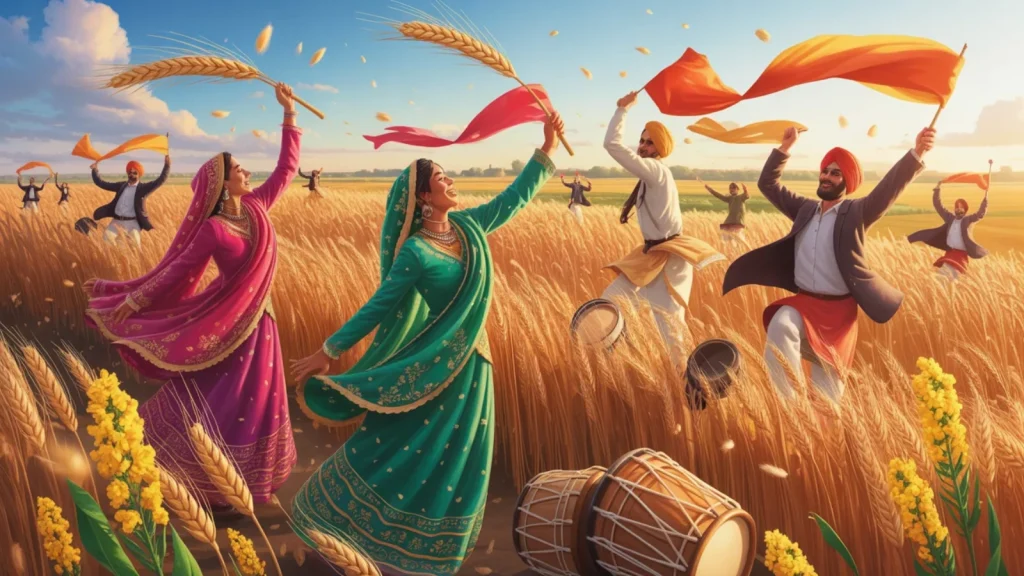
Baisakhi is celebrated for several important reasons related to agriculture, religion, and cultural traditions. The festival holds special meaning for farmers in Punjab as well as for the Sikh community around the world. Over time, Baisakhi has become a celebration that represents harvest, faith, and new beginnings.
Harvest Festival in Punjab
One of the main reasons why Baisakhi is celebrated is to mark the harvesting of the Rabi crops, especially wheat. In Punjab and nearby regions, April is the time when the crops are ready to be harvested. After months of hard work in the fields, farmers celebrate the successful harvest with great happiness.
The festival becomes a way for farmers to thank nature for a good yield and pray for prosperity in the coming year. Villages organize fairs, music performances, and traditional dances such as bhangra and giddha, which reflect the joy of the harvest season.
Creation Of The Khalsa In 1699
Baisakhi is also one of the most important religious days in Sikh history. On this day in 1699, the tenth Sikh Guru, Guru Gobind Singh Ji, established the Khalsa Panth at Anandpur Sahib. During a gathering of thousands of followers, Guru Gobind Singh Ji initiated the Panj Pyare (Five Beloved Ones) and created a new spiritual order dedicated to courage, equality, and devotion.
This historic event gave Sikhs a strong identity and introduced the principles that guide Sikh life. Because of this, Baisakhi is celebrated with special prayers, processions, and ceremonies in gurdwaras across the world.
Cultural And Community Significance
Apart from its religious and agricultural importance, Baisakhi is also a festival that celebrates community and togetherness. People gather with family and friends, wear traditional Punjabi clothes, and participate in cultural activities.
Many gurdwaras organize Nagar Kirtans (religious processions) and Langar, where free meals are served to everyone regardless of religion or background. These traditions highlight the Sikh values of equality, service, and unity, making Baisakhi a festival that brings people closer together.
If you would like to get personalized astrology insights, you can connect with AstroLive and consult experienced astrologers.
Baisakhi History And Origin
The history of Baisakhi goes back several centuries and is closely connected with agriculture, culture, and Sikh religious traditions. Over time, the festival has evolved from a harvest celebration into one of the most significant religious events for the Sikh community.
Agricultural Roots of Baisakhi
Originally, Baisakhi was celebrated as a spring harvest festival in Punjab. Farmers waited for this time of the year when the Rabi crops, especially wheat, were ready to be harvested. The fields turned golden, and the harvest brought prosperity to farming communities.
To celebrate the successful harvest, people organized fairs, music, and traditional dances. These celebrations expressed gratitude to nature for providing a good crop and ensuring the well-being of families and villages. Even today, this agricultural tradition remains an important part of the Baisakhi festival.
Historical Event at Anandpur Sahib
Baisakhi became especially important in Sikh history in 1699, when Guru Gobind Singh Ji, the tenth Sikh Guru, founded the Khalsa Panth at Anandpur Sahib. On the day of Baisakhi, Guru Gobind Singh Ji gathered thousands of followers and called for volunteers who were ready to dedicate their lives to faith and righteousness.
Five men stepped forward and were initiated as the Panj Pyare (Five Beloved Ones). Guru Gobind Singh Ji then introduced the Khalsa, a spiritual community that follows the principles of courage, discipline, equality, and devotion to God. This historic event transformed Baisakhi into a sacred festival for Sikhs around the world.
Historical Events Linked to Baisakhi
Baisakhi is also remembered because of an important event in India’s freedom struggle. On 13 April 1919, thousands of people had gathered in Jallianwala Bagh in Amritsar to celebrate Baisakhi and participate in a peaceful meeting.
During this gathering, British troops opened fire on the crowd in what later became known as the Jallianwala Bagh massacre. The tragic event became a turning point in India’s fight for independence and is remembered every year during Baisakhi as a moment of reflection and remembrance.
Also Read
5 Effects of Rahu in 7th House on Your Life
What Is Sade Sati? Phases, Effects, Worst Phase and How to Check Yours
Baisakhi as a Solar New Year Festival
Baisakhi is not only a harvest festival but also marks the beginning of the solar new year in several parts of India. Unlike many Indian festivals that follow the lunar calendar, Baisakhi is based on the solar calendar, which tracks the movement of the Sun. This is why the festival is celebrated around the same date every year, usually on April 13 or April 14.
What Is a Solar New Year?
A solar new year begins when the Sun moves into a new zodiac cycle according to the solar calendar. In the Indian astronomical system, this transition happens when the Sun enters the zodiac sign Aries, a moment known as Mesha Sankranti.
This transition is considered the start of a new solar cycle, symbolizing fresh beginnings, prosperity, and positive energy. Because Baisakhi coincides with this astronomical event, it is recognized as the start of a new year in many regional calendars.
Why Baisakhi Marks the Solar New Year
The festival marks the beginning of the month of Vaisakh in the traditional solar calendar. As the Sun enters Aries, it signals the arrival of spring and the start of a new agricultural cycle. For farming communities, this time represents both the end of one harvest season and the beginning of another farming year.
Because of this connection with nature and the solar cycle, Baisakhi has long been associated with renewal, growth, and prosperity.
Mesha Sankranti and the Solar Calendar
Mesha Sankranti is the key astronomical event linked to Baisakhi. In Sanskrit, “Mesha” means Aries, and “Sankranti” refers to the movement of the Sun from one zodiac sign to another. This transition marks an important moment in the Hindu solar calendar and is celebrated in different ways across India.
While Punjab celebrates this time as Baisakhi, many other regions observe their own festivals that also mark the Hindu solar new year. Despite different names and traditions, all these celebrations share the common theme of welcoming a new year and celebrating nature’s abundance.
If you are curious to know what the stars say about your life, you can connect with AstroLive.
Hindu Solar New Year Festivals Celebrated Around the Time of Baisakhi
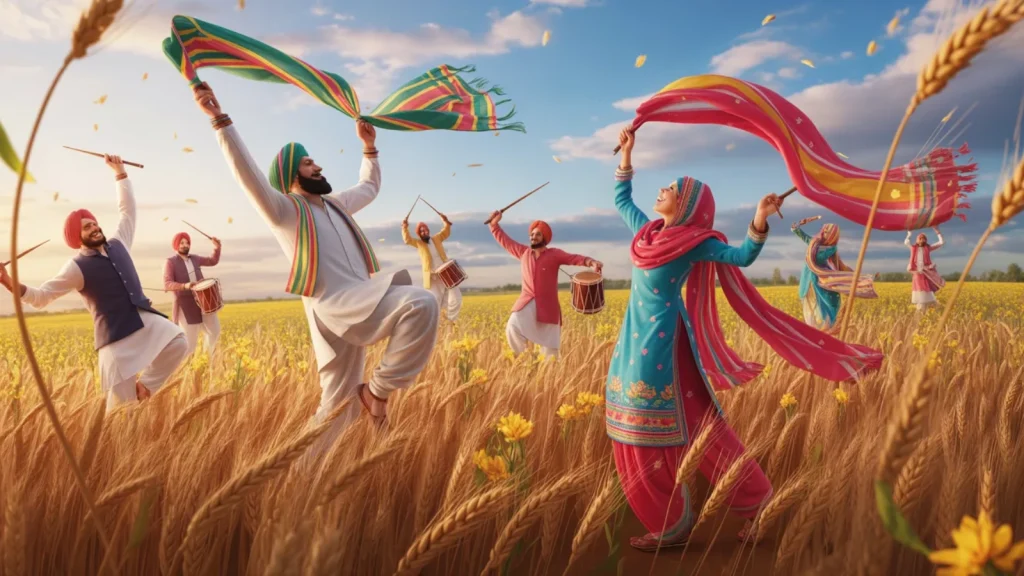
The time around Baisakhi is important across India because it marks the Hindu solar new year in many regional calendars. While Punjab celebrates Baisakhi, several other states observe their own festivals during the same period. These celebrations are connected to Mesha Sankranti, when the Sun enters the zodiac sign Aries and begins a new solar cycle.
Although the names and customs vary from region to region, the core idea remains the same: welcoming a new year, celebrating prosperity, and expressing gratitude for nature’s blessings.
Baisakhi in Punjab
In Punjab, the day is celebrated as Baisakhi or Vaisakhi. It is both a harvest festival and an important religious day for the Sikh community. People visit gurdwaras, participate in Nagar Kirtans, and celebrate with traditional Punjabi dances like bhangra and giddha.
Vishu in Kerala
In Kerala, the same time of the year is celebrated as Vishu, which marks the beginning of the Malayalam solar year. Families prepare a special arrangement called Vishu Kani, consisting of fruits, flowers, rice, and coins. Seeing the Vishu Kani first thing in the morning is believed to bring good luck for the year ahead.
Puthandu in Tamil Nadu
In Tamil Nadu, the Tamil New Year, known as Puthandu, is celebrated during the same period. People clean and decorate their homes, prepare festive meals, and visit temples to seek blessings for the new year.
Pohela Boishakh in West Bengal
In West Bengal and Bangladesh, the festival is celebrated as Pohela Boishakh, the first day of the Bengali calendar. The day is marked by cultural events, traditional music, and festive foods. Many businesses also start new accounting books on this day, symbolizing a fresh beginning.
Bohag Bihu in Assam
In Assam, the festival is known as Bohag Bihu or Rongali Bihu, which marks the Assamese New Year and the arrival of spring. People celebrate with folk dances, songs, and traditional feasts that highlight the rich culture of the region.
Even though these festivals have different names, they all share the same connection with the Hindu solar new year and celebrate the themes of renewal, prosperity, and the changing seasons.
How Baisakhi Is Celebrated in India
Baisakhi is celebrated with great enthusiasm, especially in Punjab and northern India. The festival brings together religious devotion, cultural traditions, and community celebrations. From visiting gurdwaras to enjoying lively folk dances and fairs, the day is filled with joy and togetherness.
Visiting Gurdwaras and Special Prayers
The day usually begins early in the morning with people visiting gurdwaras to offer prayers. Special kirtans (devotional hymns) and readings from the Guru Granth Sahib are organized. Devotees gather to seek blessings and remember the historical importance of the day, especially the formation of the Khalsa Panth.
Many gurdwaras are beautifully decorated, and large numbers of people come together to participate in religious services and community prayers.
Nagar Kirtan Processions
One of the most vibrant parts of Baisakhi celebrations is the Nagar Kirtan, a religious procession organised by Sikh communities. During the procession, the holy scripture Guru Granth Sahib is carried with great respect through the streets.
Devotees sing devotional songs, and groups perform Gatka, a traditional Sikh martial art. These processions create an atmosphere of devotion, pride, and celebration within the community.
Traditional Punjabi Dance – Bhangra and Giddha
Baisakhi is also famous for energetic cultural performances. People celebrate the harvest season with traditional Punjabi dances such as Bhangra and Giddha.
Bhangra is typically performed by men and reflects the happiness of farmers after a successful harvest. Giddha, usually performed by women, includes rhythmic clapping and folk songs that celebrate Punjabi culture.
Baisakhi Fairs (Melas)
In many towns and villages, Baisakhi melas (fairs) are organized. These fairs include music performances, folk dances, local handicrafts, games, and delicious traditional food. Families and friends gather to enjoy the festive atmosphere and participate in cultural activities.
Community Meals (Langar)
Another important tradition during Baisakhi is Langar, the community meal served in gurdwaras. Volunteers prepare and serve food to everyone, regardless of religion, caste, or background.
Langar reflects the Sikh values of equality, service, and sharing. Sitting together and sharing a meal symbolizes unity and community spirit, which are central to the celebration of Baisakhi.
Traditional Foods Prepared During Baisakhi
Food plays an important role in the celebration of Baisakhi. Since the festival marks the harvest season in Punjab, families prepare a variety of traditional Punjabi dishes to celebrate prosperity and abundance. Many of these dishes are made using freshly harvested grains and ingredients that are commonly grown during the Rabi crop season.
During Baisakhi, homes are filled with the aroma of festive meals, and people gather with family and friends to enjoy traditional food together. Community meals served in gurdwaras also include simple and nourishing dishes that everyone can share.
Kadhi Chawal
One of the popular dishes prepared during Baisakhi is Kadhi Chawal, a comforting meal made with a yogurt-based curry and rice. The dish is flavorful and widely enjoyed in Punjabi households, especially during festivals and family gatherings.
Makki Di Roti and Sarson Da Saag
Another well-known Punjabi dish associated with festive occasions is Makki Di Roti, served with Sarson Da Saag. This traditional combination reflects the agricultural roots of Punjab and is often enjoyed during the harvest season.
Lassi
No Punjabi celebration is complete without a glass of lassi, a refreshing yoghurt-based drink. Sweet or salted, lassi is commonly served during Baisakhi to refresh guests and complement the festive meal.
Halwa and Traditional Sweets
Sweet dishes are also an important part of Baisakhi celebrations. Karah Prasad, a sacred sweet prepared in gurdwaras, is distributed among devotees after prayers. Apart from this, families prepare sweets like halwa, laddoos, and jalebi to celebrate the joyful occasion.
These traditional foods not only add flavor to the festival but also represent the spirit of sharing, gratitude, and celebration that defines Baisakhi.
Baisakhi 2026 Wishes and Greetings
Here are some Baisakhi 2026 wishes and greetings you can share:
1. Wishing you and your family a joyful and prosperous Baisakhi. May this festival bring happiness, success, and new beginnings into your life.
2. Happy Baisakhi! May the harvest season fill your life with peace, prosperity, and good health.
3. May this beautiful festival of Baisakhi bring new opportunities, happiness, and success to you and your loved ones. Happy Baisakhi 2026!
4. On this auspicious day of Baisakhi, may your home be filled with joy, your heart with gratitude, and your life with prosperity.
5. Wishing you a wonderful Baisakhi filled with happiness, delicious food, and memorable celebrations with family and friends.
6. May the spirit of Baisakhi bring peace, prosperity, and positivity into your life. Happy Baisakhi!
These wishes reflect the spirit of the festival and help people share the joy of Baisakhi celebrations with others, whether in person or through messages and social media.
If you would like to know more about your horoscope or astrology insights, you can connect with AstroLive for guidance.

Conclusion
Baisakhi is a festival that beautifully combines agriculture, culture, and spirituality. It celebrates the harvest season, marks the beginning of the solar new year, and remembers an essential moment in Sikh history with the creation of the Khalsa Panth.
From colorful fairs and traditional dances to prayers in gurdwaras and community meals, the festival reflects the spirit of gratitude, unity, and joy. As people come together with family and friends to celebrate, Baisakhi continues to spread happiness and remind everyone of the importance of faith, hard work, and new beginnings.
Wishing everyone a joyful and prosperous Baisakhi 2026! 🌾
Additional FAQs About Baisakhi
What is the difference between Baisakhi and Vaisakhi?
“Baisakhi” and “Vaisakhi” refer to the same festival. The difference is mainly in spelling and pronunciation. “Vaisakhi” comes from the Sanskrit word “Vaisakh,” which is the name of the month in the traditional calendar, while “Baisakhi” is the commonly used Punjabi pronunciation.
Is Baisakhi a public holiday in India?
Yes, Baisakhi is a public holiday in some Indian states, particularly Punjab and Haryana. Government offices, schools, and many businesses remain closed so people can participate in the festival celebrations.
What should people wear on Baisakhi?
People usually wear traditional Punjabi clothing during Baisakhi celebrations. Men often wear kurta-pajamas with colorful turbans, while women wear salwar kameez or traditional Punjabi suits with bright dupattas. The colorful attire reflects the festive spirit of the occasion.
What is the significance of wheat during Baisakhi?
Wheat plays an important role during Baisakhi because the festival coincides with the harvesting of wheat crops in Punjab. The golden wheat fields symbolize prosperity, abundance, and the success of the farming season, which is why farmers celebrate the festival with great joy.
Do non-Sikhs celebrate Baisakhi?
Yes, Baisakhi is celebrated not only by Sikhs but also by many people in Punjab and other parts of India, regardless of religion. While the festival has deep religious significance in Sikhism, it is also widely recognized as a harvest and cultural festival.