



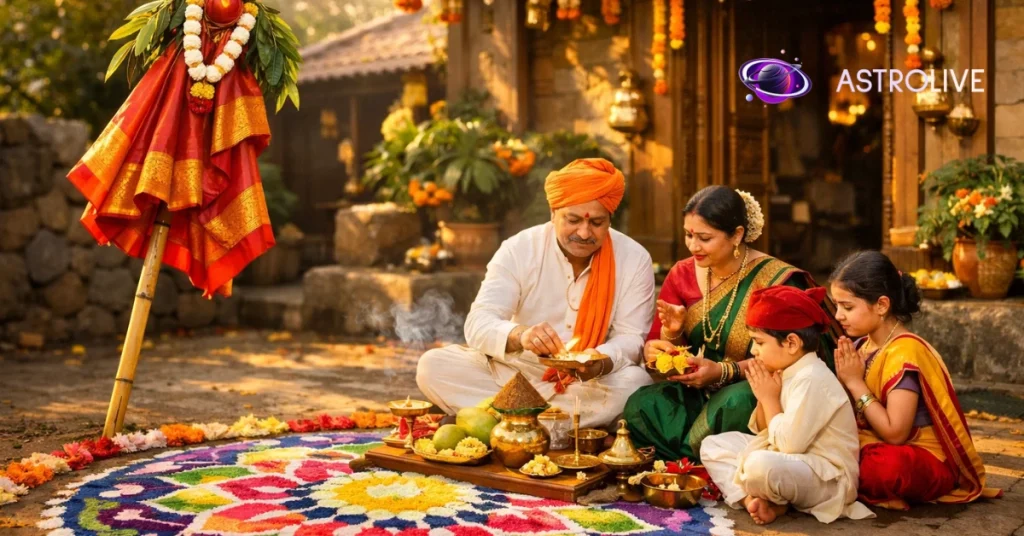
Gudi Padwa is one of the most important festivals celebrated in Maharashtra and by Marathi communities across India. It marks the beginning of the Hindu New Year and the first day of the Chaitra month as per the Hindu lunisolar calendar, usually in March or April. The festival is known for symbolising new beginnings, prosperity, and the victory of good over evil.
On this day, people clean and decorate their homes, prepare festive foods, and most importantly, raise the traditional Gudi outside their houses. The Gudi, which looks like a decorated flag, is believed to invite good luck and success for the year ahead. Families come together to perform puja, wear traditional clothes, and celebrate with great enthusiasm.
In this blog, we will understand what is Gudi Padwa, its meaning, history, rituals, and the deeper significance of Gudi Padwa in Indian culture and tradition.
Festival Overview
Gudi Padwa is a traditional Hindu festival that celebrates the beginning of the New Year, especially for people in Maharashtra, Goa, and the Konkan regions. It is considered one of the most auspicious days in the Hindu calendar and marks a fresh start filled with positivity, prosperity, and new opportunities.
The festival falls on the first day of Chaitra month, known as Chaitra Shukla Pratipada. According to the Hindu lunisolar calendar, this day marks the beginning of a new year and the arrival of the spring season. Nature also reflects this change, with blooming flowers, fresh crops, and a vibrant atmosphere, making it the perfect time for celebration.
Gudi Padwa is a New Year festival, but also a cultural and spiritual occasion. People believe that starting anything new on this day brings success and good fortune. Many families begin new business ventures, make investments, or plan important life events during this time.
The festival is mainly celebrated in Maharashtra with great enthusiasm, but its spirit is shared across India under different names. For example, it is celebrated as Ugadi in Karnataka and Andhra Pradesh, and as Cheti Chand by the Sindhi community.
Overall, if someone asks what is Gudi Padwa, the simplest answer is: it is a festival of new beginnings, cultural pride, and spiritual renewal that marks the Hindu New Year for millions of people.

Meaning Of Gudi Padwa
To truly understand the festival, it is important to know the meaning behind the name Gudi Padwa. The word itself carries deep cultural and spiritual significance.
The term “Gudi” refers to a decorated flag or sacred emblem that is raised outside homes on this day. It is usually made using a bamboo stick, bright silk cloth, neem leaves, mango leaves, a garland of sugar crystals, and an inverted copper or silver pot placed on the top. This Gudi is considered a symbol of victory, prosperity, and divine blessings.
The word “Padwa” comes from Pratipada, which means the first day of the lunar fortnight. In the Hindu calendar, this day marks the beginning of a new month and, in this case, the start of the New Year. Because of this, Padwa represents fresh beginnings and the start of a new time cycle.
When combined, Gudi Padwa literally means “the day of raising the victory flag.” It signifies success, happiness, and hope for the coming year.
There is also a spiritual belief connected to the Gudi. Many people consider it a symbol of Lord Brahma’s creation of the universe, while others see it as a victory flag celebrating Lord Rama’s return to Ayodhya after defeating Ravana. Due to these beliefs, raising the Gudi is seen as inviting positivity, wealth, and protection from negative energies.
In simple words, the meaning of Gudi Padwa is about celebrating victory, welcoming the New Year, and starting life’s journey again with faith and optimism.
Also Read!
3636 Angel Number: The Divine Message You Need to Hear Right Now
What Seeing 4444 Reveals About Your Path?
History Of The Gudi Padwa Festival
The history of Gudi Padwa is deeply rooted in Hindu mythology, ancient traditions, and regional culture. Over time, beliefs and historical events have become associated with this festival, which adds to its importance and meaning.
One of the most popular mythological stories linked to Gudi Padwa is the victory of Lord Rama over Ravana. It is believed that when Lord Rama returned to Ayodhya after 14 years of exile and after defeating Ravana, people celebrated his homecoming by hoisting victory flags. The Gudi is said to represent that same victory of good over evil, which is why it is raised outside homes.
Another belief connects Gudi Padwa to the creation of the universe. According to Hindu scriptures, Lord Brahma created the world on this day. Because of this, the festival is considered the first day of the cosmic calendar and the beginning of time itself. This belief makes the day highly sacred and spiritually powerful.
Gudi Padwa also has historical significance in Maharashtra. It is often linked with the Maratha Empire and the victories of Chhatrapati Shivaji Maharaj. After winning battles, Maratha soldiers would raise Gudis as symbols of pride and success. Over time, this practice became a household tradition and a cultural identity of the Maharashtrian people.
These mythological and historical connections together explain the deeper significance of Gudi Padwa. The festival is not only about celebrating the New Year but also about remembering victories, honouring heritage, and welcoming a prosperous future.
Rituals And Traditions
The celebration of Gudi Padwa is filled with colour, devotion, and cultural traditions. People celebrate this festival with great enthusiasm, especially in Maharashtra and Goa. Each ritual performed on this day has a symbolic meaning connected to prosperity, happiness, and new beginnings.
Home Cleaning and Decorations
Preparations for Gudi Padwa begin a day or two in advance. Families clean their homes thoroughly, as it is believed that a clean house invites positive energy and good fortune in the New Year.
Entrances with rangoli designs made using colourful powders and flowers. Mango leaves and marigold garlands are also hung on doors, which are considered sacred and auspicious.
Raising the Gudi Flag
The most important ritual of the Gudi Padwa celebration is raising the Gudi outside the house, usually on the right side of the entrance or from a window or terrace.
A traditional Gudi is prepared using:
- A long bamboo stick
- Bright silk or brocade cloth
- Neem and mango leaves
- Garland made of sugar crystals (gaathi)
- An inverted copper or silver kalash on top
The Gudi is then worshipped with haldi, kumkum, flowers, and incense sticks. It is believed to bring victory, prosperity, and protection from evil forces.

Gudi Padwa Puja Vidhi
Families perform a special puja in the morning after raising the Gudi. Prayers are offered to Lord Brahma, Lord Vishnu, and other deities for health, wealth, and success in the coming year. Many people also listen to or read the Panchang (Hindu almanac) to understand the year’s predictions.
Traditional Clothing and Festive Spirit
People wear new and traditional clothes to mark the New Year. Women often wear Nauvari sarees with traditional jewellery, while men wear a kurta, dhoti, and pheta (turban). In many cities, cultural processions, folk dances, and bike rallies are organised, creating a grand festive atmosphere.
The Gudi Padwa celebration is a beautiful blend of devotion, culture, and community bonding, symbolising a joyful start to the year ahead.
Foods Prepared During Gudi Padwa
Food plays a very special role in the celebration of Gudi Padwa. Like every Indian festival, this occasion is also marked by preparing traditional dishes that reflect culture, season, and symbolism. Families cook festive meals at home and offer prasad to God before sharing it with everyone.
One of the most important food traditions of this day is eating the neem and jaggery mixture. Though the taste may feel unusual, it has a deep meaning.
Neem and Jaggery Prasad Significance
This mixture is made using:
- Neem leaves
- Jaggery
- Tamarind
- Raw mango
- Pepper or chilli (in some regions)
The combination represents different flavours of life:
- Bitter (Neem) → Challenges and difficulties
- Sweet (Jaggery) → Happiness and success
Eating this prasad reminds people to accept life in all its forms, whether good or bad, with balance and positivity.
Popular Gudi Padwa Dishes
Many delicious Maharashtrian dishes are prepared on this day. Some of the most popular ones include:
- Puran Poli – Sweet flatbread stuffed with jaggery and lentils
- Shrikhand – Sweet flavoured yoghurt dessert
- Puri & Batata Bhaji – Classic festive combo
- Kothimbir Vadi – Coriander-based savoury snack
- Sweet rice and kesari dishes
These foods are prepared fresh at home and served as part of a festive meal.
Maharashtrian Festive Thali
A traditional Gudi Padwa thali usually includes both sweet and savoury items, symbolising abundance and gratitude. Meals are often enjoyed together with family, which strengthens bonding and festive joy.
Overall, festive food during Gudi Padwa is not just about taste but also about tradition, symbolism, and celebrating the New Year with warmth and togetherness.
Astrological Significance Of Gudi Padwa
From an astrological point of view, Gudi Padwa is considered one of the most auspicious days in the Hindu calendar. It marks the beginning of the New Year according to the lunisolar system, and many planetary positions on this day are believed to create positive cosmic energy.
According to Hindu astrology, the Chaitra month begins when the Sun enters a new cycle, and the Moon aligns in a way that signifies renewal and growth. Because of this celestial transition, Gudi Padwa is seen as a powerful time to reset goals, invite prosperity, and begin important life decisions.
Why Gudi Padwa Is Considered Auspicious
Astrologers believe that any शुभ कार्य (auspicious activity) started on this day brings long-term success. The energy of the day supports:
- New business launches
- Investments and financial planning
- Property purchases
- Gold buying
- Marriage discussions
- Housewarming ceremonies
Many people also check their yearly horoscopes or Panchang predictions on this day to understand what the coming year may bring for them in terms of career, health, finance, and relationships.
Best Things To Do on Gudi Padwa (Astrologically)
Some commonly recommended practices include:
- Performing morning puja
- Raising the Gudi in the right direction
- Consuming neem-jaggery prasad
- Donating food or clothes
- Planning new beginnings
These rituals are believed to align a person with positive planetary influences for the year ahead.
Get Expert Astrological Guidance
While general rituals are followed by everyone, many people prefer personalised guidance based on their kundli (birth chart). This helps them choose the right muhurat, make better decisions, and understand their yearly predictions more clearly.
If you want expert advice, you can connect with professional astrologers through AstroLive, where experienced astrologers guide you on:
- New Year predictions
- Career and finance outlook
- Marriage and relationship timing
- Business muhurat
- Personalised remedies
Taking expert consultation can help you start the new year with more clarity, confidence, and spiritual alignment.
Why Is Gudi Placed Outside the House?
One of the most unique and eye-catching traditions of the festival is the placement of the Gudi outside the home. If you notice during Gudi Padwa, almost every Maharashtrian household raises this decorated flag at their entrance, window, or terrace. This practice is not just decorative but deeply symbolic.
Spiritual Belief Behind Placing the Gudi
According to tradition, the Gudi is considered a symbol of victory and divine protection. It represents the triumph of good over evil and is believed to invite positive energies into the home.
Many people also associate the Gudi with:
- Lord Brahma’s creation flag
- Lord Rama’s victorious return
- A sign of prosperity and success
Raising the Gudi is believed to ward off negative energies and bring peace, happiness, and growth for the family throughout the year.
Direction and Placement Importance
The placement of the Gudi also holds importance.
- It is usually placed on the right side of the main entrance.
- Some families raise it from a window, balcony, or terrace where it is clearly visible.
- The Gudi is positioned upright to symbolise rising success and progress.
The belief is that the higher and more visible the Gudi, the stronger the flow of positivity and blessings entering the home.
Symbolism of the Gudi Elements
Each part of the Gudi has meaning:
- Silk cloth → Victory and celebration
- Neem leaves → Health and protection
- Sugar garland → Sweetness and happiness
- Kalash on top → Divine blessings and abundance
Together, the Gudi stands as a powerful symbol of hope, prosperity, and a victorious start to the New Year.
Conclusion
Gudi Padwa is much more than just a festival. It marks the beginning of a new year, new hopes, and new opportunities in life.
From raising the sacred Gudi to performing puja, preparing festive foods, and spending time with family, every tradition carries a deeper meaning connected to prosperity, positivity, and spiritual growth.
The festival beautifully reflects the victory of good over evil, the importance of cultural heritage, and the power of fresh beginnings. Whether it is linked to Lord Rama’s return, Lord Brahma’s creation, or the pride of Maratha history, each belief adds to the rich significance of Gudi Padwa.
Spiritually and astrologically, the day is considered highly auspicious for starting new ventures, making important decisions, and setting intentions for the year ahead. Many people also seek expert guidance to plan their year better and align themselves with positive energies.
Gudi Padwa reminds us to pause, express gratitude, reconnect with traditions, and welcome life with renewed faith and optimism.
In simple words, Gudi Padwa is a celebration of victory, renewal, prosperity, and cultural pride, a perfect way to begin the New Year on a positive and meaningful note.
FAQs
When is Gudi Padwa celebrated in 2026?
Gudi Padwa in 2026 will be celebrated on March 19, 2026. The date changes every year because it is based on the Hindu lunisolar calendar and falls on Chaitra Shukla Pratipada.
Is Gudi Padwa a public holiday in India?
Yes, Gudi Padwa is a public holiday in the state of Maharashtra. Government offices, banks, and many businesses remain closed, while cultural events and community celebrations take place across the state.
What colours are considered lucky on Gudi Padwa?
Bright and festive colours like yellow, green, saffron, and red are considered auspicious on Gudi Padwa. People often wear these colours as they symbolise prosperity, positivity, and new beginnings.
Can we buy gold on Gudi Padwa?
Yes, buying gold on Gudi Padwa is considered very शुभ (auspicious). Many families purchase gold, silver, or new valuables on this day as it is believed to bring wealth and financial growth throughout the year.