



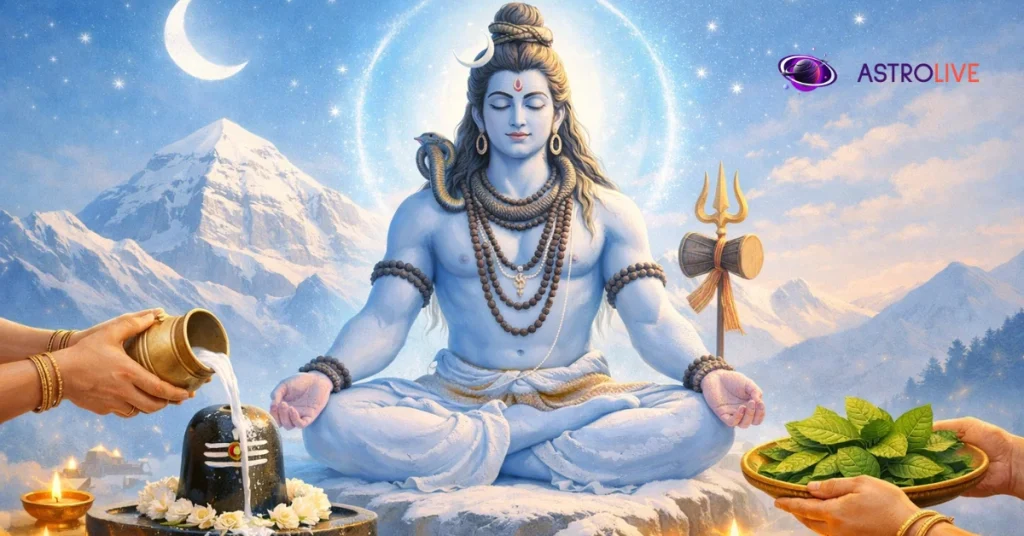
Maha Shivratri is one of the most religious festivals in honour of Lord Shiva, and is celebrated with great devotion all over India by observing, performing special puja and prayer, and remaining awake throughout the night, for meditation and prayer. It is believed that this sacred night can remove any negativity and allow devotees to progress on their spiritual journey.
Maha Shivaratri 2026 will be dedicated to the worship of Lord Shiva on the auspicious Phalguna Krishna Paksha Chaturdashi; on this day, devotees of Lord Shiva will perform puja rituals (offer milk, water, and leaves of the bilva tree to the Shiva Ling) and repeat the mantra “Om Namah Shivaya” as part of their traditional fasting. at temples or in homes during Nishita Kaal (midnight); these rituals will include special offerings to the Shiva Ling and other deities.
This blog aims to describe the significance, date, and rituals of Maha Shivaratri 2026 in a way that is understandable to everyone, to enable correct practice and enjoyment of this most sacred festival.
Maha Shivaratri 2026 Date, Tithi & Nishita Kaal
Maha Shivaratri will take place on Sunday, February 15th, 2026. The majority of worship happens on February 15th after sunset until the early morning hours (16th), making it the most significant day of the festival.
Maha Shivaratri falls on Phalguna Krishna Paksha Chaturdashi, the 14th day of the waning phase of the lunar cycle, according to the Hindu lunisolar calendar. The tithi from Chaturdashi begins on February 15th during the evening and ends at midnight, which is why there is a high emphasis on worship during these hours.
The best time to perform puja for Lord Shiva is during Nishita Kaal. Nishita Kaal falls approximately at midnight, and devotees believe that during this auspicious hour, any prayers or abhishekam performed will generate maximum spiritual benefit; at this pre-determined time, many temples will hold special rituals for devotees who either attend temple services or conduct puja at home.
One should be aware that while Chaturdashi and Nishita Kaal may be set for February 15th, 2026, the beginning/ending times for each may vary slightly depending upon the current local sunrise schedule for each location.
Therefore, you can directly connect with an expert astrologer on AstroLive.
Significance of Maha Shivaratri
The spiritual significance of Maha Shivaratri focuses on self-discipline and devotion to Lord Shiva through spiritual growth. The night of Maha Shivaratri is also a time when devotees will be aided in letting go of thoughtlessness, negative thoughts, and past karmas.
Maha Shivaratri is different from other Hindu festivals since it lasts overnight.
The overnight worship of Lord Shiva signifies mastery over the desires of the material world as well as an awakening of new, higher consciousness. As well, staying awake on the night of Maha Shivaratri and reciting Shiva mantras to align the body and mind with positive energy.
On a spiritual level, Maha Shivaratri is connected to both meditation and transformation. Many yogic traditions believe that the universe reaches its peak on this night, making it the perfect time for people to meditate and perform spiritual practices. This is why saints and spiritual seekers place such great importance on Mahashivratri.
Many householders also use this holy day of Maha Shivaratri to gain blessings for family harmony, good health, and prosperity. According to believers, Lord Shiva, who is known for his kindness and simplicity, will readily answer any Sincere prayers submitted to Him during Maha Shivaratri.
Maha Shivaratri Story & Mythological Background
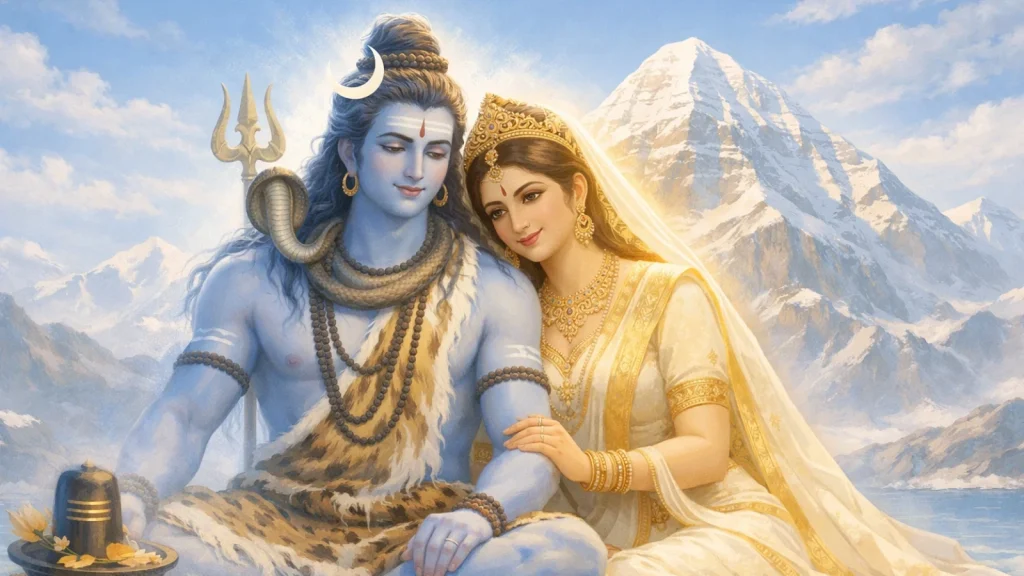
According to various Hindu scriptures, multiple Maha Shivaratri stories explain why this night is considered so holy. One of these beliefs suggests that Maha Shivaratri represents the union of Lord Shiva and Goddess Parvati, which is known as their divine marriage. This union represents the merging of consciousness (represented by Shiva) with energy (represented by Shakti), creating balance throughout the universe.
Another tale concerns the Samudra Manthan (churning of the ocean), where a deadly poison emerged, which would destroy all creation. To save creation, Lord Shiva consumed the poison and held it in his throat; this resulted in him getting a blue throat due to the effects of the poison. Because of this great sacrifice, he is worshipped in the form of Neelkanth (one with a blue throat), and Maha Shivaratri is celebrated as an act of selflessness by Him.
Other traditions believe that on this night, Lord Shiva revealed himself through the Shiva Lingam. This is a representation of his infinite and formless forms. The Lingam represents creation, preservation, and destruction and serves as a reminder to devotees of the eternal cycle of life.
These stories may vary somewhat from one region to another; however, they all exemplify Lord Shiva’s qualities, such as compassion, strength, and detachment. Reflecting on these stories during the Maha Shivaratri celebration can motivate devotees to pursue truth, discipline, and devotion to worship Lord Shiva.
Need guidance? Connect directly with an expert astrologer on AstroLive.
Read More
महाशिवरात्रि कैसे मनाएं सही विधि और नियम?
Maha Shivaratri Puja Vidhi
The Maha Shivaratri puja vidhi is performed to seek the blessings of Lord Shiva with purity and devotion. The puja can be done at home or in a temple, and it does not require complicated arrangements.
Preparation for Puja: Devotees usually wake up early, take a bath, and wear clean clothes. The place of worship is cleaned, and a Shiva Lingam or Lord Shiva’s image is placed on a clean platform. A lamp (diya) and incense are lit to begin the puja.
Abhishekam of Shiva Lingam: Abhishekam is the most important part of Maha Shivaratri worship. The Shiva Lingam is bathed with water, milk, curd, honey, ghee, or panchamrit. Each offering is made slowly while chanting “Om Namah Shivaya.” This ritual represents purification of the mind and soul.
Offering of Bilva Leaves and Flowers: After abhishekam, bilva leaves, flowers, sandalwood paste, fruits, and incense are offered to Lord Shiva. Bilva leaves are considered very dear to Lord Shiva and are offered with devotion.
Four Prahar Puja: Many devotees perform puja during all four prahars of the night. Each prahar has its own significance, and special prayers or abhishekam can be done at each time. If all four prahars are not possible, performing puja during Nishita Kaal (midnight) is considered most auspicious.
Mantra Chanting and Aarti: Devotees chant Shiva mantras, especially “Om Namah Shivaya,” or recite Shiva stotras. The puja ends with aarti and offering of prasad.
The puja is completed the next morning, after which devotees prepare to break the fast at the prescribed time.
Check Auspicious Timings With Today’s Panchang
Maha Shivaratri Fasting Rules & Vrat Vidhi
Fasting on Maha Shivaratri is considered a way to show devotion, self-control, and purity of mind. Many devotees observe a fast throughout the day and night and break it the next morning after completing the puja.
Fasts Observed on Maha Shivaratri
Different devotees follow different types of fasts based on their health and faith:
- Nirjala fast: No food or water is consumed for the entire day and night. This is the strictest form of fasting.
- Phalahar fast: Devotees eat fruits, dry fruits, and drink milk or fruit juices.
- Milk and water fast: Only milk and water are consumed during the day.
- Simple vrat: Some devotees eat light sattvic food once, usually without grains, onion, or garlic.
Foods Allowed During the Fast
Commonly allowed items include fruits, milk, curd, nuts, coconut water, sabudana, and vrat-friendly flours. Drinking enough water is encouraged, especially for those doing a partial fast.
Foods to Avoid
Devotees usually avoid grains, rice, wheat, pulses, onion, garlic, alcohol, and non-vegetarian food. The focus is on purity and simplicity.
Parana (Breaking the Fast)
The fast is broken the next day after morning puja and abhishekam, during the time advised by the local panchang. Devotees should not break the fast immediately after midnight unless advised by tradition or health needs.
Who Can Avoid Fasting
Children, elderly people, pregnant women, and those with medical conditions are not required to fast. In such cases, devotion through prayer and mantra chanting is considered equally meaningful.
Best Prasad & Offerings for Maha Shivaratri
Offering prasad to Lord Shiva on Maha Shivaratri is an important part of the worship. These offerings symbolise purity, gratitude, and devotion. Simple and sattvic items are considered most suitable on this holy day.
Most Auspicious Offerings to Lord Shiva
- Bilva (Bael) leaves: These are considered the most sacred offering for Lord Shiva. Each leaf should be clean and unbroken and offered with devotion.
- Water and milk: Abhishekam with clean water, milk, or Ganga jal is believed to purify the mind and soul.
- Panchamrit: A mixture of milk, curd, honey, ghee, and sugar is commonly used during special abhishekam.
- Fruits and sweets: Seasonal fruits and simple sweets made without grains are offered as naivedya.
Maha Shivaratri Prasad
After the puja, prasad is distributed among devotees. Fruits, dry fruits, kheer made with milk, or vrat-friendly sweets are commonly given. Many temples also offer milk-based prasad after morning puja.
Offerings to Avoid
Devotees usually avoid offering tulsi leaves, cooked rice, or tamasic food items to Lord Shiva. Cleanliness and simplicity are given more importance than variety.
Offering prasad with a pure heart and faith is considered more important than the quantity or richness of the items.

Conclusion
Maha Shivaratri is a great occasion for all people to take time and think about themselves in relation to Lord Shiva. Fasting, worship all night, chanting of mantras, and showing devotion to Lord Shiva will help us purify our inner self, grow spiritually, and receive blessings of health, peace, and prosperity.
It is not necessary to observe the vrat with strictness, but anyone who has a pure heart will receive the blessings bestowed by Lord Shiva on Mahashivaratri. It is through faith, discipline, and self-awareness that one will be able to experience the true essence of Maha Shivaratri.
To assist devotees in correctly celebrating Maha Shivratri and receiving the greatest benefit from the event, they should learn the date of Maha Shivratri, the meaning of the holiday, how to perform puja (worship), fasting rules, and important stories related to Maha Shivratri.
May Lord Shiva remove the negativity from your life and help direct you down a path of wisdom, balance, and transformation.
If you would like more personalized guidance with regard to your rituals, vrat, and spiritual remedies for Maha Shivaratri, please contact an expert on AstroLive for help creating a more meaningful experience this year.
Har Har Mahadev. 🙏🕉️
Frequently Asked Questions – Maha Shivaratri 2026
1. Why is Maha Shivaratri considered more powerful than other Shivratris?
Maha Shivaratri is believed to occur when cosmic energies are naturally elevated, making spiritual practices more effective. Unlike monthly Shivratris, this night is said to support deeper meditation, mental clarity, and inner transformation.
2. Can Maha Shivaratri puja be performed without a Shiva Lingam?
Yes. If a Shiva Lingam is not available, devotees can worship Lord Shiva using a picture, idol, or even by mentally visualizing Him while chanting mantras with devotion.
3. Is it necessary to stay awake the entire night on Maha Shivaratri?
Staying awake is recommended but not compulsory. Devotees who are unable to stay awake all night can focus on sincere prayer, meditation, or mantra chanting during the most peaceful hours of the night.
4. Can women observe Maha Shivaratri vrat?
Yes. Women of all ages observe Maha Shivaratri vrat to seek blessings for well-being, harmony in relationships, and spiritual growth. There is no restriction on women observing this fast.