



Mesh Sankranti is not just another date on the Hindu calendar. It marks a powerful shift that influences rituals, fresh beginnings, and even important life decisions.
Most people know it as the day when the Sun enters Aries. This shift is also seen as a powerful planetary alignment, where the Sun’s position supports clarity, action, and spiritual focus.
If you’ve ever searched for the right rituals, exact timing, or the real reason behind their importance, you’re not alone. This guide explains everything clearly, from meaning and spiritual significance to step-by-step rituals you can follow, even at home.
What Is Mesh Sankranti?

The word “Sankranti” means transition, the movement of the Sun from one zodiac sign to another.
In astrology, this movement is known as an astrological transit, where a planet shifts from one zodiac sign to another, influencing energy patterns, decisions, and timing in everyday life.
Mesh Sankranti happens when the Sun enters Mesha (Aries), usually around April 13 or 14 each year.
What makes this particular Sankranti stand out is its role in the solar cycle. It marks the beginning of the Hindu Solar New Year in several regions like Bengal, Kerala, and Odisha.
There’s also a practical aspect that many people overlook. Mesh Sankranti marks the end of Kharmas, a period when major events such as weddings, housewarmings, and business launches are avoided. Once this day arrives, that pause ends, and important decisions resume.
Why Mesh Sankranti Matters
You can think of this day as a reset point.
The Sun entering Aries represents new energy, clarity, and alignment with purpose. It also marks the beginning of the month of Vaishakh, which is considered spiritually pure.
For families, this day opens the door again for weddings, engagements, house-warming ceremonies, business ventures, and traditional rituals that were paused during Kharmas.
For individuals, it’s a powerful opportunity to focus on prayer, charity, and inner balance. Actions performed on this day are believed to carry greater spiritual value.
When is Mesh Sankranti 2026: Date & Timing
Mesh Sankranti in 2026 falls on Tuesday, April 14. This is the day the Sun enters Aries, and that transition is what gives the entire day its spiritual importance.
In 2026, the Sun enters Mesha Rashi at 2:58 PM. This marks the exact Sankranti moment, and all ritual timings are based on it.
Punya Kaal, the auspicious period for performing rituals, begins at 2:58 PM and continues until sunset. Any holy bath, Arghya, prayer, or charitable act performed during this time is believed to carry greater spiritual value compared to the rest of the day.
Within this window lies an even more important period known as Maha Punya Kaal, which lasts from 2:58 PM to around 4:45 PM. This is considered the most powerful time of the day. If you are unable to observe all rituals, focusing on this time is seen as especially meaningful.
This also changes how the day is observed. Unlike many Sankrantis that emphasize morning rituals, Mesh Sankranti in 2026 is centered around the afternoon. Planning your bath, Arghya, puja, and donations after 2:58 PM will align your observance with the most relevant time window. Completing the key rituals before 4:45 PM is considered ideal.
These timings can vary slightly depending on your location. For precise, city-specific details, it is best to verify through a reliable Panchang source before the day.
Spiritual Meaning Behind the Day
In Vedic understanding, the Sun is not just a celestial body; it represents Surya Dev, the source of life, energy, and consciousness.
When the Sun enters Aries, its energy is considered at its peak. This makes the day especially suitable for spiritual practices, charity, and letting go of attachments.
Charity on this day is not viewed as a simple act of giving. It is seen as a meaningful exchange where you offer something of value, and in return, you receive blessings, clarity, and balance.
Key Rituals to Follow on Mesh Sankranti
The rituals are simple in structure, but each carries meaning when done with attention. Here are the rituals that you must follow.
Holy Bath (Snan)
The day traditionally begins with a sacred bath before sunrise, ideally in a holy river like the Ganga, Yamuna, or Godavari. This act is believed to cleanse accumulated negativity and prepare the body and mind for prayer.
If visiting a river isn’t possible, you can add a few drops of Ganga jal to your regular bath water. This is a widely accepted practice, especially for those living in cities.
Offering Arghya to the Sun
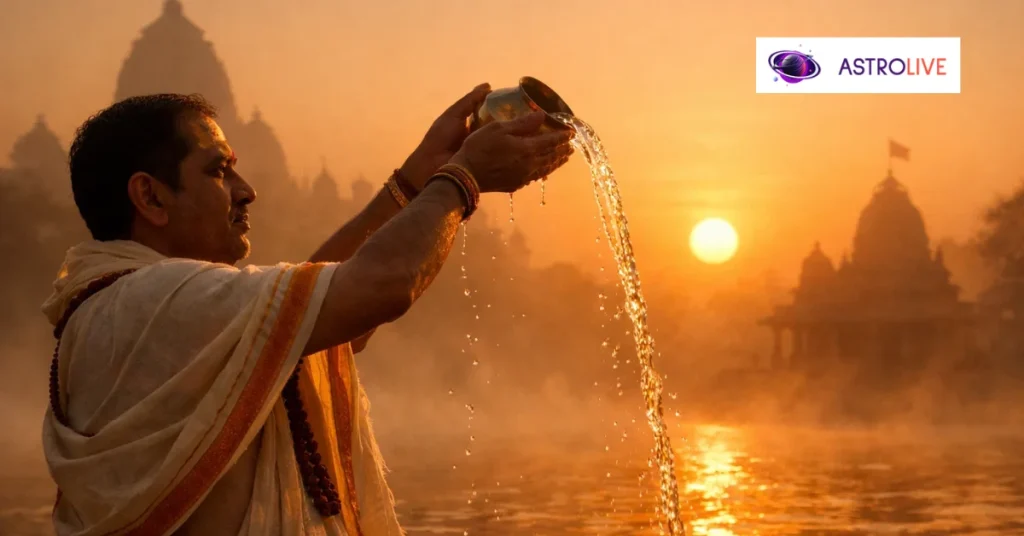
Offering Arghya is one of the most important rituals of the day. It involves pouring water toward the rising Sun using a copper vessel, preferably with red flowers or kumkum added to it.
You should stand facing east, raise the vessel to eye level, and slowly pour the water in a thin stream while focusing on the Sun and offering your prayers. This is usually repeated seven times.
Each detail has meaning—copper is associated with solar energy, the east direction represents new beginnings, and the number seven connects to Surya’s symbolism in Vedic tradition.
Charity (Dan-Punya)
Charity holds special importance on Mesh Sankranti. Donations made on this day are believed to bring multiplied spiritual merit.
People commonly donate food grains like rice and wheat, clothing to those in need, jaggery and sesame seeds, or money to temples and charitable causes.
The underlying idea is simple give something that has real value and use, not just something extra.
Satvik Food and Fasting
Many devotees either observe a fast or follow a satvik diet, which means eating light, pure vegetarian food without onion, garlic, or heavy spices.
Foods like khichdi, fruits, milk-based dishes, sesame, and jaggery are commonly consumed. These foods are traditionally associated with balance and warmth.
On the other hand, tamasic foods such as meat, alcohol, and processed items are avoided, as they are considered to negatively affect the body and mind on a spiritually significant day.
Temple Visit or Home Puja
If possible, visiting a temple, especially one dedicated to Surya Dev, is considered highly beneficial.
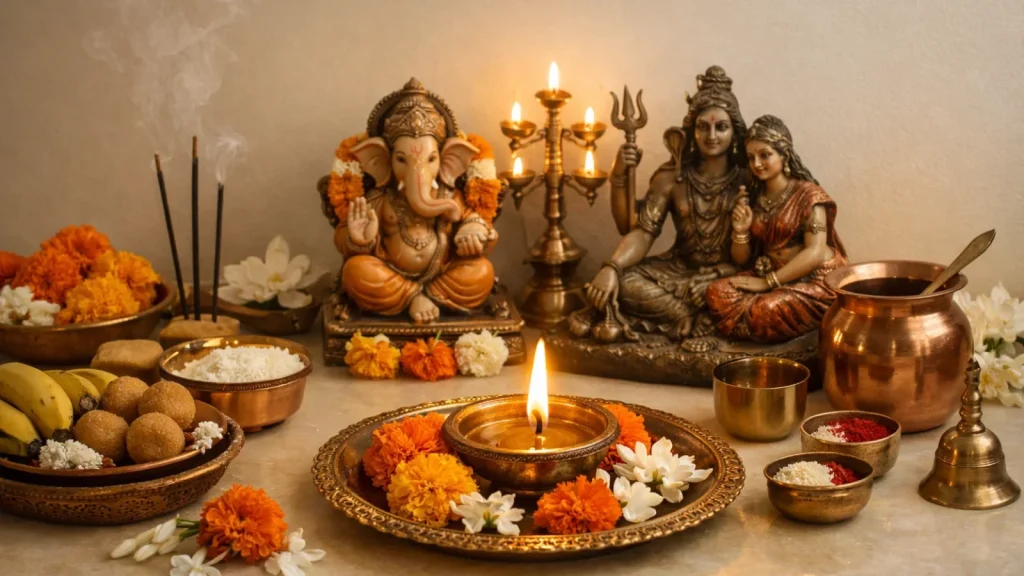
However, performing puja at home is equally meaningful when done with sincerity. Lighting a diya is the first step, as it symbolizes the presence of divine light and helps create a calm, focused environment for worship. Offering fresh flowers to the deity or toward the Sun adds a sense of devotion and respect, while also enhancing the purity of the ritual space.
Saying a prayer, whether it is a known mantra like the Surya Chalisa or simply a few words spoken with genuine intention, completes the process. Even a short moment of focused gratitude while facing the rising Sun carries significance. The structure of the ritual can vary, but the sincerity behind it is what truly matters.
Step-by-Step Morning Routine
Start your day early, ideally during Brahma Muhurat, which falls before sunrise. This time is considered highly peaceful and spiritually receptive.
Begin with a bath, adding Ganga jal if available, and wear clean, simple clothing in light colors such as white, yellow, or orange.
After that, perform Arghya facing the rising Sun. Once this is done, you can either visit a temple or perform a short puja at home. Make a charitable donation before midday, and later, eat satvik food.
Even if you cannot follow every step perfectly, maintaining awareness and intention is more important than strict perfection.
Mesh Sankranti Across India
This day is celebrated in different ways across India, though the underlying meaning remains the same.
In Kerala, it is celebrated as Vishu, where people begin the day by seeing an auspicious arrangement called Vishukkani. Tamil Nadu observes it as Puthandu, marking the Tamil New Year. In Punjab, it coincides with Baisakhi, a harvest festival. Odisha celebrates Pana Sankranti with a traditional drink, while Bengal marks Pohela Boishakh with cultural festivities. Assam celebrates Bohag Bihu with dance and seasonal rituals.
Despite the different names and customs, all these celebrations are rooted in the same solar transition.
Why Mesh Sankranti Ends Kharmas?
Kharmas is a period when the Sun transits through Pisces and is considered astrologically weak. During this time, major life events are avoided.
Families across different regions postpone weddings, housewarmings, and business activities during this period. It acts as a natural pause.
When the Sun enters Aries on Mesh Sankranti, this pause ends completely. Activities that were delayed are resumed, making the day an ideal time to begin something important.
How to Celebrate Mesh Sankranti at Home
Not everyone has access to rivers or temples, and not everyone can take time off. That does not mean the day loses its importance.
You can begin by adding Ganga jal to your bathwater and performing Arghya in the morning. Even if your schedule is tight, making a single meaningful donation during the day fulfills an essential part of the observance.
If you do not have a puja setup, simply lighting a diya and offering a short prayer while facing east is enough. Those who cannot fast completely can still follow a satvik diet by avoiding non-vegetarian food.
The idea is not to replicate every ritual perfectly but to maintain the intention behind them.
Common Mistakes and What to Avoid on Mesh Sankranti
Many people observe the day without realizing they are missing its essence.
One of the most common mistakes is ignoring the timing of Punya Kaal. Performing rituals without considering this window reduces their significance.
Another issue is consuming non-satvik food casually, especially on a busy day. Skipping charity entirely is also a major oversight, as giving is central to Sankranti observance.
Some people rush through the Arghya ritual or perform it incorrectly. Slowing down and understanding the process makes a real difference.
Treating the day like any other is perhaps the biggest mistake. Even a simple observance with awareness is far more meaningful.
What Not to Do
Non-vegetarian food, including eggs, is traditionally avoided on this day.
It is also advised to avoid anger, arguments, or negative interactions, as the mental state is believed to influence the outcome of rituals.
Oversleeping should be avoided, since the early morning hours are considered the most important for spiritual practices. Skipping the bath is also discouraged.
In some traditions, purchasing items like leather or iron is considered inauspicious, and respecting elders and seeking their blessings is encouraged.
Meaning Behind the Rituals
Each ritual has a deeper reasoning.
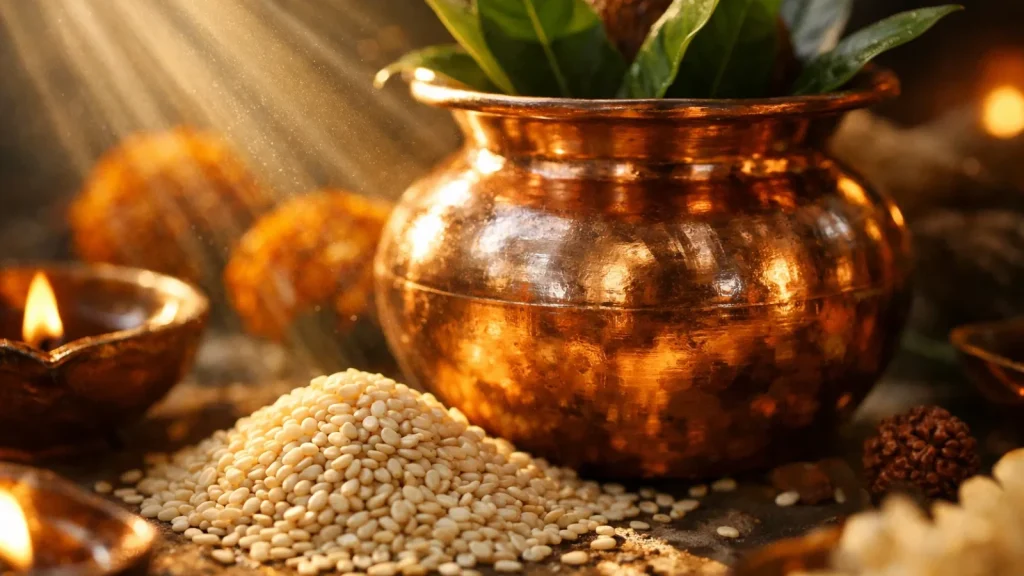
Sesame seeds are associated with warmth and solar energy. Copper is linked to the Sun in Vedic astrology and is believed to enhance the effect of offerings. Facing east aligns the body with the direction of sunrise, symbolizing new beginnings.
The repetition of seven times in Arghya connects to Surya’s symbolism, including the seven horses of his chariot and broader cosmic representations.
Understanding these meanings makes the rituals feel purposeful rather than mechanical.
Also read,
How to Calculate Vedic Astrology Transit
Planetary Alignment: When It Happens and How You Can See It
Mythological Stories Behind Mesh Sankranti
The rituals of Mesh Sankranti are not limited to astrology. They are deeply connected with mythological narratives that give the day its devotional meaning and emotional depth.
Parashurama Jayanti
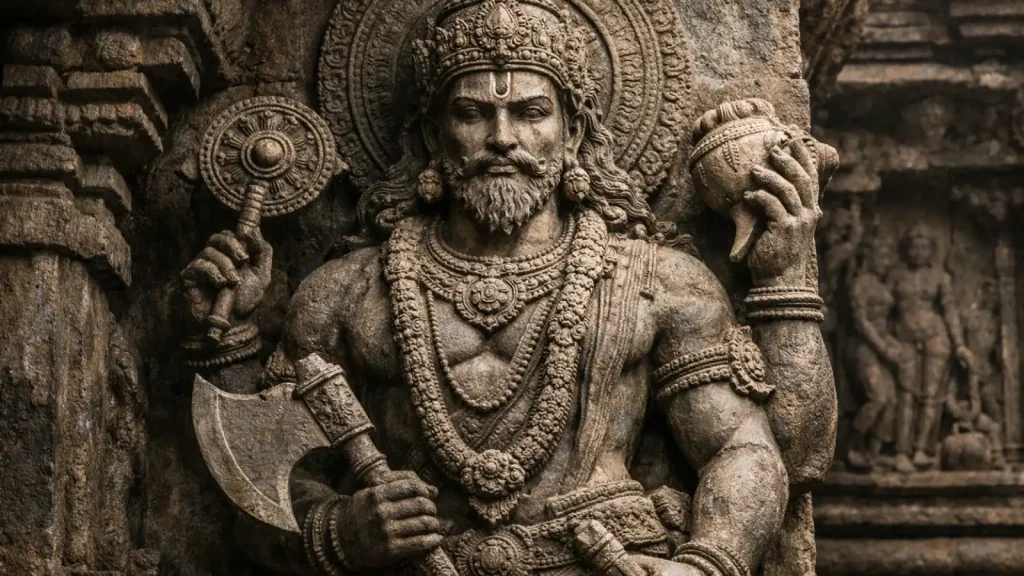
In many traditions, Mesh Sankranti falls around the time of Parashurama Jayanti, the birth anniversary of Parashurama, the sixth avatar of Lord Vishnu. Known as the warrior sage with an axe, Parashurama represents the restoration of balance and justice.
His birth during this period adds another layer of importance to the day. In regions like Maharashtra, Karnataka, and parts of North India, this connection is especially recognized. For Vishnu devotees, Mesh Sankranti becomes not just a solar event but also a time to honor a powerful incarnation associated with dharma.
The Madhusudan Connection
In some Vaishnava traditions, Mesh Sankranti is linked with Madhusudan, a name of Lord Vishnu that refers to his victory over the demon Madhu. Madhu symbolizes chaos and darkness, while Vishnu represents order and light.
This idea aligns naturally with the Sun entering Aries, a position associated with strength and clarity. The transition reflects the movement from inertia to action, from darkness to light. Because of this, Vishnu worship on this day is considered especially meaningful in certain traditions.
The Ramayana Connection
Some interpretations of the Ramayana connect key events in Lord Rama’s journey with solar transitions. Moments such as his exile, his path toward Lanka, and his eventual return are often studied alongside the movement of the Sun.
Within this perspective, Mesh Sankranti represents forward movement and renewed strength. Devotees who pray to Lord Rama on this day see it as a time to align themselves with discipline, purpose, and righteous action.
Want This Day to Work for You Personally?

Knowing the rituals is one thing. Knowing how Mesh Sankranti specifically affects your birth chart, your current phase of life, or a decision you’ve been sitting on is a different conversation entirely.
At AstroLive, you can book a one-on-one call with an experienced astrologer who can tell you exactly how this solar transition affects your Rashi, what it means for your career or relationships right now, and which rituals carry the most weight for your specific situation. No generic advice, a reading based on your actual chart.
Not sure which puja to perform this Sankranti? AstroLive also handles that for you. Book a puja performed on your behalf by qualified priests, or order a Chadhava offering at a temple, all from home, on the right day, at the right time.
Final Thought
Mesh Sankranti is not just about the Sun changing signs. It marks a shift in rhythm, both outwardly in the calendar and inwardly in how you choose to begin again.
Tradition gives you structure, but it doesn’t demand perfection. Whether you follow every ritual in detail or keep things simple, what truly matters is the intent behind your actions. A quiet prayer, a small act of giving, or even a moment of awareness can hold just as much meaning.
Instead of focusing on doing everything right, focus on doing it consciously. Let the day be a reset, clear your mind, set your direction, and move forward with purpose.
That’s where the real value of Mesh Sankranti lies.
FAQs
When is Mesh Sankranti in 2026?
Mesh Sankranti falls on April 14, 2026. Exact timing depends on the Panchang.
Can we eat non-veg on Mesh Sankranti?
Traditionally, no. A satvik diet is followed to maintain spiritual purity.
What if I miss Mesh Sankranti Punya Kaal?
Rituals can still be performed later. Timing is important, but intention also matters.
Is Mesh Sankranti the same as Makar Sankranti?
No. Makar Sankranti occurs in January, while Mesh Sankranti falls in April.
Can rituals be done at home?
Yes. All essential rituals can be performed at home with simple arrangements.