



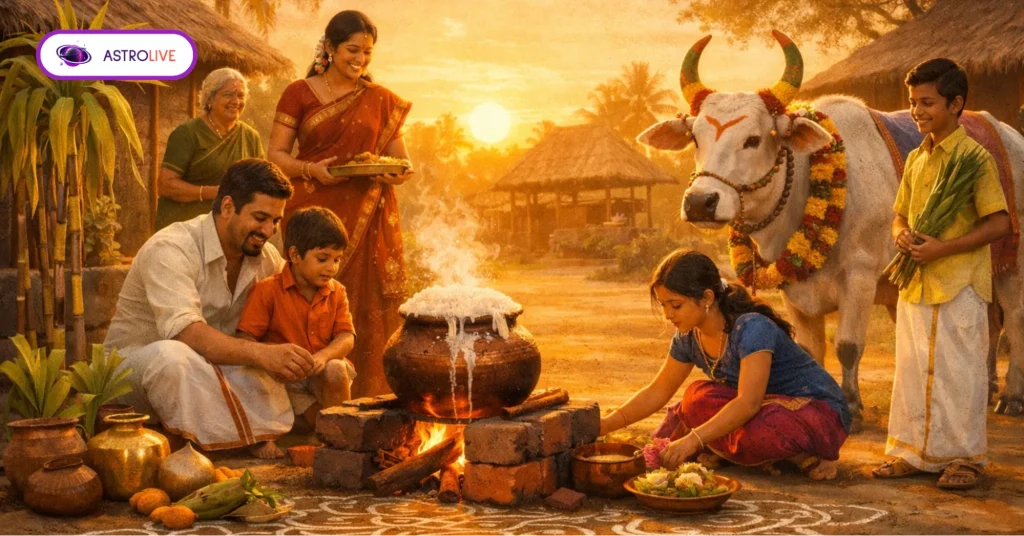
Pongal is an important festival for the people of Tamil Nadu. It is a harvest festival that shows our gratitude to nature, the Sun God, farmers, and the animals. Pongal is celebrated every year in January, and Pongal 2026 will be celebrated with the same happiness and traditions. This festival is about gratitude and family bonding. People clean their homes with beautiful kolams, wear new dresses, and cook special Pongal dishes. These small traditions may seem simple, but each one has a deep meaning.
This festival is for everyone: if Pongal is celebrated simply at home, the feeling remains the same. It is a time to be thankful, spend time with loved ones, and welcome good things into our lives.
In this blog, we explain what Pongal is, how Pongal will be celebrated, and the traditions and customs followed during this festival.
What Is the Pongal Festival? Meaning and Significance
Pongal is a traditional harvest festival celebrated mainly in Tamil Nadu. The word Pongal means “to boil over”. It refers to the cooking of rice with milk and jaggery, which is the most important part of the celebration. When the pot boils over, it is seen as a sign of prosperity and happiness.
Pongal is celebrated to thank nature for a good harvest. Farmers thank the Sun God for sunlight, the rain for water, and the land for giving crops. This festival reminds us that our life depends on nature and hard work.
The significance of Pongal is not only religious but also cultural. It brings families together and keeps old traditions alive. People forget their daily stress and focus on simple joys like cooking together, sharing food, and visiting relatives.
Still teaches us an important lesson. It reminds us to be thankful for what we have and to respect farmers, animals, and nature. That is why the festival is still celebrated with pride and happiness every year.
Pongal 2026 Dates And 4 Days of Celebration
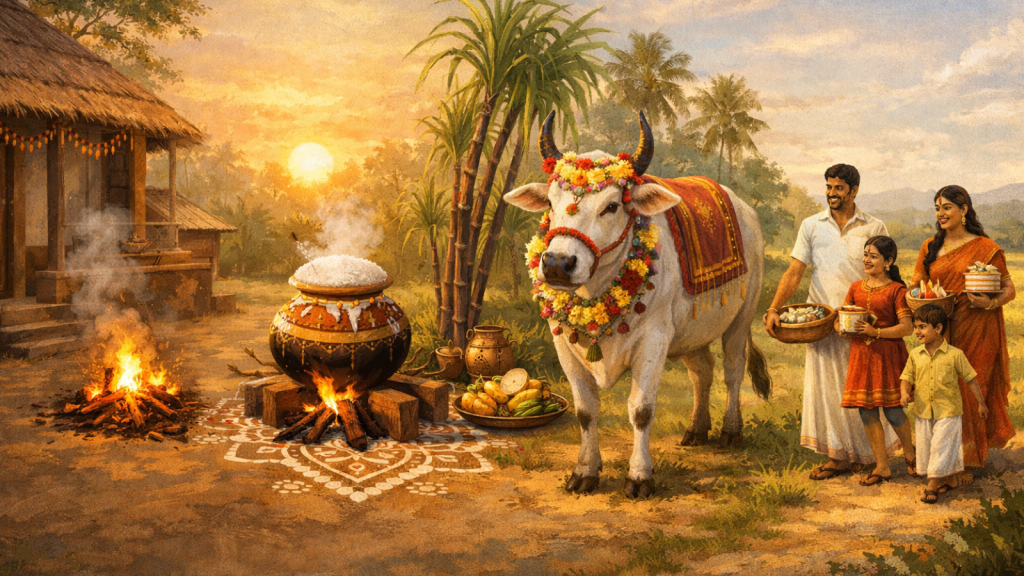
Pongal 2026 will be celebrated in January. This festival is celebrated for four days, and each day has its own meaning and customs. These four days show respect for nature and family relationships.
The four days of Pongal 2026 are:
- Bhogi Pongal
- Thai Pongal (Surya Pongal)
- Mattu Pongal
- Kaanum Pongal
Each day focuses on a different part of life and teaches us values like gratitude, sharing, and togetherness. Pongal celebrations usually start early in the morning. People decorate the entrance with kolam and wear traditional clothes. Even many families follow these traditions, whether they live in villages or cities.
In the next sections, we will explain each day of Pongal in detail and how these traditions are followed during Pongal 2026.

Bhogi Pongal: Traditions and Customs
Bhogi Pongal is celebrated as the first day of the festival. It is celebrated as a new beginning and the removal of old and unwanted things from our lives. On this day, people clean their homes and throw away old items that are no longer useful. One of the main traditions of Bhogi Pongal is the Bhogi bonfire. Old clothes, broken items, and waste materials are burnt early in the morning. This tradition shows that we are leaving behind the past and welcoming positive changes into our lives.
People also decorate their homes with fresh kolam designs made using rice flour. Mango leaves and flowers are used to decorate doors and entrances. In villages, the atmosphere feels very lively, with families waking up early and preparing for the main Pongal day.
Bhogi Pongal teaches an important lesson. It reminds us to keep our surroundings clean and our minds fresh, but also about starting the new season with a positive mindset.
Thai Pongal (Surya Pongal): Main Day of Pongal Festival
Thai Pongal, also called Surya Pongal, is the most important day of the Pongal festival. It is celebrated on the second day and is dedicated to the Sun God. On this day, people thank the Sun for giving light and energy, which helps crops grow. The main ritual of Thai Pongal is cooking the Pongal dish. Rice, milk, jaggery, and ghee are cooked together in a new clay pot, usually in an open space. When the milk boils and overflows, people shout “Pongalo Pongal” with happiness. This shows hope for abundance and good fortune.
Houses are decorated with colourful kolams, sugarcane, turmeric plants, and flowers. People wear traditional clothes and offer the Pongal dish to the Sun God before sharing it with family and neighbours.
Thai Pongal brings everyone together. Families sit, eat, and celebrate as one. It is a day filled with joy, gratitude, and positive energy, making it the heart of Pongal celebrations.
Mattu Pongal: Traditions, Customs, and Significance
Mattu Pongal is the third day of the Pongal festival. This day is celebrated to honour cattle like cows and bulls. In traditional farming, cattle play a very important role. They help farmers in ploughing fields and growing crops, so they are treated with respect and gratitude. On Mattu Pongal, cattle are given a bath and decorated with flowers, bells, and colourful paints. Their horns are painted, and garlands are tied around their necks. Special food is prepared and offered to them as a way of saying thank you.
People also pray for the health and safety of their cattle. In many villages, processions and small celebrations are organised. Some places also conduct traditional events like Jallikattu as part of Mattu Pongal celebrations. The significance of Mattu Pongal is very deep. It teaches us to respect animals and understand their importance in our daily lives. Even today, Mattu Pongal reminds us of the strong bond between humans, animals, and nature.
Also Read:
How Can A Mulank Calculator Unlock Your Life Secrets?
Hora Calculator Explained: Meaning, Benefits, And How To Use It
Mattu Pongal 2026: Date and Special Rituals
Mattu Pongal 2026 will be celebrated on the third day of the Pongal festival in January. This day is specially dedicated to cattle, which are an important part of farming and rural life. Even today, many families continue to follow these traditions with respect and care. On Mattu Pongal 2026, people wake up early and clean their cattle sheds. Cows and bulls are washed and decorated with flowers, colourful clothes, and bells. Their horns are painted, and garlands are tied around their necks. Special food is prepared and offered to the cattle before it is shared with family members.
In villages, Mattu Pongal is celebrated grandly. Cattle are taken around the village, and people pray for their good health. In some areas, traditional events like Jallikattu are organised, where people celebrate bravery and strength. These events are deeply connected to Tamil culture.
Even in cities, people celebrate Mattu Pongal 2026 in simple ways. They visit temples, feed cows, and teach children about the importance of animals in our lives. Mattu Pongal reminds us to live in harmony with nature and respect all living beings.
Kaanum Pongal: Family Traditions and Social Celebrations
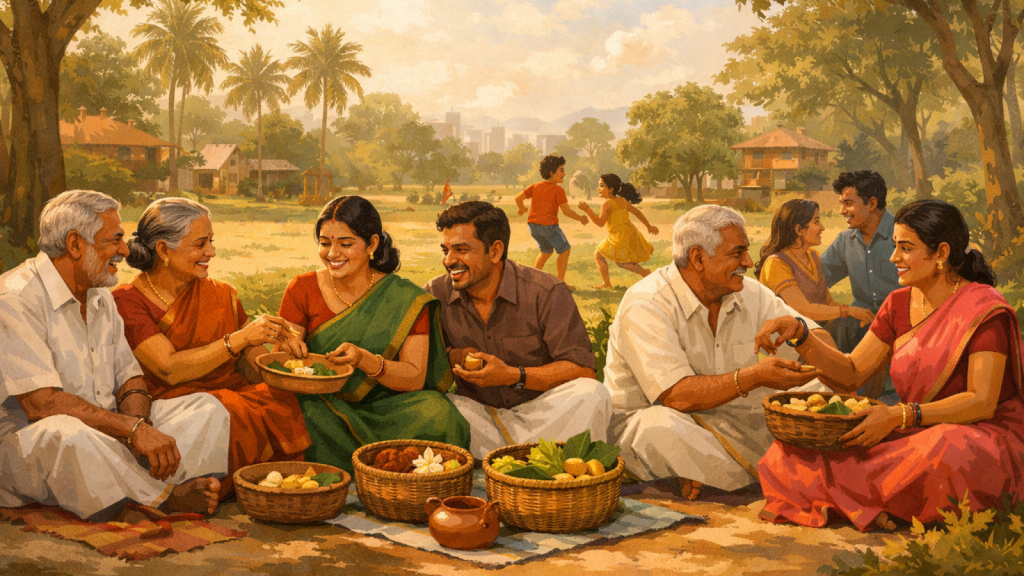
Kaanum Pongal is the fourth and final day of the Pongal festival. This day is mainly about family, relationships, and spending time together. After the main rituals of the first three days, Kaanum Pongal is more relaxed and joyful. On Kaanum Pongal, people visit their relatives, friends, and neighbours. Many families go out for picnics to parks, temples, riversides, or beaches. Sisters pray for the well-being of their brothers, and families exchange gifts and food.
In villages, people gather in open spaces and enjoy traditional games and music. In cities, families may go for short trips or have meals together at home. The feeling of togetherness remains the same. Kaanum Pongal shows the importance of social bonds. It reminds us to stay connected with our loved ones and celebrate happiness together. This day completes the Pongal festival on a warm and positive note.
Traditional Pongal Food and Dishes
Food plays a very important role in Pongal celebrations. Most of the dishes prepared during Pongal are made using freshly harvested rice, which shows gratitude for a good harvest. These foods are simple, healthy, and full of tradition.
The most popular dish is Sakkarai Pongal. It is made with rice, jaggery, milk, ghee, cashews, and raisins. This sweet dish is first offered to the Sun God and then shared with family and neighbours. Another common dish is Ven Pongal, which is a savoury dish made with rice, dal, pepper, and ghee.
Apart from Pongal dishes, people also prepare vadai, payasam, coconut chutney, and sugarcane. Sugarcane is an important part of the festival and symbolises sweetness and prosperity in life.
Cooking and sharing food bring everyone together during Pongal. These traditional dishes remind us of simple living and the joy of sharing meals with loved ones.

Pongal Decorations and Kolam Traditions
Decorations are an important part of Pongal celebrations. People clean their homes and decorate the entrance to welcome happiness and good luck. These decorations make the festival feel bright and positive. One of the main traditions is drawing a kolam in front of the house. Kolams are made using rice flour and are drawn early in the morning. They come in many designs, from simple patterns to colourful drawings with flowers. Kolam is believed to bring prosperity and invite positive energy into the home.
Houses are also decorated with mango leaves, turmeric plants, sugarcane, and fresh flowers. These items are closely connected to nature and farming. People wear traditional clothes like sarees and veshtis, which adds to the festive mood. Pongal decorations are simple but meaningful. They show respect for tradition and help create a happy and welcoming atmosphere for the festival.
Want to know when you will get married? Consult for free on our app AstroLive. Download now
Conclusion
Pongal is a beautiful festival that reminds us to be thankful for nature, farmers, animals, and our loved ones. Pongal 2026 is not just about following traditions, but about understanding their meaning and celebrating them with a grateful heart. From Bhogi Pongal to Kaanum Pongal, every day teaches us values like cleanliness, gratitude, respect, and togetherness.
Mattu Pongal and Mattu Pongal 2026 especially remind us of the strong bond between humans and animals, and why we must respect all living beings. Whether Pongal is celebrated in villages or cities, grandly or simply, the feeling of joy remains the same. As Pongal 2026 approaches, take time to celebrate the festival in your own way. Spend time with family, share food, follow traditions, and welcome positivity into your life. Pongal is not just a festival; it is a feeling of happiness, gratitude, and new beginnings.
Want to know your marriage date? Get a free consultation on AstroLive
Frequently Asked Questions (FAQs) About Pongal 2026
1. Is Pongal a public holiday in 2026?
Yes, Pongal is a public holiday in Tamil Nadu. Many offices, schools, and colleges remain closed, especially on Thai Pongal. In other states, it may not be a government holiday, but people still celebrate at home.
2. Can Pongal be celebrated if we do not follow all traditional rituals?
Yes, Pongal can be celebrated simply. The festival is about gratitude and positivity. Even small efforts like cooking Pongal, spending time with family, or saying thanks to nature are enough.
3. Is Pongal only a Hindu festival?
Pongal is mainly a cultural harvest festival. People from different communities in Tamil Nadu celebrate it together. It is not limited to religion but focuses on nature, farming, and togetherness.
4. Can Pongal be celebrated in apartments or cities?
Yes, many people celebrate Pongal in apartments and cities. Simple kolams, indoor cooking, temple visits, and family gatherings are common ways to celebrate Pongal in urban areas.