



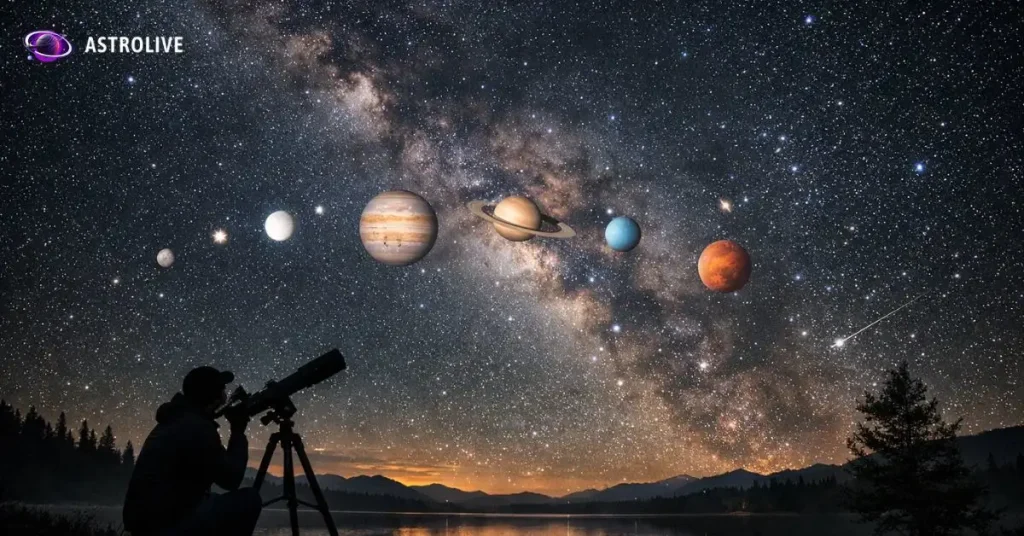
There’s something naturally awe-inspiring about looking up at the night sky and knowing that multiple planets are sharing the same stretch of space. A planetary alignment is one of those rare celestial moments that sparks curiosity in both casual skywatchers and serious astronomy enthusiasts.
For centuries, people have watched the skies to understand patterns, seasons, and cosmic movements. Today, planetary alignments continue to fascinate because they remind us of the vast, rhythmic motion of our solar system quiet, predictable, and beautiful.
What Is Planetary Alignment?
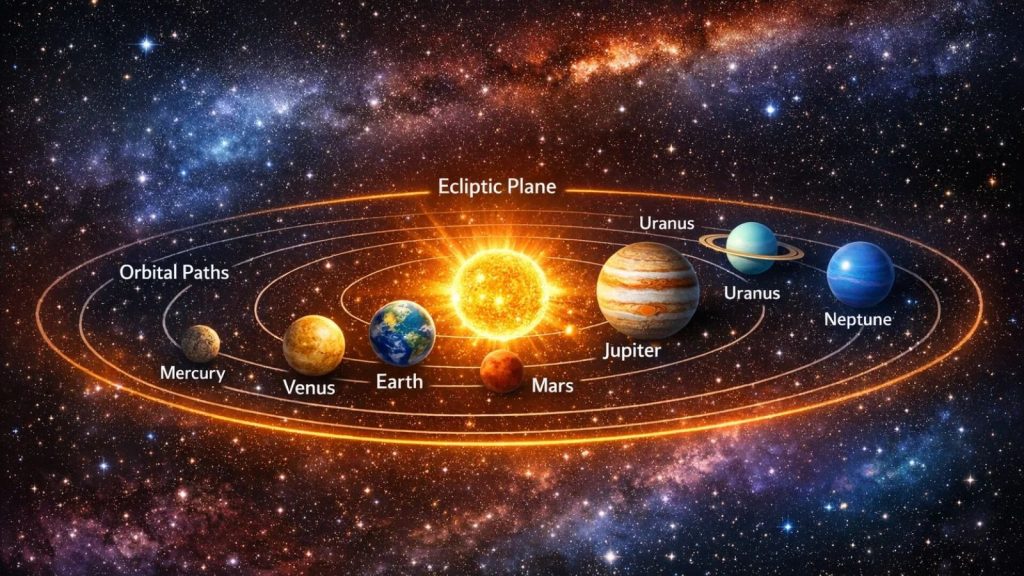
A planetary alignment occurs when several planets appear to line up in the sky from Earth’s point of view. This doesn’t mean the planets are forming a perfect straight line in space. Instead, they align along the same general plane—the path the planets follow around the Sun, known as the ecliptic.
Because all the major planets orbit the Sun in roughly the same flat disk, there are times when multiple planets become visible along the same arc of the sky. From Earth, this creates the appearance of a neat lineup, even though the planets are actually millions of kilometers apart.
Planetary alignments can involve two planets or several at once. The more planets involved, the rarer and more exciting the event becomes for observers. These alignments are completely natural and predictable, based on orbital mechanics—not mysterious forces or sudden cosmic events.
Understanding this simple concept helps clear up common misconceptions and makes it easier to appreciate planetary alignments as beautiful astronomical phenomena rather than rare or dangerous occurrences.
When Is the Planetary Alignment Happening?
If you’re wondering when the the planetary alignement happening, the answer depends on how many planets are involved and where Earth is in its orbit. Planetary alignments don’t happen on a fixed date every year, but they do occur regularly as planets move at different speeds around the Sun.
Smaller alignments where two or three planets appear close together are fairly common and can happen several times a year. Larger alignments involving four or more planets are rarer and tend to attract more attention from skywatchers.
These events are usually visible either just before sunrise or shortly after sunset, when the sky is dark enough and the planets are above the horizon. Weather conditions, location, and light pollution also play a big role in visibility.
Astronomers can predict alignments years in advance, which makes it easier to plan ahead. This brings us to one of the most talked-about upcoming events the notable alignments expected in 2026.
Planetary Alignment 2026: What to Expect
The planetary alignment 2026 is expected to be one of the more exciting sky events for astronomy enthusiasts and casual observers alike. During this period, several planets will appear in close proximity along the ecliptic, creating a striking visual display often referred to as a planetary parade.
While the exact visibility will depend on your location and the specific dates, early predictions suggest that multiple bright planets—such as Venus, Mars, Jupiter, and Saturn—may be visible within the same general region of the sky. Some of these planets can be seen with the naked eye, making the event accessible even for beginners.
Most of the key alignment moments in 2026 are expected to occur during early morning or evening hours, when the sky is dark, but the planets are still above the horizon. Clear skies and minimal light pollution will significantly improve viewing conditions.
Because alignments like this are predictable, 2026 offers a great opportunity to plan ahead, learn where to look, and fully enjoy the experience rather than stumbling upon it by chance.
What Is a Planetary Parade?
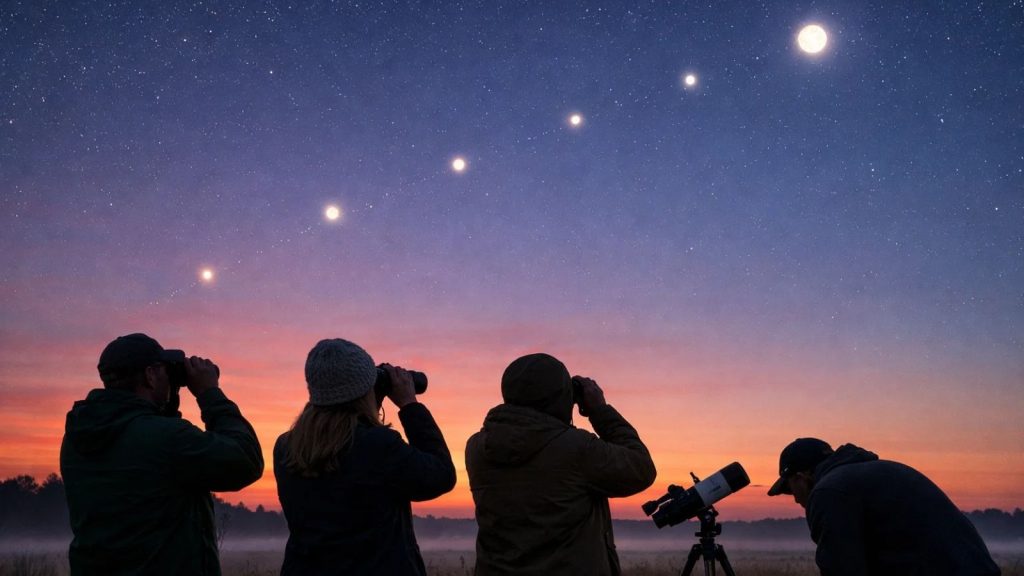
A planetary parade is a term commonly used when several planets appear lined up across the sky at the same time. While it sounds dramatic, it simply describes a visual event where planets are visible along the same arc, usually during dawn or dusk.
The main difference between a planetary parade and a planetary alignment is scale and visibility. An alignment refers to the positioning of planets along the ecliptic, whether or not all of them are easy to see. A planetary parade, on the other hand, emphasizes visibility—multiple planets appearing clearly to observers from Earth.
During a planetary parade, planets may seem evenly spaced or clustered, creating a striking and memorable sight. These events are especially popular among photographers and first-time stargazers because they don’t require advanced equipment.
Understanding this distinction helps set realistic expectations and makes skywatching more enjoyable, especially during highly anticipated events like those expected in 2026.
How to See Planetary Alignment With the Naked Eye
One of the best things about a planetary alignment is that you don’t need expensive equipment to enjoy it. With a bit of planning and the right conditions, many alignments can be seen clearly with the naked eye.
Choose the Right Time
Most planetary alignments are visible either shortly after sunset or just before sunrise. This is when the sky is dark enough, but the planets are still above the horizon.
Find a Clear View
Look for an open area with a clear view of the horizon and minimal light pollution. City lights can make fainter planets harder to spot, so darker locations offer a much better experience.
Know Where to Look
Planets appear along the ecliptic, a path that runs roughly east to west across the sky. Bright planets like Venus and Jupiter are usually the easiest to identify because they shine steadily and don’t twinkle like stars.
Be Patient
Give your eyes a few minutes to adjust to the darkness. Even a short wait can make additional planets visible.
If you’re unsure about positions or timing, sky-tracking tools can make the process much easier, which brings us to helpful apps and tools for planetary viewing.
Tools and Apps That Help You Track Planetary Alignments
While you can spot many planets with the naked eye, knowing exactly when and where to look makes the experience much more rewarding. This is where astronomy tools and mobile apps become incredibly useful for tracking a planetary alignment.
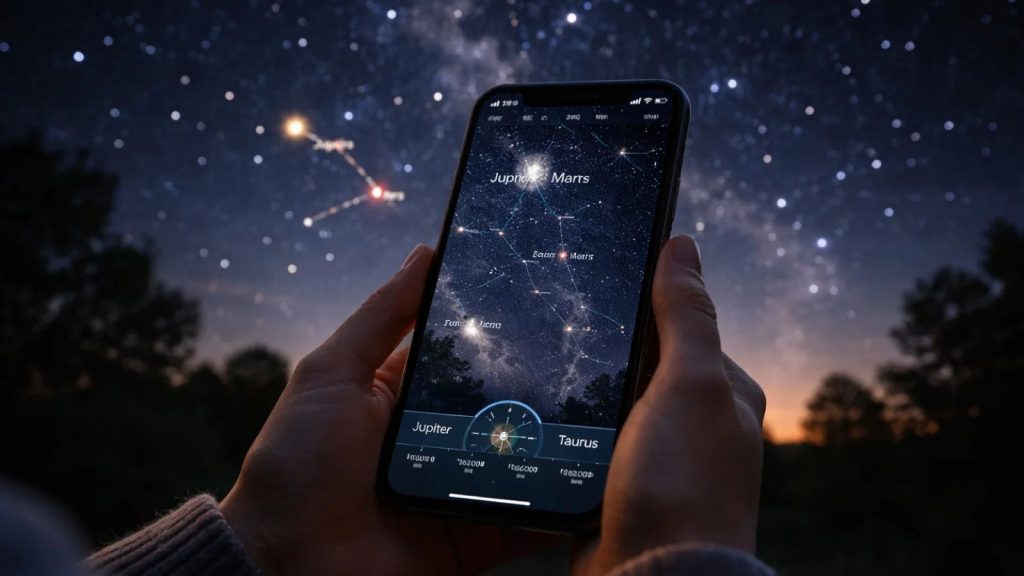
Sky-tracking apps use your location and time to show real-time maps of the night sky. They help you identify planets, understand their positions, and avoid confusion with stars. Instead of guessing, you can simply point your phone at the sky and see what’s visible.
These tools are especially helpful when:
- An alignment happens close to the horizon
- Multiple planets are visible at once
- You’re new to stargazing
- Weather or timing windows are short
Many apps also provide alerts for upcoming events, so you don’t miss important moments like a planetary parade or rare alignment. For anyone curious about astronomy, these tools remove complexity and make skywatching more accessible.
This is where a dedicated platform like AstroLive can make planetary tracking even easier.
Common Myths About Planetary Alignment
Planetary events often spark myths and misconceptions, especially when multiple planets appear together in the sky. A planetary alignment is a fascinating sight, but it’s also one of the most misunderstood astronomical phenomena.
One common myth is that planetary alignments cause natural disasters or dramatic changes on Earth. In reality, the gravitational influence of aligned planets is extremely small and has no measurable impact on earthquakes, weather, or human behavior.
Another misconception is that planets form a perfect straight line in space during an alignment. What we actually see is a visual alignment from Earth’s perspective, not a physical lineup across the solar system.
Some people also confuse astronomy with astrology, believing alignments have personal or spiritual effects. While astrology interprets planetary positions symbolically, astronomy explains them through science and predictable orbital motion.
Understanding the science behind planetary alignments helps separate fact from fiction and allows us to enjoy these events for what they truly are—beautiful, natural occurrences in our night sky.
Tips for First-Time Skywatchers
If this is your first time observing a planetary alignment, a little preparation can make the experience far more enjoyable.
Start by checking the weather forecast. Clear skies are essential, and even thin cloud cover can block planet visibility. Choose a location away from city lights if possible—parks, rooftops, or open fields work well.
You don’t need special equipment, but a basic pair of binoculars can help you see planets more clearly. Most importantly, give yourself time. Arrive early, let your eyes adjust to the darkness, and enjoy the process rather than rushing it.
Using a reliable sky-tracking app can also boost confidence, especially when identifying planets for the first time.
Enjoy the Sky’s Natural Rhythm
A planetary alignment is a reminder that our solar system is constantly in motion, following patterns that are both predictable and beautiful. Whether it’s a small alignment or a full planetary parade, these events offer a chance to slow down and reconnect with the night sky.
By understanding when alignments happen and how to see them, you can turn a simple moment of curiosity into a memorable experience. With the right timing, a clear view, and helpful tools like AstroLive, anyone can enjoy these celestial displays—no expert knowledge required.
FAQ’s
1. When is the planetary alignment happening next?
Dates vary depending on the number of planets involved, but astronomers can predict upcoming alignments years in advance.
2. Can planetary alignment be seen without a telescope?
Yes, many alignments—especially those involving bright planets—can be seen with the naked eye.
3. What is a planetary parade?
A planetary parade refers to multiple visible planets appearing across the sky at the same time, often during dawn or dusk.