



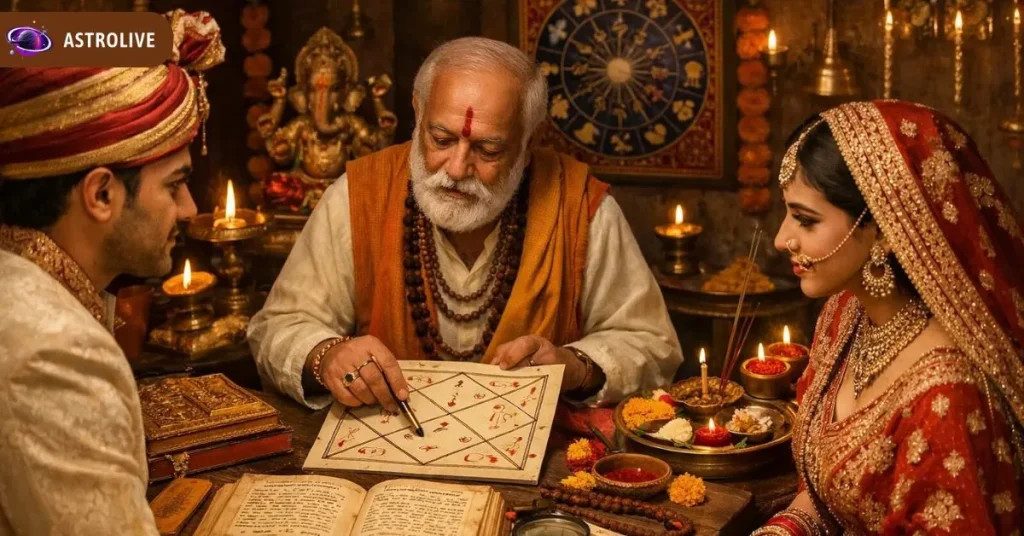
Marriage is one of the most important life decisions, which is why families often look for guidance before taking the final step. Kundali matching has long been used in Indian astrology to assess compatibility between two individuals planning to marry. Even today, it continues to be a topic of discussion across both traditional and modern households.
With changing lifestyles and evolving relationship dynamics, many people question whether kundali matching is still necessary or simply a cultural practice. Some view it as essential, while others believe personal understanding matters more than astrology.
What Is Kundali Matching?

Kundali matching is an astrological method used to evaluate compatibility between two people before marriage. It is based on the birth charts of both partners, which are created using their date, time, and place of birth. These charts are believed to reflect personality traits, emotional tendencies, and life patterns.
The process compares different planetary positions to understand how well two individuals may align in areas such as temperament, communication, health, and long-term stability. This comparison is often referred to as horoscope matching, as it analyzes how the horoscopes interact with each other.
Rather than predicting specific events, kundali matching aims to highlight strengths and possible challenges in a relationship. Many families use it as a guiding tool to gain reassurance before marriage, especially when long-term harmony and mutual understanding are priorities.
Why Kundali Matching Is Done for Marriage
Kundali matching is traditionally done to assess how well two people may adapt to each other after marriage. The idea is to identify areas of harmony as well as potential challenges, allowing couples and families to make informed decisions.
Astrologically, the process focuses on factors such as emotional compatibility, health, financial stability, and overall life balance. Supporters believe that kundali matching helps reduce misunderstandings by highlighting possible friction points early on.
Beyond astrology, the practice also offers psychological reassurance. For many families, checking compatibility provides confidence that the marriage is being approached thoughtfully. While it doesn’t guarantee success, kundali matching is often viewed as a preventive measure rather than a prediction of outcomes.
Understanding Kundali Milan and Guna Matching
Kundali milan is the most commonly used system for evaluating compatibility in marriage. It works through a point-based method known as the Ashta-Koota or 36-guna system. Each guna represents a specific aspect of compatibility, such as mental alignment, emotional bonding, and mutual understanding.
During kundali matching, the birth charts of both individuals are compared across these categories, and points are awarded accordingly. The higher the score, the stronger the perceived compatibility. Generally, a score of 18 or above out of 36 is considered acceptable for marriage.
It’s important to understand that kundali milan is not meant to be interpreted in isolation. Certain gunas carry more weight than others, and experienced astrologers often look beyond the final score to assess overall balance. This broader interpretation helps provide a more realistic picture of compatibility rather than relying only on numbers.
How to Check Kundali Matching for Marriage
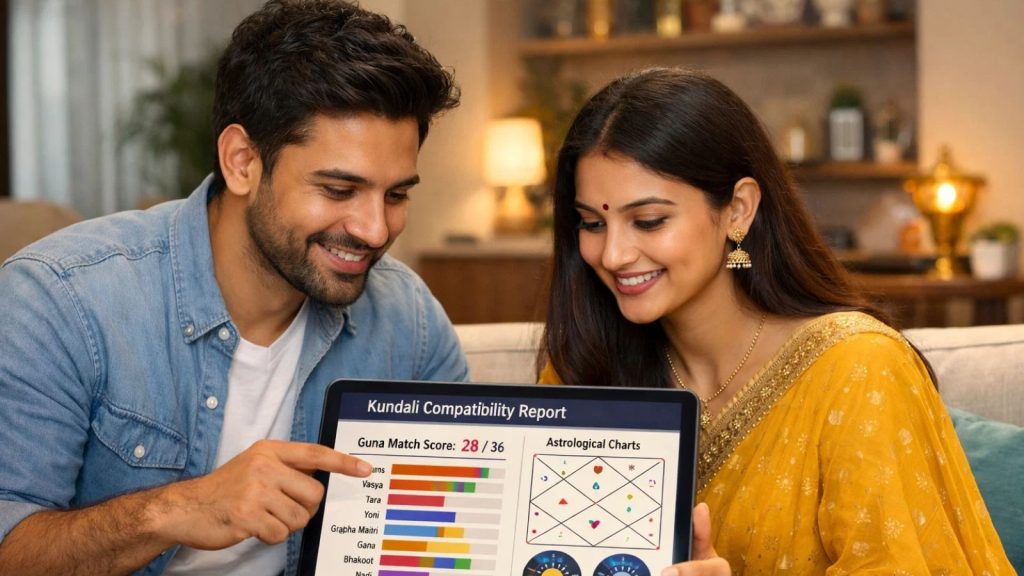
Checking kundali matching for marriage starts with accurate birth details of both individuals. This includes date of birth, exact time of birth, and place of birth. Even small inaccuracies can affect the results, so precision matters.
Today, many people prefer online tools to check compatibility quickly. These platforms generate instant reports based on traditional astrological principles and give an overview of guna scores and compatibility factors. Learning how to check kundali matching for marriage online can be helpful for initial understanding, but the results should be read carefully.
For deeper insights, consulting an experienced astrologer is often recommended. An astrologer can interpret results beyond numerical scores, consider planetary combinations, and explain remedies if challenges appear. This balanced approach helps couples view kundali matching as guidance rather than a final verdict.
Importance of Horoscope Matching in Modern Marriages
Horoscope matching remains important for many couples, even in modern relationships. While lifestyles and expectations have evolved, compatibility at emotional and mental levels remains essential for a stable marriage. Horoscope matching helps assess these deeper aspects beyond surface-level attraction.
In today’s fast-paced world, couples often face challenges related to stress, career pressure, and family responsibilities. Horoscope matching is believed to offer insight into how partners may handle such situations together. For some, it acts as a support system that encourages better understanding and patience.
That said, modern marriages also rely heavily on communication, mutual respect, and shared values. Horoscope matching works best when viewed as a guiding tool rather than the sole deciding factor. When combined with real-life compatibility, it can add clarity instead of confusion.
Common Myths About Kundali Matching
One common myth about kundali matching is that a low guna score always leads to an unhappy marriage. In reality, many successful marriages have scores below the “ideal” range. Compatibility depends on multiple factors, not just numbers.
Another misconception is that doshas automatically mean problems. Certain astrological doshas can be balanced through understanding, remedies, or favorable planetary positions elsewhere in the chart. They are indicators, not life sentences.
Some people also believe astrology alone decides marital success. This isn’t true. Communication, emotional maturity, and shared values often play a much bigger role than kundali matching alone.
When Kundali Matching May Not Be Necessary

Kundali matching may not feel necessary for every couple, especially when there is strong emotional understanding and mutual respect. In many love marriages, partners already spend significant time together and develop compatibility through communication and shared experiences.
Practical factors such as similar values, life goals, and problem-solving approaches often outweigh astrological considerations. When both partners are aligned on expectations around family, career, and lifestyle, the role of kundali matching naturally becomes less central.
That said, some couples still choose to check compatibility for reassurance rather than validation. In such cases, kundali matching acts as guidance, not a deciding factor, helping couples approach marriage with awareness rather than fear.
How AstroLive Helps with Accurate Kundali Matching
Understanding kundali matching becomes easier with the right tools and guidance. AstroLive offers a simple and reliable way to analyze compatibility using traditional astrological principles combined with modern technology.
AstroLive connects users with experienced astrologers for personalized consultations. This allows individuals to discuss concerns, understand doshas, and explore possible remedies if needed. By making kundali matching more accessible and transparent, AstroLive helps users approach marriage decisions with confidence and clarity.
Balancing Kundali Matching with Real-Life Compatibility
Kundali matching works best when it is balanced with real-life understanding. Astrology can highlight tendencies and possible challenges, but it cannot replace open communication, trust, and emotional maturity.
Successful marriages often depend on how partners handle disagreements, support each other’s goals, and adapt to change. These qualities develop through interaction, not astrology alone. Viewing kundali matching as a guiding tool rather than a strict rule helps couples stay realistic.
When combined thoughtfully, astrological insights and personal compatibility can complement each other. This balanced approach allows couples to respect tradition while still making decisions based on practical, lived experiences.
Also Read,
Importance of Yoni Matching for Marriage in Kundali: An Insightful Overview
नाम के पहले अक्षर से जानें कि आपका विवाह कब और किससे होगा? | जन्म कुंडली मिलान
Conclusion
So, is kundali matching necessary for marriage? The answer depends on personal beliefs, cultural values, and individual circumstances. For some, it provides reassurance and guidance, while for others, emotional connection and mutual understanding matter more.
Kundali matching works best when seen as a supportive tool rather than a deciding factor. When balanced with communication, trust, and shared goals, it can help couples approach marriage with awareness and confidence. Ultimately, a successful marriage is built on effort, understanding, and respect—astrology can guide the journey, but it doesn’t define it.
FAQs
Is kundali matching mandatory for marriage?
No, kundali matching is not legally or universally mandatory. It is a cultural and personal choice.
What is a good guna score for marriage?
A score of 18 or above out of 36 is generally considered acceptable, though other factors also matter.
Can marriage succeed without kundali matching?
Yes, many marriages thrive without kundali matching, especially when partners share strong emotional compatibility.