



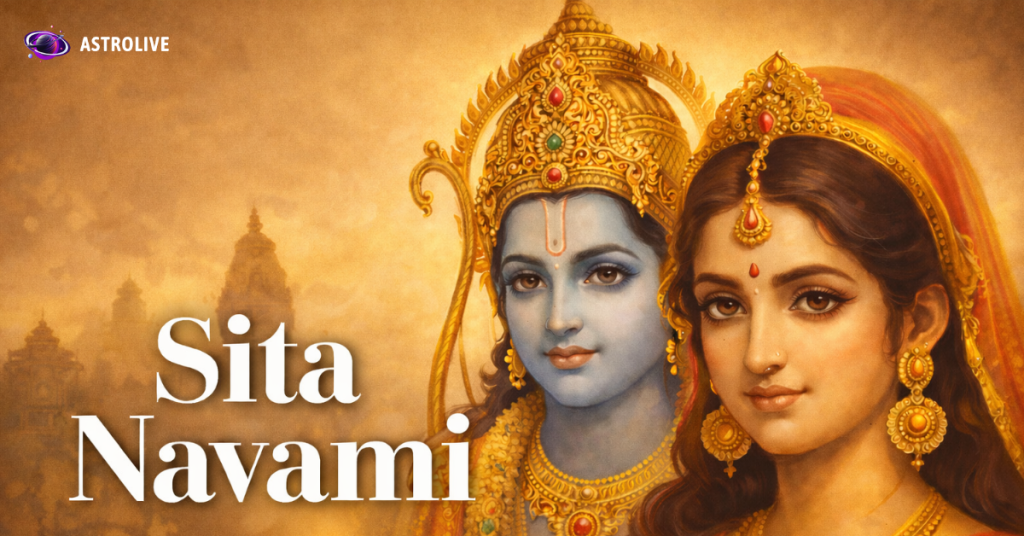
Sita Navami is not just another date on the calendar. It is a day that invites reflection, devotion, and a deeper connection with values that still shape everyday life. The festival honors Sita, revered for her quiet strength, resilience, and unwavering faith.
Yet many people approach the day with uncertainty. Questions around the correct date, the rituals that truly matter, and whether the festival can be observed without elaborate arrangements often create confusion. The challenge is not devotion, but clarity.
This guide helps simplify everything. It explains how to understand the correct date, perform the puja, observe the vrat, and connect with the deeper meaning behind the celebration. Whether you follow traditions closely or prefer a simpler approach, there is always a meaningful way to observe the day.
Sita Navami marks the birth of Goddess Sita and is observed on the Navami tithi of Shukla Paksha in the Vaishakha month. Devotees fast, perform puja, and seek blessings for harmony, strength, and well-being. The exact date in 2026 may vary slightly depending on regional calendar calculations, but the essence of the celebration remains the same: honoring devotion, patience, and inner strength.
What is Sita Navami?
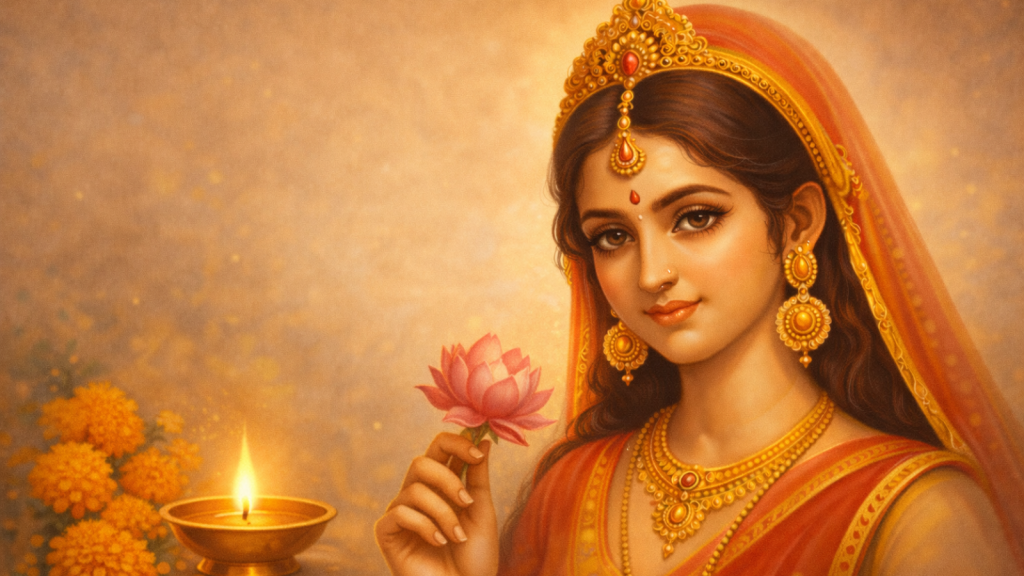
Sita Navami marks the appearance day of Sita, Rama’s consort. The festival holds special importance in Hinduism and is observed across India and Nepal.
For many, it is a day of prayer for family well-being. Married women often observe a vrat, seeking blessings for long and harmonious relationships. But the relevance of this Navami goes beyond that.
At its core, the festival is about honoring inner strength. Sita’s life reflects patience, dignity, and moral clarity even in difficult situations. That is what makes the day meaningful for a wider audience, including spiritual seekers and younger generations.
Why Sita Navami Matters Spiritually
Every ritual on this day points toward a deeper idea. It is not just about tradition. It is about what those traditions represent.
Sita is often seen as a symbol of purity. But that is only part of the story. She also represents endurance, compassion, and quiet courage.
Her journey in the Ramayana shows how strength does not always look loud or forceful. Sometimes, it appears as patience and clarity in difficult moments.
This is why many people connect with this auspicious event on a personal level. It becomes less about ritual correctness and more about reflection.
Sita Navami 2026 Date, Tithi, and Muhurat
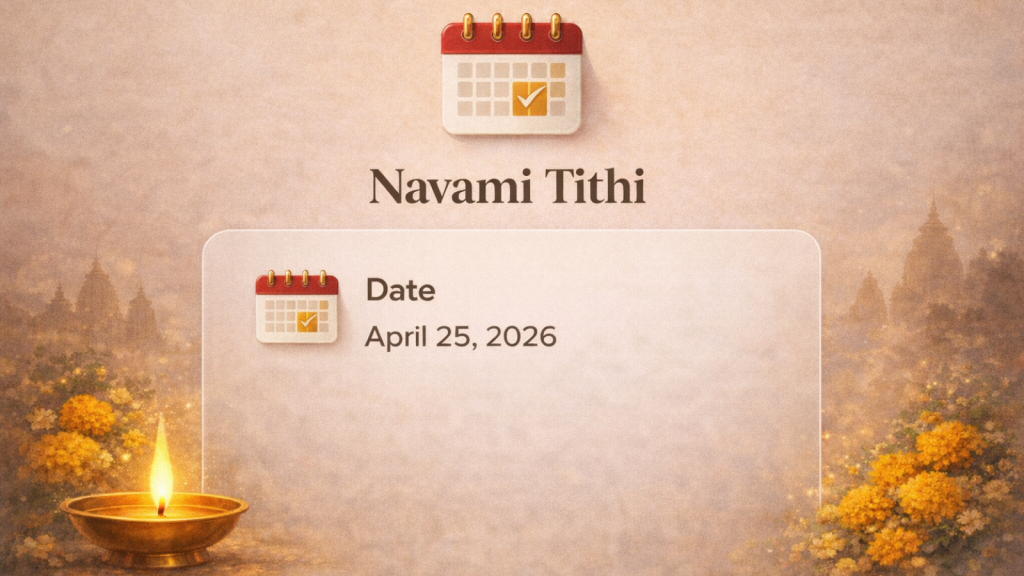
One of the most common questions each year is simple: when exactly is Sita Navami?
The answer is not always straightforward. The Sita Navami 2026 date depends on lunar calculations, which can vary slightly across regions.
The festival is observed on the Navami tithi of Shukla Paksha in the Vaishakha month. However, the key detail is whether this tithi overlaps with midday, which is considered most auspicious.
This is why you may see different dates listed on different platforms. Both may be technically correct based on their calendar system.
- Date: 25 April 2026
- Navami Tithi Begins: 07:21 PM on 24 April 2026
- Navami Tithi Ends: 06:27 PM on 25 April 2026
Why Dates Differ Across Calendars
This confusion usually comes from two systems: Purnimant and Amavasyant calendars.
Some regions calculate months from the full moon, while others begin from the new moon. That alone can shift festival dates.
Another factor is the concept of Madhyahna. If the Navami tithi exists during midday, that day is considered ideal for celebration.
So what should you do? Follow a trusted local panchang or choose the date observed in your region. Consistency matters more than perfection.
The Birth Story of Goddess Sita
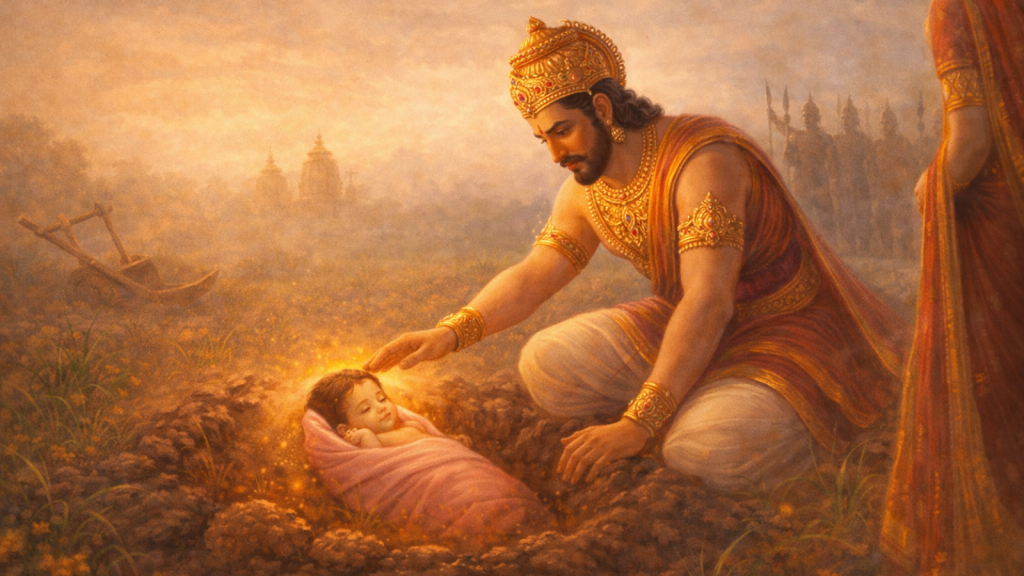
The story of Sita’s birth is both simple and symbolic.
According to the Ramayana, King Janaka discovered her while plowing a field. She was found in a furrow, which is why she is called Sita.
This origin connects her directly to the earth. She is often referred to as Bhoomija, meaning daughter of the earth.
There is a deeper idea here. Her birth represents purity that is untouched by ego or desire. It suggests a connection between human life and nature, something many traditions emphasize.
Meaning Behind Sita’s Names
Sita is known by several names, each offering a different perspective on her identity.
- Sita: Derived from the furrow where she was found
- Janaki: Daughter of King Janaka
- Maithili: Princess of Mithila
- Vaidehi: One who rises above physical attachment
- Bhoomija: Daughter of the Earth
These names are not just labels. They reflect qualities and philosophical ideas. For example, Vaidehi suggests detachment, a concept often discussed in spiritual teachings.
Significance of Jayanti Sita Navami
Jayanti Sita Navami marks the divine appearance of Sita. It is seen as a powerful day to seek blessings and reflect on values that sustain relationships and inner balance.
Many devotees believe that observing this day with sincerity brings peace, stability, and clarity.
However, the significance is not limited to married life. It also speaks to personal growth. The day encourages self-reflection. Are you patient in difficult situations? Do you act with integrity when tested?
These questions make the festival relevant even today.
How to Celebrate Sita Navami at Home
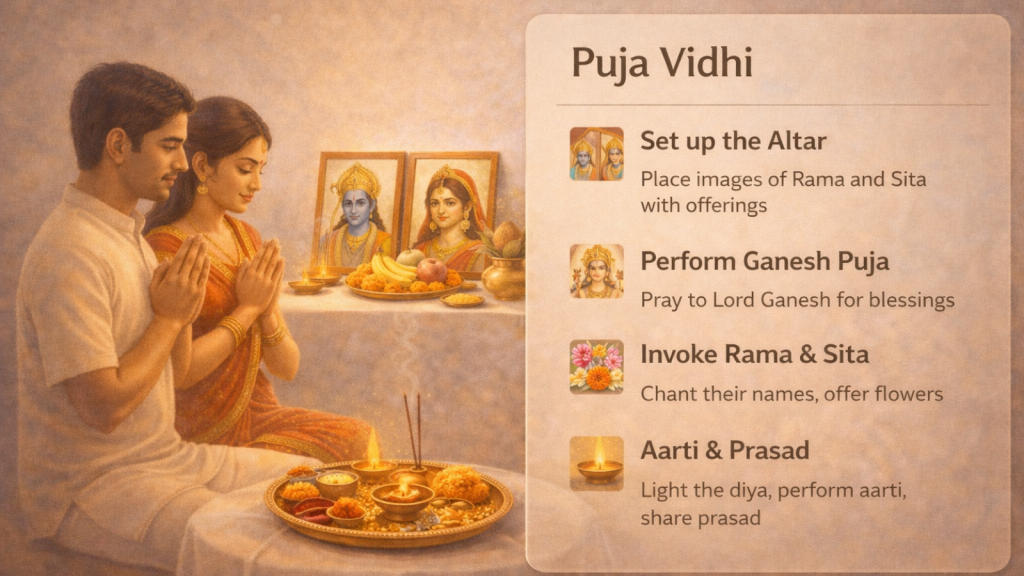
Celebrating Sita Navami does not require elaborate arrangements. What matters is intention and attention.
Even a simple setup can feel meaningful if done with care.
Step-by-Step Puja Vidhi
Start your day early. Clean the space where you plan to perform the puja. A calm and tidy environment sets the tone.
Place an image or idol of Sita and Rama. Offer flowers, light a diya, and prepare simple prasad.
As you perform the aarti, focus on the meaning behind the ritual. Chanting mantras or reading the vrat katha can deepen the experience.
If time is limited, keep the ritual short but mindful. A sincere prayer often carries more value than a long, distracted ceremony.
Essential Puja Items Checklist
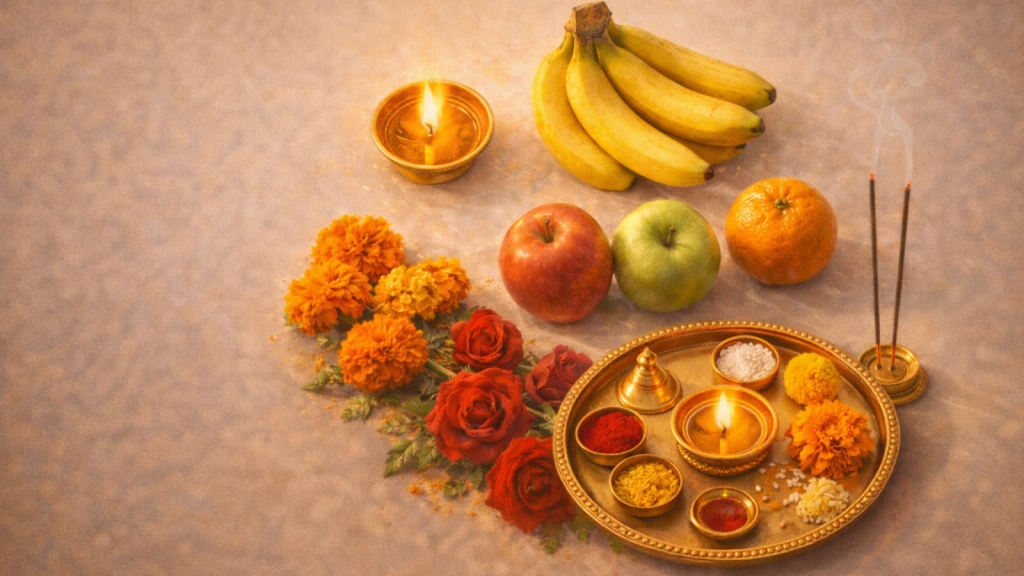
You do not need an extensive list. A few basic items are enough.
- Fresh flowers
- Incense sticks
- Diya (lamp)
- Fruits or sweets
- Clean water (preferably Gangajal)
- Red cloth or offering
Keeping things simple makes the process easier to follow, especially for beginners.
Fasting Rules (Vrat Guidelines)
Fasting is an important part of Sita Navami, but it should be approached thoughtfully.
Some observe a full fast without water, known as nirjala. Others choose a lighter option with fruits and milk.
If you are new to fasting, start with a moderate approach. Health should not be compromised.
The fast is usually broken after the puja, often in the evening. The focus is not on restriction, but on discipline and mindfulness.
How to Celebrate in Modern Lifestyles
Not everyone has access to temples or extended time for rituals. That is completely fine.
You can celebrate at home with a short puja, a quiet prayer, or even by reading a passage from the Ramayana.
Living abroad? Adjust the timing based on your local timezone. The intention behind the act remains the same.
Small, consistent practices often create a deeper connection than occasional elaborate ones.
How Astrolive Enhances Your Sita Navami Experience

For many people, the most challenging part is getting accurate information and guidance.
This is where Astrolive can help simplify the process.
- Access precise muhurat timings without confusion
- Receive step-by-step puja guidance in simple language
- Consult astrologers for personalized vrat advice
- Access guidance in different languages, making it more accessible to a wider audience.
- Calculate Vedic astrology insights to understand how planetary positions may influence your rituals and spiritual practices
Having clear guidance removes uncertainty and helps you focus on devotion rather than details.
Common Mistakes to Avoid
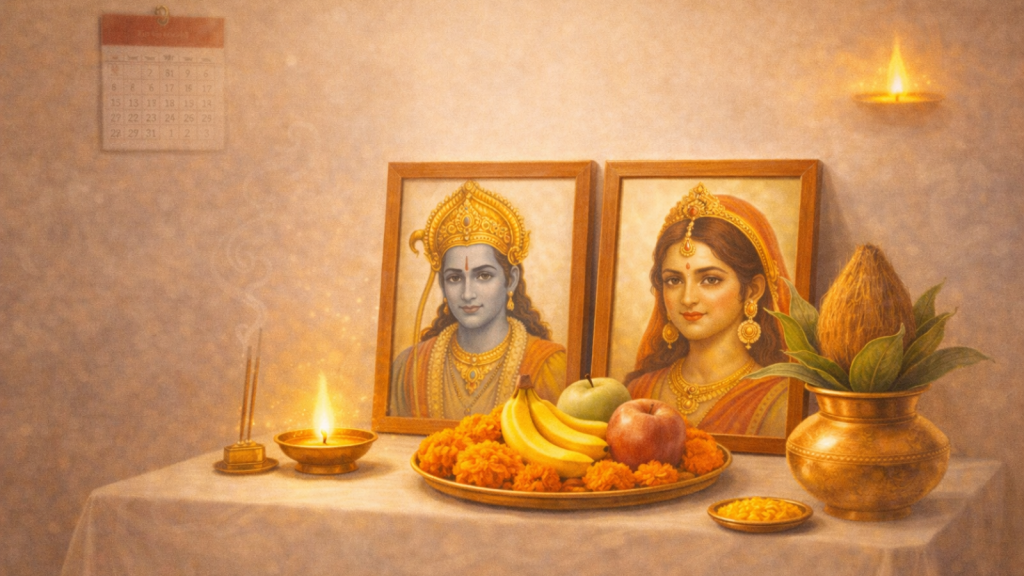
Many people overcomplicate the process or focus on the wrong details.
One common mistake is following the wrong date without checking a reliable source. This can lead to unnecessary confusion.
Another issue is skipping the sankalp, which sets the intention for the puja.
Some try to follow every ritual perfectly and end up feeling stressed. That defeats the purpose. Simplicity often works better.
Finally, performing rituals without understanding their meaning can make the experience feel mechanical. Taking a moment to reflect can change that.
Read More!
Akshaya Tritiya 2026: Date, Time, And Significance
चैत्र नवरात्रि 2026: 26 या 27 मार्च? जानें कब है नवमी और कन्या पूजन का मुहूर्त!
Deeper Spiritual Meaning of Sita Navami

Looking beyond rituals, this Navami offers a chance to explore deeper ideas.
Sita is often described as Shakti, the feminine energy that complements and supports balance. Her strength is subtle but powerful.
Her story challenges the idea that strength must always be visible. It shows that resilience can exist quietly.
Relevance in Modern Life
These ideas still apply today.
Handling stress, maintaining relationships, and staying grounded during uncertainty are all modern challenges.
Sita’s story offers a perspective. Strength does not always require control. Sometimes it comes from patience and clarity.
This is what makes Sita-Navami more than a ritual. It becomes a reminder.
Conclusion
Sita Navami is not defined by complexity. It is shaped by intention.
Whether you follow detailed rituals or keep things simple, the essence remains the same. It is about connecting with values that bring balance and clarity.
By approaching the day with awareness and sincerity, you create a celebration that feels meaningful, not just traditional.
Frequently Asked Questions
1. What is Sita Navami, and why is it celebrated?
This Navami honors the birth of Sita, symbolizing purity, devotion, and inner strength. Devotees celebrate this day through prayers and fasting to seek blessings for harmony, stability, and spiritual growth.
2. What is the Sita Navami 2026 date and timing?
In 2026, the festival is observed during the Shukla Paksha of the Vaishakha month. The exact date and muhurat may vary depending on regional calendar calculations, so checking a reliable panchang is recommended.
3. How can you perform the puja at home in a simple way?
Start by cleaning your space and placing images of Sita and Rama. Offer flowers, light a diya, and say a simple prayer or mantra. Even a short, focused ritual can feel meaningful.
4. Who should observe the vrat, and what are its benefits?
While married women commonly observe the fast for family well-being, anyone can participate. It is believed to bring emotional balance, stronger relationships, and a sense of inner peace when done with sincerity.
5. How can Astrolive support your festival preparation?
Astrolive provides accurate timing details based on your location, along with clear guidance on rituals and fasting. It also helps answer common doubts, making it easier to follow traditions without confusion.