



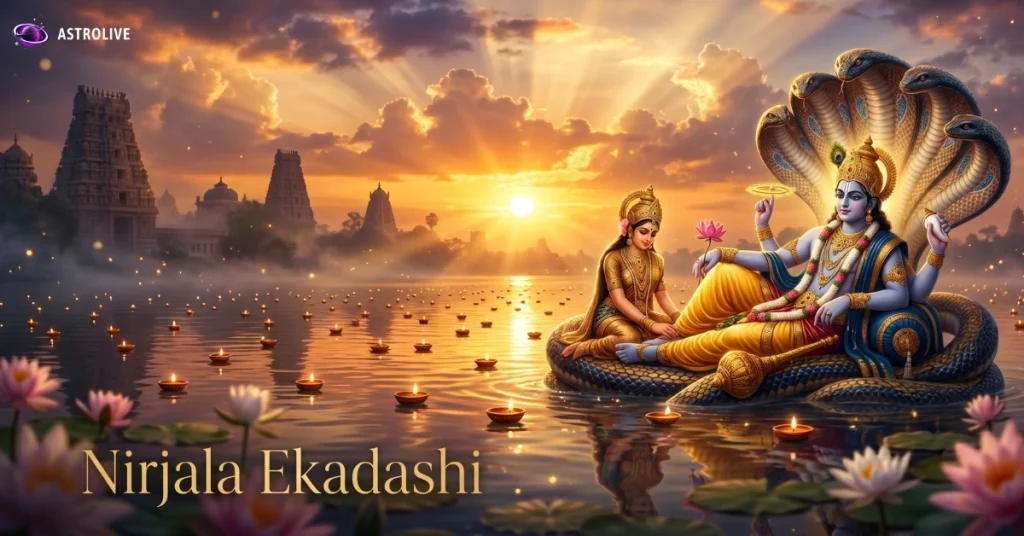
Nirjala Ekadashi is not just another fasting day in the Hindu calendar. For many devotees, it is a deeply personal act of faith, discipline, and surrender. Unlike other Ekadashi fasts, this one asks for complete abstinence from both food and water for an entire day, which is why it is considered the most intense and spiritually rewarding Ekadashi vrat.
Every year, devotees across India observe this sacred fast to seek Lord Vishnu’s blessings, cleanse the mind, and strengthen spiritual focus. Some do it out of devotion. Others follow family traditions passed down for generations. And for many first-time observers, the fast becomes an emotional and transformative experience.
Nirjala Ekadashi 2026 Date and Timings at a Glance
The nirjala ekadashi date in 2026 falls on June 25, 2026 (Thursday), according to the Udaya Tithi tradition, during the Shukla Paksha of the Jyeshtha month.
This year, the Ekadashi tithi begins on June 24, 2026, at 6:13 PM and ends on June 25, 2026, at 8:10 PM. Since the Ekadashi tithi is present during sunrise on June 25, devotees will observe the fast on that day.
The exact tithi and Parana timings may vary slightly based on regional Panchang calculations.
Here’s what devotees usually look for before planning the fast:
- Ekadashi start and end timings
- Sunrise-based fasting window
- Parana timing for breaking the fast
- Auspicious puja muhurat
Checking a trusted Panchang before beginning the vrat is important because Ekadashi observance follows lunar timings, not just calendar dates.
What Is Nirjala Ekadashi?
This holy Ekadashi vrat is a sacred Hindu fast dedicated to Lord Vishnu in which devotees avoid both food and water for 24 hours. The word “Nirjala” literally means “without water.”
This observance is also known as Pandava Nirjala Ekadashi because of its connection with Bhima from the Mahabharata. According to tradition, Bhima struggled to observe all Ekadashi fasts due to his strong appetite. Sage Vyasa advised him to keep one strict Nirjala fast instead, believing it would bring the spiritual merit of all 24 Ekadashis combined.
That belief still shapes how devotees view the vrat today. Many consider it the most spiritually powerful Ekadashi of the year.
Why Nirjala Ekadashi Holds Such Deep Spiritual Importance
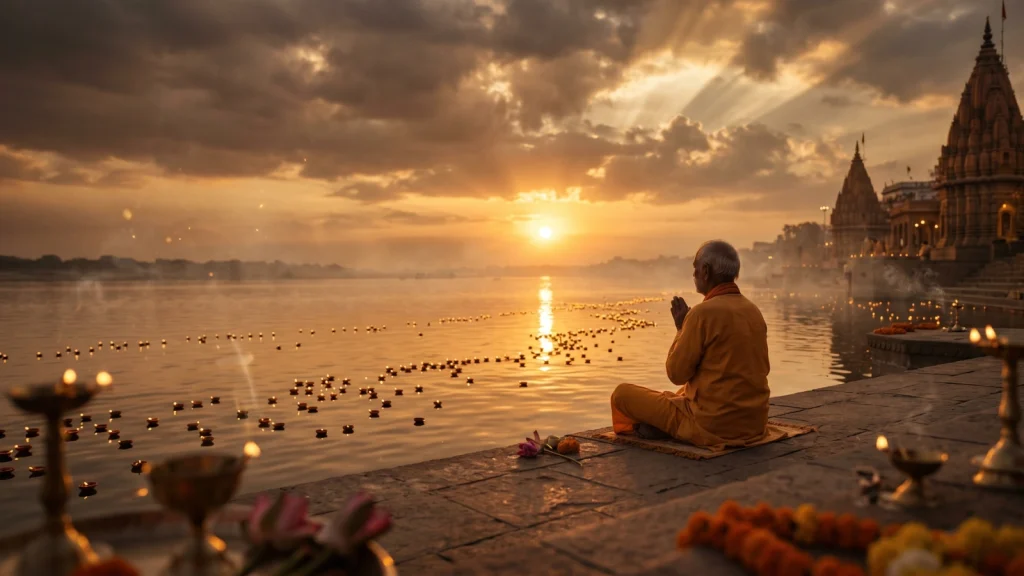
Fasting without water sounds physically difficult, and it is. But the significance of this vrat goes far beyond physical restraint. The spiritual and religious nirjala ekadashi significance comes from its association with self-discipline, devotion to Lord Vishnu, and the belief that this single fast carries the merit of multiple Ekadashi observances.
The fast symbolizes mastery over desires. Hunger and thirst are basic human instincts. Choosing to step away from them, even temporarily, becomes an act of discipline and devotion.
For many devotees, the day creates mental clarity. Without regular routines around meals and distractions, attention naturally shifts toward prayer, chanting, and self-reflection.
There is also a strong emotional side to the vrat. Families often observe it together. Temples organize Vishnu bhajans late into the night. Some devotees spend the day reading the Bhagavad Gita or Vishnu Sahasranama. The atmosphere itself feels spiritually charged.
Traditional scriptures suggest that observing Nirjala Ekadashi with sincerity can help remove past sins and bring divine blessings. Whether someone sees that literally or symbolically, the fast clearly carries deep emotional meaning for millions.
The Story Behind Pandava Nirjala Ekadashi
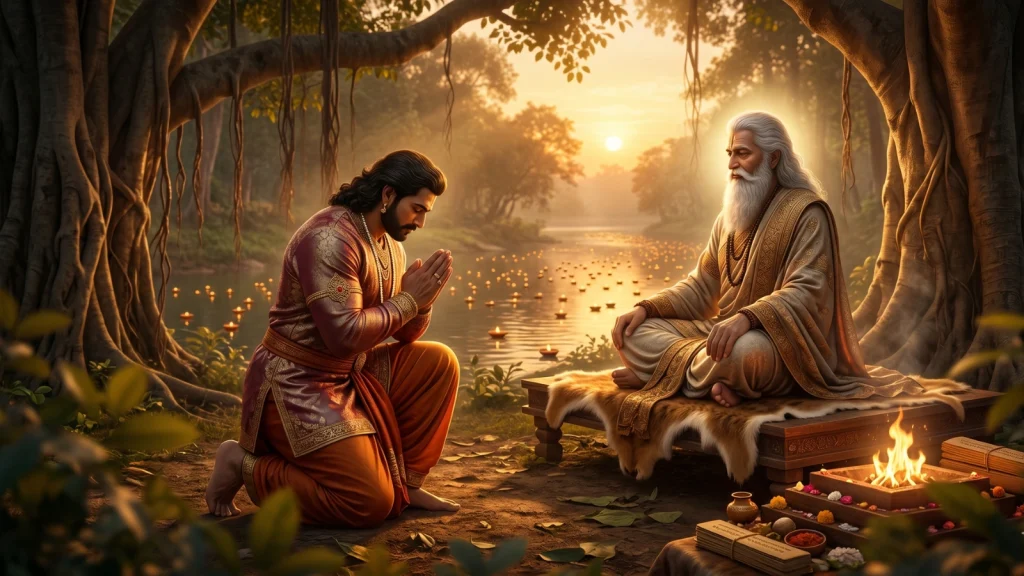
The story of Pandava Nirjala Ekadashi is rooted in the Mahabharata and is closely connected to Bhima, one of the Pandava brothers. It is often shared not just as a religious tale, but as a reminder that devotion can take different forms depending on human capacity.
Bhima, known for his incredible strength and equally powerful appetite, used to struggle with fasting. While his brothers Yudhishthira, Arjuna, Nakula, and Sahadeva observed every Ekadashi fast with discipline, Bhima found it nearly impossible to stay without food, let alone water.
Feeling disappointed that he could not follow the same spiritual discipline, Bhima approached Sage Vyasa, the revered sage and compiler of the Vedas, seeking a practical solution. He expressed his concern honestly, saying that controlling hunger once a month felt beyond his ability.
Sage Vyasa listened patiently and offered a compassionate alternative. Instead of observing all Ekadashi fasts throughout the year, Bhima was advised to observe just one Ekadashi with complete sincerity and strict discipline, where he would abstain from both food and water entirely. This single fast, Vyasa explained, would carry the spiritual merit of all Ekadashi vrats combined.
Bhima accepted the guidance and observed this intense fast with full dedication. That Ekadashi later came to be known as Nirjala Ekadashi, meaning the “waterless” Ekadashi.
Since then, devotees believe that observing this one powerful fast with devotion can bring the blessings of all Ekadashis. More importantly, the story is not just about physical endurance. It reflects a deeper truth that spiritual practice should align with one’s capacity, while still maintaining sincerity and faith.
Nirjala Ekadashi Fasting Rules: What You Should and Shouldn’t Do
Many first-time devotees feel anxious about the fasting rules. The good news is that preparation matters more than perfection.
Prepare Your Body Before the Fast
The day before the vrat, devotees usually eat simple satvik meals. Heavy, oily foods are avoided because they increase discomfort during fasting.
Hydration also matters. Since this spiritual fast involves avoiding water entirely, many experienced devotees increase water intake the previous evening.
Adequate sleep helps, too. Fatigue often feels stronger when combined with dehydration.
What Is Allowed During Nirjala Ekadashi?
Traditionally, strict observers consume nothing at all, including water. However, not everyone follows the vrat at the same intensity.
Some elderly devotees or people with health concerns may choose a modified fast with fruits or limited liquids. Spiritual teachers often emphasize sincerity over extreme physical strain.
Prayer, meditation, mantra chanting, and reading Vishnu-related scriptures are encouraged throughout the day.
Foods and Habits to Avoid
Nirjala Ekadashi is not only about avoiding food. It also focuses on mental discipline.
Devotees generally avoid:
- Grains and rice
- Onion and garlic
- Anger and arguments
- Negative speech
- Excessive sleeping
The idea is to create inner calm, not just physical restriction.
Breaking the Fast Properly
Parana, or breaking the fast, happens the next morning during a specific time window. This timing is considered spiritually important.
Most devotees begin with water, fruits, or light satvik food. Eating heavy meals immediately after the vrat can feel uncomfortable, especially during summer heat.
Can Everyone Observe Nirjala Ekadashi?
This question deserves more attention than most blogs give it.
This holy Ekadashi vrat is physically demanding. Summer temperatures in many parts of India can make a waterless fast especially difficult. For healthy adults, preparation usually helps. But some people should approach the vrat carefully.
Pregnant women, elderly individuals, diabetics, and people with medical conditions should speak with a healthcare professional before attempting a strict Nirjala fast.
There is also no shame in modifying the observance. Many devotees choose partial fasting while maintaining spiritual practices like chanting, charity, and prayer.
Working professionals often wonder whether they can keep the vrat while managing office routines. Some do successfully, especially if they reduce physical exertion and stay indoors whenever possible.
The spirit of the fast matters more than pushing the body beyond safe limits.
Step-by-Step Puja Vidhi for Nirjala Ekadashi at Home

The puja for the sacred vrat is simple but deeply devotional.
Most devotees begin the day with an early morning bath and clean clothes, preferably in light or yellow shades associated with Lord Vishnu.
A small altar is prepared with:
- An image or idol of Lord Vishnu
- Tulsi leaves
- Yellow flowers
- Incense and diya
- Fruits for offering after Parana
Many devotees chant Vishnu Sahasranama or repeat the mantra “Om Namo Bhagavate Vasudevaya” throughout the day.
Charity also plays an important role. Donating water, food, clothes, or money to those in need is considered highly auspicious during this spiritual discipline.
Some families stay awake at night singing bhajans or listening to devotional stories. The atmosphere often feels peaceful and deeply reflective.
Common Mistakes Devotees Make During Nirjala Ekadashi
One common mistake is treating the vrat as only a physical challenge. The fast is meant to encourage humility and spiritual focus, not endurance alone.
Another issue is poor preparation. Skipping hydration beforehand can make the experience unnecessarily harsh.
Some devotees also ignore Parana timing, which is traditionally considered an essential part of the observance.
There is also a growing tendency to compare fasting intensity. Spiritual practices become less meaningful when they turn competitive. A sincere partial fast can carry more devotion than a strict fast done for appearance.
Read More!
Ganga Dussehra 2026: Date, Rituals, & Significance
5 Powerful Astrological Mantras for Stress Relief | Astrological Remedies
What Nirjala Ekadashi Teaches Beyond Rituals
The deeper lesson of Ekadashi often gets overlooked.
For one day, the fast interrupts automatic habits. Eating, drinking, scrolling, consuming, reacting. Everything slows down. That pause creates awareness.
In many ways, the vrat teaches restraint in a world built around constant consumption. It encourages patience, mindfulness, and gratitude for things we usually take for granted, especially water.
Some devotees even describe the experience as mentally cleansing. By evening, physical discomfort often gives way to a surprising sense of stillness.
That shift is perhaps the real power behind this spiritual fast.
How Astrolive Can Help You Observe Nirjala Ekadashi More Meaningfully

For devotees who want proper guidance, Astrolive can make Nirjala Ekadashi easier to understand and observe correctly.
The platform helps users stay aligned with accurate spiritual timings and rituals without confusion.
Features that may help include:
- Personalized Panchang guidance
- Vrat reminders and notifications
- Access to astrologers for spiritual consultation
- Insights based on kundli and planetary influences
- Easy access to devotional resources and rituals
This can be especially useful for beginners observing the vrat for the first time.
Final Thoughts
Nirjala Ekadashi is often described as the toughest Ekadashi fast, but devotees rarely remember it only for the difficulty.
What stays with people is the feeling. The silence. The discipline. The sense of offering something meaningful through devotion.
Not everyone will observe the vrat perfectly, and that is okay. Spiritual practice has never been about perfection alone. Intention matters just as much.
Whether you keep a strict fast or observe the day through prayer and mindfulness, this spiritual fast offers a rare opportunity to slow down and reconnect with faith in a deeply personal way.
FAQs on Nirjala Ekadashi
1. What is Nirjala Ekadashi?
It is a sacred Hindu fast dedicated to Lord Vishnu where devotees avoid both food and water for 24 hours.
2. When is Nirjala Ekadashi in 2026?
Nirjala Ekadashi 2026 will be observed on June 25, 2026 (Thursday) according to Udaya Tithi.
3. Why is Nirjala Ekadashi called the most powerful Ekadashi?
Because it is believed to give the spiritual benefits of all Ekadashi fasts when observed with devotion.
4. What are the main Nirjala Ekadashi fasting rules?
Devotees avoid food, water, grains, onion, garlic, and focus on prayer, fasting, and Vishnu worship.
5. Can everyone observe Nirjala Ekadashi fast?
No. Elderly people, pregnant women, and those with health issues should take medical advice or follow a partial fast.