



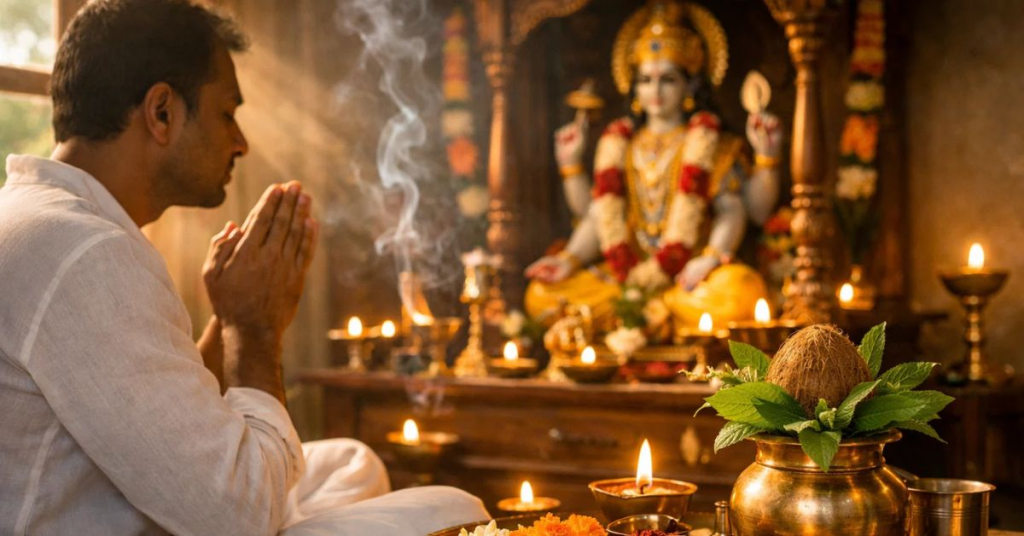
Apara Ekadashi is one of the most spiritually rewarding fasting days in Hindu tradition. It is observed during the Krishna Paksha (waning phase of the moon) in the month of Jyeshtha. Known for its immense power to cleanse past sins and bring divine blessings, this sacred day holds deep significance for devotees of Lord Vishnu.
But what exactly makes Apara Ekadashi so special?
Often referred to as the Ekadashi that grants “limitless” (apara) पुण्य (merit), it is believed that observing this fast with sincerity can offer benefits equal to performing great acts of charity, pilgrimages, and rituals. For many, it’s not just about fasting it’s about spiritual reset, discipline, and devotion.
If you’ve ever wondered apara ekadashi kya hai, or why so many people follow this vrat every year, you’re in the right place. In this guide, we’ll break down everything you need to know from its meaning and rituals to its deeper spiritual impact.
Apara Ekadashi Kab Hai? (Date & Timings)
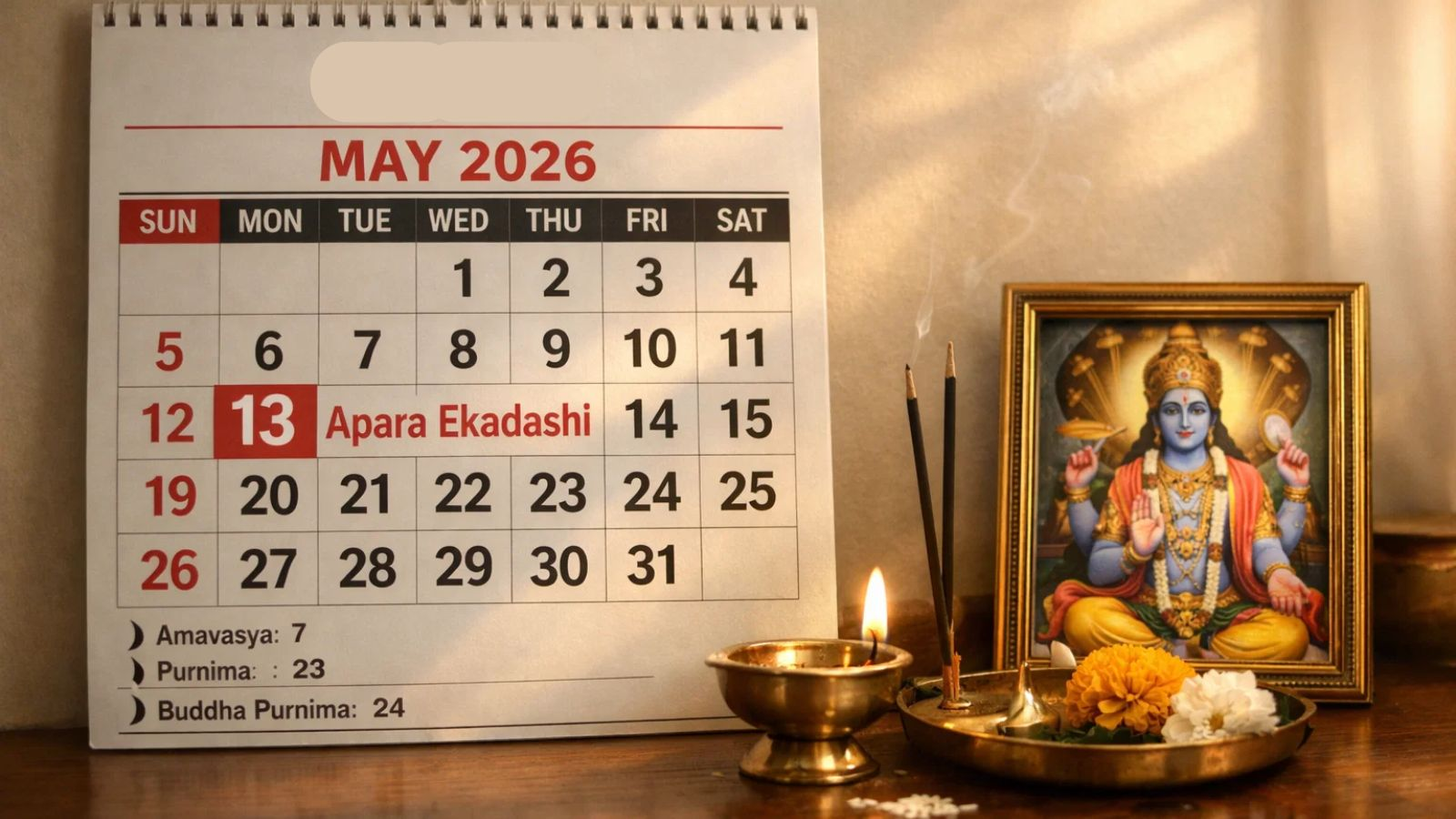
Many devotees search every year for apara ekadashi kab hai, as the exact date changes based on the lunar cycle.
In 2026, Apara Ekadashi will be observed on 13 May 2026 (Wednesday). The Ekadashi Tithi begins on the afternoon of 12 May 2026 and ends on the afternoon of 13 May 2026. But the main fasting day is considered based on sunrise timing.
The Parana (fast breaking time) falls on 14 May 2026 in the morning after sunrise, once the Dwadashi tithi begins.
Key Timings (Simple View)
- Ekadashi Tithi Start: 12 May 2026 (afternoon)
- Ekadashi Tithi End: 13 May 2026 (afternoon)
- Main Vrat Day: 13 May 2026
- Parana: 14 May 2026 (morning after sunrise)
Since timings can slightly vary by location and Panchang, devotees often confirm local timings before observing the fast
Apara Ekadashi Significance
The spiritual significance of Apara Ekadashi lies in its deep connection with purification, devotion, and karmic cleansing. Among all Ekadashis, it is often described as one of the most powerful for removing negative karma and past sins when observed with sincerity.
According to Hindu belief, observing apara ekadashi significance goes beyond just fasting—it is about aligning the mind, body, and soul with divine consciousness. Devotees believe that this vrat helps eliminate even heavy karmic burdens and opens the path toward peace, prosperity, and spiritual growth.
What makes this day especially meaningful is its association with Lord Vishnu, the preserver of the universe. On this day, devotees focus on prayers, chanting Vishnu mantras, reading scriptures, and maintaining self-discipline. These practices are believed to strengthen spiritual energy and bring clarity of thought.
Another key aspect of Apara Ekadashi is its emphasis on forgiveness and letting go. It encourages individuals to reflect on their actions, correct past mistakes, and move forward with a cleaner mindset.
Many also believe that observing this fast brings benefits equivalent to performing:
- sacred pilgrimages
- charity and donations
- major Vedic rituals
This is why Apara Ekadashi is not just a religious observance but a powerful opportunity for inner transformation.
Also Read – How to Celebrate Mohini Ekadashi: Rituals and Traditions
Apara Ekadashi Vrat Katha (Story Behind the Vrat)
The apara ekadashi vrat katha is deeply rooted in Hindu scriptures and highlights the power of devotion, repentance, and divine forgiveness.
According to the traditional story, there once lived a righteous king named Mahidhwaj, who was known for his kindness and spiritual nature. However, due to circumstances and misunderstandings, he was killed by his own brother. Who then tried to hide his wrongdoing by burying his body under a tree.
After his death, Mahidhwaj’s soul did not find peace and turned into a wandering spirit. People in the village began experiencing unusual disturbances, and no one could understand the cause.
One day, a learned sage meditating nearby became aware of the situation. Through his divine vision, he discovered the truth about the king’s unjust death. The sage advised the villagers to observe Apara Ekadashi vrat and dedicate the merit to the departed soul.
As the villagers sincerely observed the fast and performed prayers on Ekadashi, the accumulated spiritual merit helped liberate King Mahidhwaj’s soul from suffering. He finally attained peace and moved toward a higher spiritual realm.
This story highlights the core message of apara ekadashi vrat katha—that sincere devotion, fasting, and remembrance of Lord Vishnu can cleanse deep karmic bonds and even bring liberation to troubled souls.
It also reinforces the belief that this Ekadashi is not just about personal benefit, but also about healing and spiritual upliftment for others.
Know about this too – Varuthini Ekadashi: Meaning, Mythology, Fasting Rules & Benefits
How to Observe Apara Ekadashi (Rituals & Rules)

Observing Apara Ekadashi is considered most effective when it is done with discipline, purity, and devotion. The vrat is not only about abstaining from food but also about cleansing thoughts and focusing on spiritual practices.
On the day of Ekadashi, devotees usually begin by waking up early in the morning, taking a bath, and wearing clean clothes. The day is dedicated to Lord Vishnu, so the home or temple space is cleaned and a lamp is lit in front of his idol or image.
Fasting is the central part of this vrat. Some devotees follow a complete fast without food and water, while others opt for a partial fast by consuming fruits, milk, or light sattvic meals. The key is maintaining self-control and avoiding grains, pulses, and heavy foods.
Throughout the day, chanting of Vishnu mantras, reading sacred texts like the Bhagavad Gita or Vishnu Sahasranama. Also, staying away from negative speech or actions are highly encouraged. Many devotees also spend time in prayer and meditation to stay spiritually focused.
Nighttime is considered especially powerful, and many people stay awake, engaging in bhajans or devotional activities. This is believed to increase the spiritual benefits of the vrat.
The fast is traditionally broken on the next day during the Parana time, after sunrise and within the recommended window, once Dwadashi tithi begins.
When followed with sincerity, these practices are believed to enhance the apara ekadashi significance, helping devotees experience inner peace and spiritual upliftment.
Consult Astrologers for Apara Ekadashi Guidance (AstroLive)

While the rituals and spiritual meaning of Apara Ekadashi are widely followed, many people still feel unsure about the exact vrat rules, personal dos and don’ts, or how it aligns with their horoscope. This is where personalized guidance can make a real difference.
Different individuals may experience different spiritual and practical outcomes based on their planetary positions, family traditions, and health conditions. In such cases, speaking to an experienced astrologer can help you observe the fast in a more meaningful way.
Platforms like AstroLive allow you to connect with astrologers in real time and get clarity on:
- whether you should observe a full or partial fast
- the correct Parana timing for your location
- personalized rituals based on your kundli
- remedies to enhance spiritual benefits of the vrat
This kind of guidance can help you align your practice of Apara Ekadashi more closely with your personal spiritual journey.
Conclusion
Apara Ekadashi is more than just a fasting dayv it is a powerful spiritual observance dedicated to cleansing karma, strengthening devotion, and inviting divine blessings into life. From its sacred vrat katha to its deep spiritual meaning, this Ekadashi holds a special place in Hindu tradition.
Whether you are observing it for spiritual growth, discipline, or peace of mind, understanding apara ekadashi kya hai, its timing, and rituals helps you follow it with greater sincerity. Its significance lies not just in fasting but in self-reflection, purity of thought, and devotion to Lord Vishnu.
If observed with faith, Apara Ekadashi is believed to bring immense spiritual merit and inner transformation making it one of the most meaningful Ekadashis of the year.

FAQs
1. What is Apara Ekadashi?
Apara Ekadashi kya hai is a sacred Hindu fasting day dedicated to Lord Vishnu. It is observed on the 11th day of Krishna Paksha in the month of Jyeshtha. It is believed to remove sins and bring spiritual upliftment when observed with devotion.
2. When is Apara Ekadashi in 2026?
Apara Ekadashi in 2026 will be observed on 13 May 2026 (Wednesday), while the Ekadashi Tithi begins on 12 May 2026 and ends on 13 May 2026.
3. Why is Apara Ekadashi important?
The apara ekadashi significance lies in its ability to cleanse past karma, promote spiritual discipline, and bring blessings of Lord Vishnu. It is considered one of the most powerful Ekadashis for spiritual growth.
4. What is the Apara Ekadashi vrat katha?
The apara ekadashi vrat katha tells the story of a king whose soul attained peace after the villagers observed this fast on his behalf, highlighting the power of devotion and karma cleansing.
5. How is Apara Ekadashi observed?
Devotees observe fasting, avoid grains and heavy foods, chant Vishnu mantras, read scriptures, and engage in prayer and meditation throughout the day.