



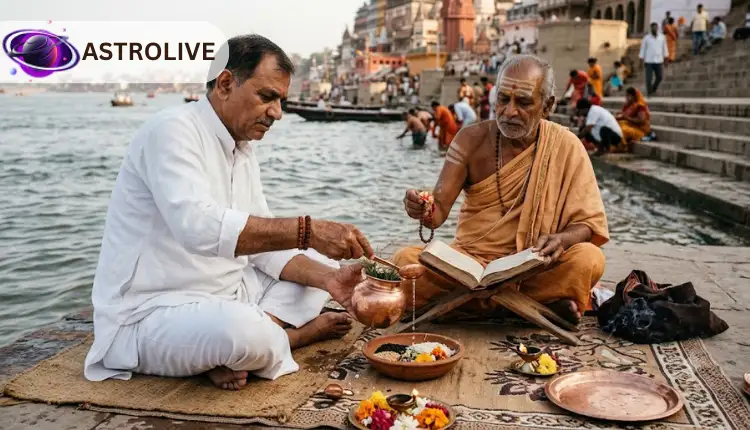
Sanatan Dharma isn’t simply about temples and deity worship; it’s also about honoring and paying respect to every creation of God.
Just as it worships the holy river Ganga, the holy mountain Govardhan, and Kailash, similarly, in the 16-day lunar period of the Bhadrapada month, Hindus offer respect and charity to their forefathers by offering them tarpan and pind to help them get elevated to higher spiritual places.
Here’s a complete guide highlighting why Pitru Paksha is important and explaining the meaning and process of following rituals with great reverence to satisfy your ancestors and receive their blessings.
What Is Pitru Paksha?
Pitru Paksha is a sacred period that starts with the Bhadrapada Purnima, dedicated to remembering, honoring, and expressing gratitude to the deceased ancestors, known as Pitrs.
It is traditionally observed for around 16 lunar days during the waning phase of the Moon.
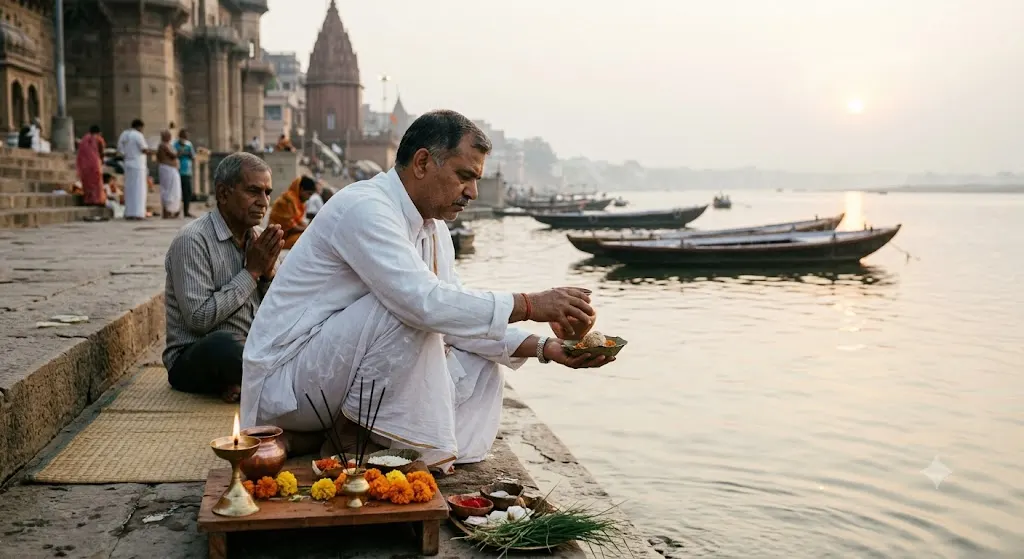
During this period, families perform rituals such as Shraddha, Tarpan, and Pind Daan to pay respects to their ancestors.
One also offers food, water, sesame seeds, and perform charity as a part of the process that varies according to family traditions and regionality.
Shraddha is generally performed on the tithi (lunar date) of an ancestor’s death.
The final day, Sarva Pitru Amavasya or Mahalaya Amavasya, is considered particularly important for ancestral rituals, especially when the exact death tithi is unknown.
Beyond rituals, this Paksha is a time to remember family members who have passed away, appreciate their contributions, and practice gratitude and charity. Performing these rites with faith and devotion helps us honor the ancestral lineage and practice gratitude and appreciation.
Significance And Stories Related To It.
One of the most well-known stories associated with Pitru Paksha is that of Karna from the Mahabharata. According to the epic, after Karna died, he reached the Pitruloka (the abode where souls reach after death until the judgement for heaven or hellish planets comes) but was offered gold and precious jewels instead of food.
When he asked why, he was told that during his lifetime, he had generously donated wealth but had not offered food or performed rituals for his ancestors. Karna was then allowed to return to Earth for a period to offer food and perform Shraddha for his ancestors.
This story is traditionally associated with the importance of Pitru offerings and Annadan (donating food).
Honoring the sacred Paksha has also been stated in different scriptures like the Srimad Bhagavatam (Bhagavata Purana).
( ŚB 7.14.19 )
kuryād apara-pakṣīyaṁ
māsi prauṣṭha-pade dvijaḥ
śrāddhaṁ pitror yathā-vittaṁ
tad-bandhūnāṁ ca vittavān
A brāhmaṇa who is sufficiently rich must offer oblations to the forefathers during the dark-moon fortnight in the latter part of the month of Bhādra. Similarly, he should offer oblations to the relatives of the forefathers during the mahālayā ceremonies in the month of Āśvina.
Another important belief connects this Paksha with the idea that ancestors are remembered through faithful offerings and charitable acts. Families therefore perform rituals, feed people, and donate food or other necessities according to their customs.
Pitru Paksha teaches the values of gratitude, remembrance, charity, and respect for one’s ancestors.
The traditions surrounding it emphasize maintaining a spiritual connection with previous generations while fulfilling one’s duties toward them.
Rituals To Perform In Pitru Paksha.
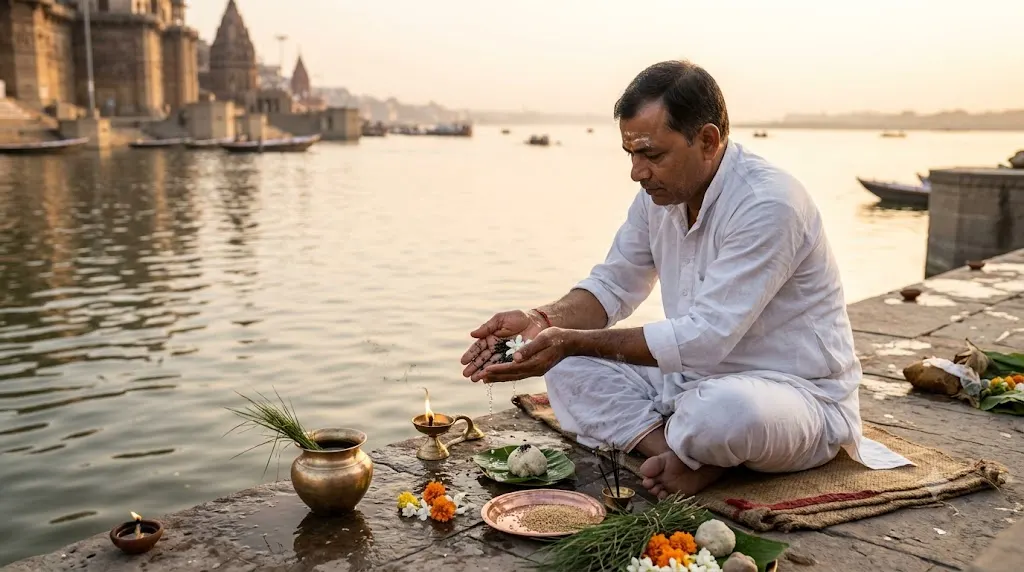
Here are some of the common rituals performed during this period:
- Shraddha Ritual: Shraddha is performed to honor departed ancestors with faith and devotion. Families traditionally offer food, water, and other items while praying for the peace of their ancestors.
- Tarpan: Tarpan involves offering water, often mixed with black sesame seeds (til), while remembering the ancestors. It is performed as an expression of respect and gratitude toward the Pitrs.
- Pind Daan: Pind Daan involves offering pindas (rice or flour-based offerings) to the ancestors. It is traditionally performed as part of ancestral rites and prayers for their spiritual well-being.
- Offering Food: Families traditionally prepare satvik food and offer it in memory of their ancestors. In many traditions, food is also given to Brahmins, cows, dogs, crows, or people in need.
- Charity and Donation: Donating food, clothes, grains, or other useful items is considered a meaningful practice during this paksha. It reflects generosity and is performed as an offering in remembrance of ancestors.
- Prayers and Meditation: Families may spend time praying, chanting mantras, or meditating for their departed ancestors. These practices provide an opportunity to remember loved ones and reflect on family traditions.
- Sarva Pitru Amavasya: The final day is considered particularly significant for ancestral rituals. Those who cannot perform Shraddha on the specific death tithi may traditionally perform it on this day.
About AstroLive.
Make your spiritual journey more convenient with AstroLive, a digital platform that brings traditional Pujas and astrology services closer to you. Whether you want to perform a Puja during this paksha or seek guidance for other important occasions, AstroLive lets you explore and book available services online.
Why Choose AstroLive:
- Online Puja Booking: Explore available Pujas and book them conveniently from anywhere.
- Experienced Pandits: Pujas are performed by knowledgeable priests following traditional rituals and procedures.
- Live Puja Updates: Stay informed about your Puja with updates during the ritual.
- Puja Recording: Receive a recording of the performed Puja for your personal reference, where available.
- Prasadam Delivery: Selected Puja services may include Prasadam delivered to your doorstep.
- Astrology Services: Get access to astrology-related services and guidance through the platform.
- Convenient Experience: Participate in traditional spiritual practices without having to arrange everything in person.
Perform Pitru Paksha Puja Easily With AstroLive.
Observing rituals can be made easier with AstroLive’s online Puja services. AstroLive provides a dedicated “Book a Pooja” section where devotees can browse available Puja services and book them online.
During this paksha, you can visit the AstroLive Puja platform, choose a suitable available Puja, provide the required details such as your name and gotra, and complete the booking from home. AstroLive’s Puja services are conducted by experienced priests following traditional rituals.
Depending on the Puja, AstroLive also provides updates when the ritual begins and ends, a complete video recording of the Puja through WhatsApp, and Prasadam delivery where offered.
So, if you are unable to visit a temple personally during this paksha, online Puja booking can provide a convenient way to participate in an available ancestral or spiritual ritual from home. Before booking, check AstroLive’s current Puja listings to confirm whether a Pitra Paksha/Shraddha-specific Puja is available.
With AstroLive, you can combine the convenience of online services with traditional spiritual practices. Visit AstroLive to explore its Puja and astrology services and find an option suitable for your spiritual needs.
Frequently Asked Questions
1. What is Pitra Paksha?
It is a sacred period dedicated to remembering and honoring deceased ancestors through prayers, Shraddha, Tarpan, and other traditional rituals.
2. Why is Pitra Paksha celebrated?
It is observed to express gratitude toward ancestors and pray for their peace and spiritual well-being.
3. What rituals are performed during Pitru Paksha?
Common rituals include Shraddha, Tarpan, Pind Daan, offering food, prayers, and charity.
4. Can we perform Pitru Paksha rituals at home?
Yes, many families perform simple ancestral prayers and offerings at home according to their family traditions. More elaborate rituals may be performed with the guidance of a priest.
5. What is Sarva Pitru Amavasya?
Sarva Pitru Amavasya is the final day of this paksha. It is considered an important day for performing Shraddha and remembering ancestors, especially when their specific death tithi is unknown.