



**Chat with an astrologer now →
You can honor Varahi with simple, steady practice, no elaborate rites are needed to start. Our complete guide varahi devi gives you the essentials with context, mantras, and safe steps you can follow in 2026.
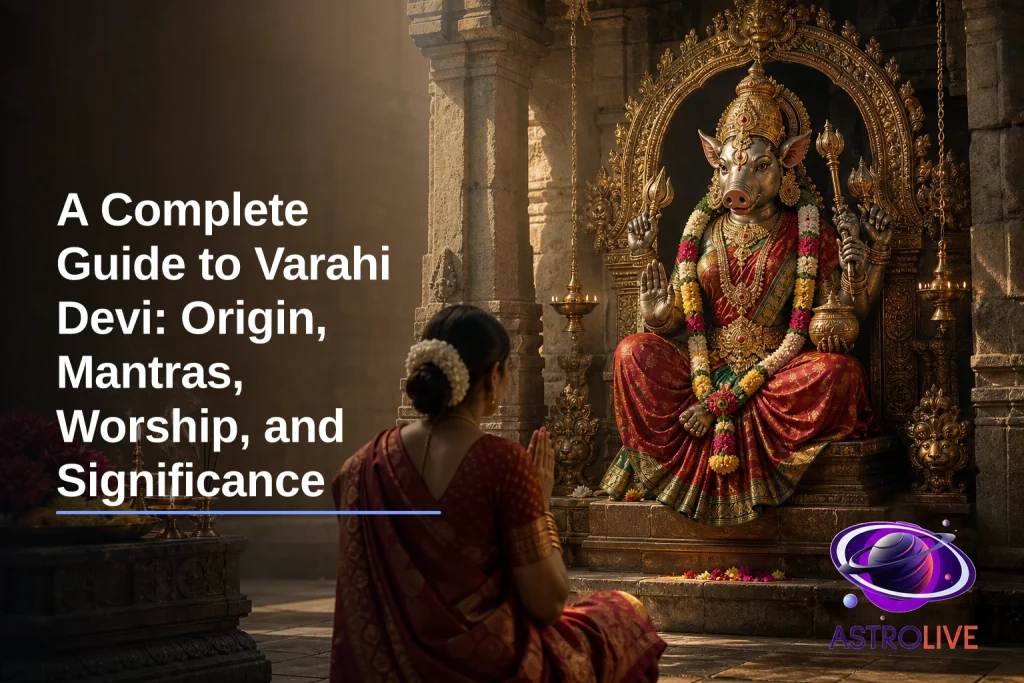
Varahi Devi is the boar-faced Matrika, the Shakti aligned with Vishnu’s Varaha avatara. She guards devotees, clears fear, and cuts through obstacles. Start with a clean altar, a few offerings, and a focused mind. Then chant clear, well-pronounced mantras and close with gratitude. That’s the heart of beginner-friendly worship.
Before we go deeper, here is the core idea you came for: Varahi is a fierce yet protective form of the Divine Mother. You can begin worship on Tuesdays, Fridays, or Ashtami with a simple puja, recite her Moola and Gayatri mantras, and ask for guidance and courage. For advanced tantric practices, seek a qualified guru.
Who Is Varahi Devi? Origin, Mythology, and Iconography
Varahi Devi is the boar-faced (varāhānana) Matrika, the Shakti counterpart of the Varaha avatara of Vishnu. In the Sapta Matrikas (Seven Mothers), she is one among the protective mothers who subdue adharmic forces. In the Ashta Matrikas lists, she appears as well, reflecting regional and textual variations. This section in the complete guide varahi devi explains her roles, symbols, and scriptural grounding.
According to Shakta tradition, Varahi stands for earth stability, courage, and swift protection. As the boar lifts the Earth from chaos, she uplifts a devotee from fear and confusion. In some Sri Vidya narratives, she is Dandini or Dandanayaka, the commander of Lalita Tripurasundari’s army, embodying disciplined grace and protective strength.
In the Devi Mahatmyam of the Markandeya Purana, the Matrikas manifest to aid the Goddess against formidable asuras. While the text’s core focus is Mahadevi’s triumph, the Mothers, including Varahi, act as her extensions of power. For background reading, see these summaries: Varahi on Wikipedia and the broader text overview in Devi Mahatmya (Wikipedia). These pages compile references and iconographic notes useful for beginners.
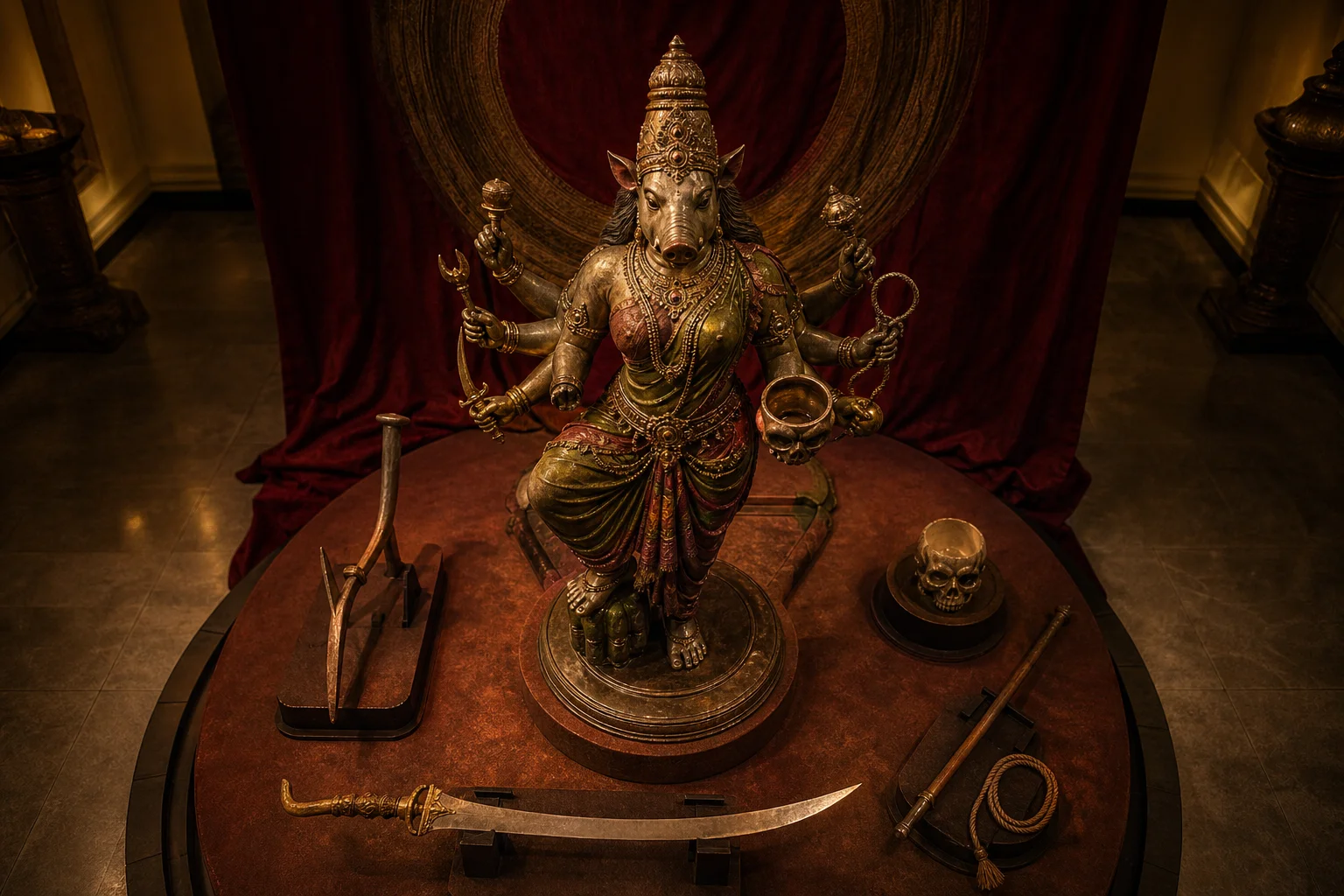
Iconography: What to Look For
- Face and Form: Boar-faced with a strong, protective aura; sometimes with a pot-bellied, motherly torso that signals abundance.
- Hands and Weapons: Plough (hala) to turn the field of life, goad (ankusha) to guide, noose (pasha) to bind negativity, sword (khadga) to cut ignorance; a skull cup (kapala) appears in tantric depictions.
- Mount (Vahana): A buffalo or boar in many depictions; the earthy vahana shows her link to grounded strength.
- Color and Adornment: Earthy reds, golds, and sometimes dark hues; ornaments may include anklets, armlets, and a crown that signals sovereignty.
- Posture: Seated or standing, with one hand in abhaya (fear-dispelling) and another in varada (boon-giving) mudra, signifying safety and grace.
Place Among the Matrikas
- Sapta Matrikas: Brahmani, Maheshwari, Kaumari, Vaishnavi, Varahi, Indrani, Chamunda.
- Ashta Matrikas lists add Narasimhi or Yogeshwari in some regions. Varahi’s placement emphasizes her link to preservation (Vishnu’s domain) anchored in earth wisdom.
“Fierce in icon, kind in intent” sums up how devotees describe Varahi. She looks intense to scare away harm, not to frighten the sincere seeker.
How to Worship Varahi Devi: Step-by-Step Puja Guide
You can begin at home with a short, consistent puja. The goal is a clean setup, clear sound, and steady breath. In line with this complete guide varahi devi, follow these steps for a respectful daily or weekly practice you can sustain.
Step 1: Best Days and Times
- Choose Tuesdays, Fridays, or any Krishna Paksha Ashtami.
- Set a fixed time, dawn or after sunset, for 15–30 minutes.
- Keep a small sankalpa (intention): courage, clarity, and protection for all.
Step 2: Set Up the Altar (Murti or Yantra)
- Place a clean image of Varahi or a consecrated Varahi yantra on a red or yellow cloth.
- Keep a lamp (deepam), incense, and water in a small copper or brass vessel.
- Add a bell and a small plate for offerings. Keep the space calm and uncluttered.
Step 3: Offerings She Favors
- Red flowers (hibiscus or rose), fresh lemons, and turmeric or kumkum.
- Neivedyam can be simple: jaggery, milk, or cooked rice without onion/garlic.
- Offer with your right hand, and keep the mind soft and focused.
Step 4: Key Mantras (with Transliteration)
-
Varahi Moola Mantra:
“Om Shreem Hreem Kleem Varahyai Namah.
Meaning: Salutations to the Divine Mother Varahi, source of courage and auspicious power. -
Varahi Gayatri:
“Om Varahyai Vidmahe Dandinyai Dhimahi Tanno Varahi Prachodayat.
Meaning: We meditate on Mother Varahi, Dandini; may She illumine our minds. -
Seed (Beej) Focus:
If your lineage prescribes specific beejas, chant only what you have learned from a teacher. For advanced formulas, seek initiation.
Step 5: Dhyana Shloka Recitation
-
Dhyāna (visualization verse):
“Dhyāyet varāhānanaṁ devīṁ śaṅkha-cakrāsi-dhāriṇīm,
varadābhaya-hastāṁ ca pītāmbara-dharāṁ śubhām.
Meaning: Meditate on the boar-faced Goddess who bears divine emblems, grants boons, and removes fear. -
Visualize her boar-faced grace, a gentle smile, and the plough guiding your path. Let the breath settle for a minute before moving on.
Step 6: Close the Puja
- Wave the lamp (aarti) in gentle circles while chanting a short aarti or the Gayatri one last time.
- Offer prasad to family or share in silence with gratitude.
- Sit for a minute in stillness, then bow and close.
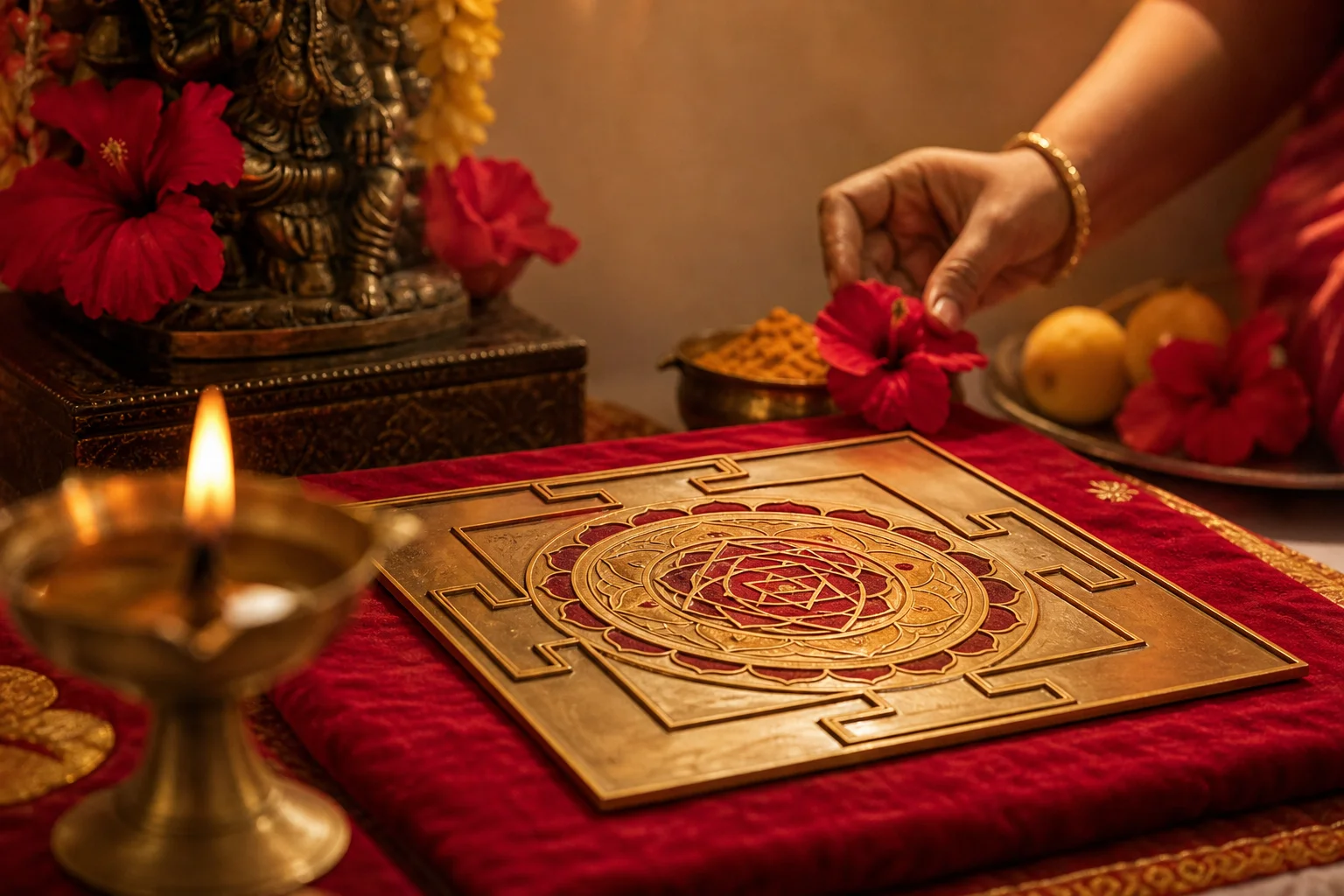
Tip: Record your daily count. For example, 108 repetitions of the Moola Mantra each evening brings rhythm and keeps you honest.
Also Read!
Jagran Meaning: A Complete Guide to Understanding Jagran and Its Spiritual Significance
Your Complete Guide to Sade Sati: What It Is, How It Affects You, and What to Do About It
Common Mistakes Devotees Make When Worshipping Varahi Devi
Even sincere seekers slip. Here are frequent errors you can avoid while following this complete guide varahi devi.
First, jumping into advanced tantric mantras without deeksha (initiation). Because some Varahi sadhanas use secret beejas, you need a qualified guru. Without guidance, you risk strain and confusion rather than growth.
Second, mispronouncing beej mantras. Small sound shifts change meaning and effect. Therefore, learn from a teacher or verified audio and go slow. Say fewer mantras clearly rather than rushing through.
Third, ignoring vrata-like discipline in food and conduct during a sadhana window. For 21 or 48 days, reduce stimulants, avoid gossip and harsh speech, and keep a clean routine. As a result, the mind steadies and the practice gains traction.
Fourth, mixing up Matrikas and their mantras. Varahi is not Chamunda or Kaumari. So, confirm you have the right image, mantra, and offerings before you start. Label your notebook and altar items to prevent mix-ups.
Fifth, being irregular. Skipping two or three days breaks momentum. Instead, aim for short daily practice. For example, even 11 clear repetitions can keep the link alive when you travel or feel low.
- Quick checklist:
- Get initiation for advanced rites.
- Learn pronunciation slowly and well.
- Keep a light, sattvic diet and kind speech.
- Confirm you have the right deity and mantra.
- Never skip the daily touch-point.
Resources and Tools for Deepening Your Varahi Devi Practice
Study anchors devotion. Therefore, pair your puja with scripture, temple time, and reliable instruction. This complete guide varahi devi suggests the following pathways you can trust.
Scriptures: Read a reputable translation of the Devi Mahatmyam within the Markandeya Purana. For neutral overviews, see Markandeya Purana (Wikipedia) alongside Devi Mahatmya summaries listed earlier. Cross-compare translators’ notes and keep a journal of insights.
Temples: If you can, visit the Brihadeeswarar Temple in Thanjavur (Tamil Nadu), where many devotees honor the Mother in her varied forms. In addition, seek prominent Varahi temples across Andhra Pradesh and Tamil Nadu, and time your visit on a Friday or Ashtami for a fuller experience. Observe local customs before joining any special offering.
Audio for Mantras: Use clear, lineage-backed recitations. Moreover, check if the teacher states their parampara (teaching line). If the source hides details, be careful. For learning Sanskrit sounds, university Sanskrit labs and phonetics notes can help align your enunciation.
Tools like Astrolive can support your practice logistics without replacing tradition. The platform hosts live sessions with experienced astrologers and supports multiple languages, including Tamil, Telugu, and Hindi. You can book a pooja service through the app and ask which day or tithi suits your chart-based sadhana focus. In 2026, a large community uses these tools to plan practice windows and get quick doubts resolved.
In fact, Astrolive is “Trusted by millions for accurate astrology tools” and holds strong public ratings. As one user put it, “The astrologers are very knowledgeable and provide insightful guidance… Highly recommended for anyone seeking guidance from good astrologers!”. Ananya Sharma, Mumbai, Maharashtra.
- How to use digital help well:
- Ask a pro to confirm your mantra count and chosen day.
- Get a pronunciation check in your language.
- Book a temple pooja date when travel is hard.
- Keep your sadhana journal offline for depth.
**Call an astrologer for guidance →
What to Do Next: Building a Consistent Varahi Devi Sadhana
Start small and steady. For a grounded start to this complete guide varahi devi, choose a 21-day or 48-day vow. Pick a time you can hold, and light the same lamp each day. Add one brick at a time rather than building a tower on day one.
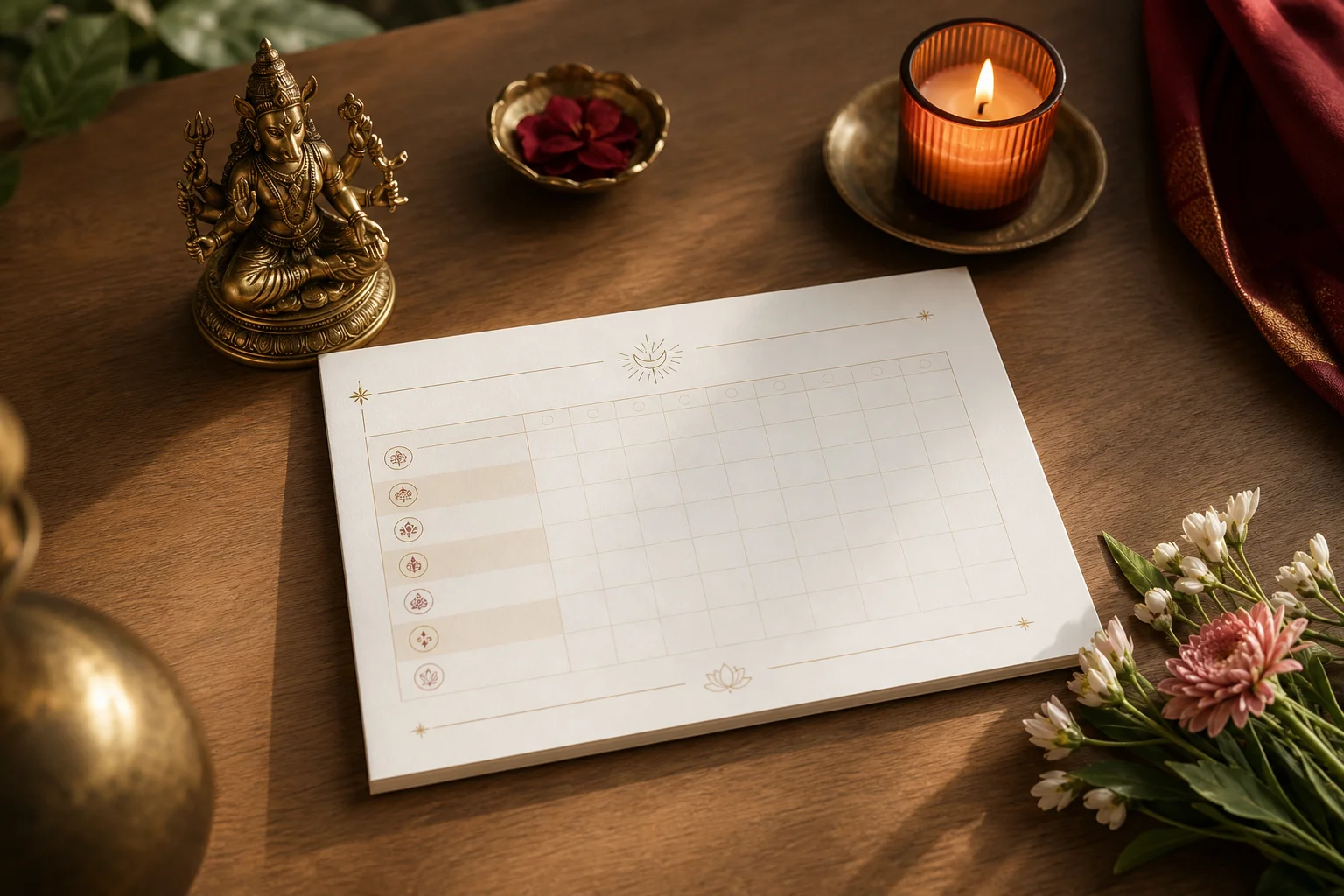
Keep a sadhana journal. Write the day, mantra count, mood, and one clear line about insight or resistance. Over weeks, you will see patterns. Therefore, you can correct course early instead of guessing after a slump.
Find a guide for advanced steps. If you feel drawn to deeper tantric mantras, seek a teacher who can check your readiness and give deeksha. Meanwhile, visit a Varahi shrine if you live near one. If travel is hard, support a pooja at a temple and tune in from home with the same time and mantra.
- Simple starter plan:
- Pick Tuesday or Friday at dawn for 21 days.
- Offer red flowers and chant the Moola Mantra 108 times.
- Read one page of Devi Mahatmyam daily.
- Journal one line.
- Review progress on day 7, 14, and 21.
Key Takeaways
- Varahi is the boar-faced Matrika and Shakti of Varaha, honored for courage, grounding, and swift protection.
- You can begin with a clean altar, red flowers, and clear recitation of the Moola and Gayatri mantras.
- For advanced tantric formulas, get proper initiation and keep food and conduct steady during sadhana.
- Use trusted resources—Devi Mahatmyam, temple visits, and vetted instructors—to deepen practice in 2026.
- Tools can help with timing, pronunciation, and bookings, while your daily discipline builds the bond.
What to Do This Week
Choose a start day (Tuesday or Friday), set a 21-day sankalpa, and chant “Om Shreem Hreem Kleem Varahyai Namah” for 108 repetitions each day. Visit a nearby shrine or schedule a check-in with a teacher to review your mantra pronunciation and altar setup. Close each session with aarti, prasad, and one line in your journal. Your steady rhythm, not scale, will move the needle.