



**Get instant astrologer chat →
Rudraksha comes from Elaeocarpus ganitrus, an evergreen that thrives in humid, frost‑free belts from Nepal and India to Indonesia, and sets bead‑bearing drupes after 7–8 years. Use this complete guide rudraksha tree to learn fast, field‑ready ID, growing needs, and the bead’s place in tradition in 2026.
You’ll see the science and the story side by side. First, you’ll get a clear answer: the tree likes warm, wet summers, hates hard frost, and needs well‑drained soil. Then, you’ll get a step‑by‑step plan to pick honest seedlings, plant them, and care for them until fruit.
 with labeled leaves, flowers, green drupes, and a cross-section showing the bead; clean white background, museum-plate style)
What Is a Rudraksha Tree? Botany, Origins, and Where It Grows
Rudraksha beads are the seeds of Elaeocarpus ganitrus, a broadleaf evergreen in the Elaeocarpaceae family. The tree shows a straight trunk, gray‑brown bark, and a rounded crown. Leaves are simple, glossy, and elliptic with serrated edges; new flushes can be coppery red before turning deep green.
In its native range, you’ll meet it from the Himalayan foothills of Nepal and North India, across Northeast India and Bangladesh, through Myanmar, and into Indonesia (notably Java and Sumatra). The band is humid subtropical to tropical, with warm monsoon rains and short, mild winters. As a rule, frost injures young growth and can kill seedlings.
Mature height in favorable ground sits in the mid‑teens to low‑twenties in meters, with plenty of daylight and space. In addition, the tree bears small, cream‑white, fringed flowers in clusters. Fruit set follows after the warm season. The “bead” is the stone of a blue‑ripening drupe, not the whole fruit.
Altitude and Climate for a Rudraksha Tree
Choose low to mid‑elevation foothill zones that avoid sharp frost; those belts work best for establishment. Aim for warm summers and keep winter lows above 4–5°C, especially for young plants. Steady summer rain with high humidity improves flowering and fruit set. During bloom, shelter the tree from dry, hot winds.
For scientific background and distribution notes, see this short overview of the species on Elaeocarpus ganitrus. Wikipedia. Use it as a map to cross‑check local suitability.
Quick ID Checklist for a Rudraksha Tree
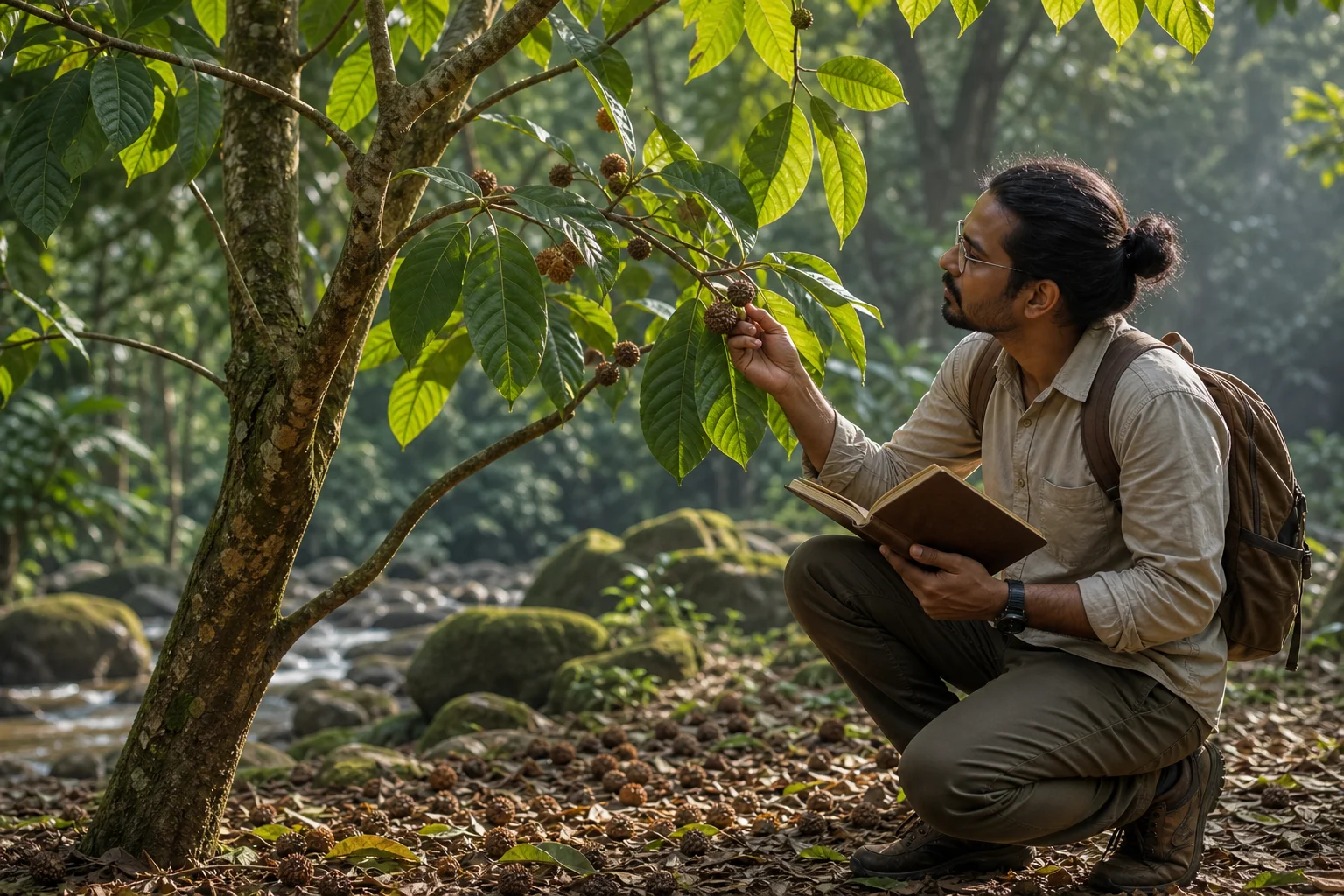
Look for evergreen leaves with fine serration and netted veins. The small, cream flowers have fringed petals and appear in racemes. Fruits start as green drupes that ripen toward blue, each holding a hard, sculpted stone whose surface shows natural lines (mukhi) running from the stem end to the apex. These features together separate it cleanly from look‑alikes.
Finally, plan your timeline. From seed, a healthy tree starts fruiting in 7–8 years, with peak yields later. Therefore, patience is part of the project. This section sets the base for the complete guide rudraksha tree you’ll use through the rest of this article.
How to Identify, Select, and Grow a Rudraksha Tree Step by Step
You want a live tree, not a story. So here is a clear, practical path that works in real gardens and farms. This complete guide rudraksha tree process starts with honest sourcing, then moves through soil prep, planting, and care.
Step 1: Identify Genuine Seedlings vs. Fakes
- Demand a botanical label: “Elaeocarpus ganitrus.” Avoid vague tags like “Rudraksha plant.
- Check leaves: young flush may be reddish; mature leaves are glossy, serrate, and elliptic.
- Inspect stems: woody, not herbaceous; internodes even, no graft scars from unrelated species.
- Ask origin: Nepal, North/East India, or Indonesia sources are standard; request nursery records.
- Verify the nursery’s track: ask for 1–2 buyer refs or photos of fruiting mother trees.
Step 2: Prep Soil and Climate (Subtropical, Well‑Drained)
- Site: full sun to light afternoon shade in very hot zones.
- Soil: loam or sandy loam; pH near neutral; rich in organic matter.
- Drainage: critical. Raise a 20–30 cm mound if the site puddles after rain.
- Microclimate: windbreaks on the hot, dry wind side; frost cloth ready for young trees.
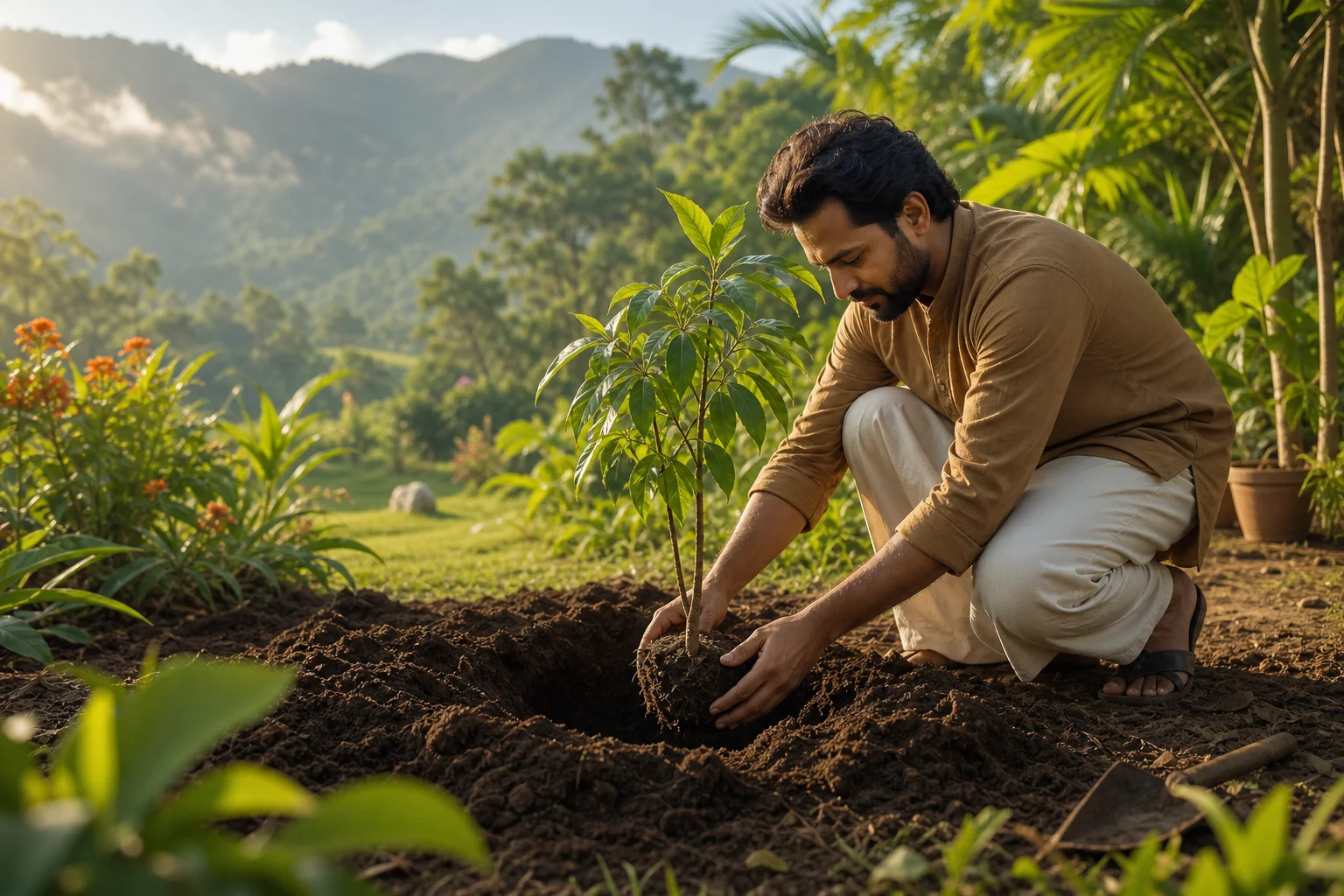
Step 3: Planting and Germination Tips
- From seed: use fresh seed after removing pulp; sow 2–3 cm deep in a fast‑draining mix.
- From saplings: choose 30–60 cm tall, well‑rooted plants; plant at the same depth as in the pot.
- Spacing: 5–7 m between trees for future crown spread and light.
- Mulch: 5–8 cm organic mulch, kept 10 cm off the trunk to prevent rot.
Step 4: Watering and Sunlight Needs
- Water: keep soil evenly moist, not soggy. Deep water 1–2 times per week in dry spells.
- Sun: aim for 6–8 hours of light. In heat waves above 40°C, offer light afternoon shade.
- Feeding: start with compost; add a balanced, slow‑release feed in spring and mid‑monsoon.
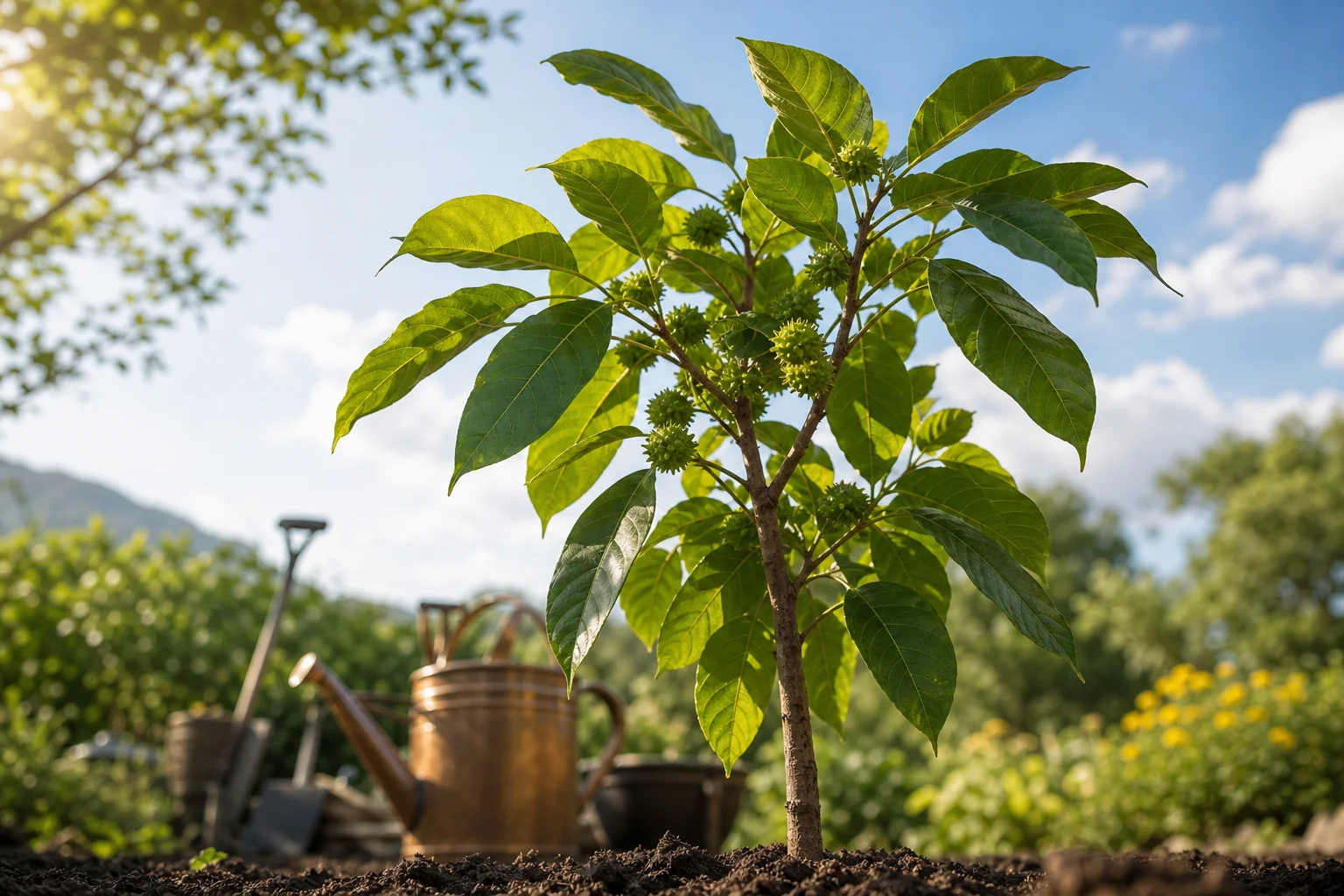
Step 5: Patience — Fruiting Takes 7–8 Years
- Year 0–2: root growth and canopy build; protect from frost.
- Year 3–5: first flowers in good sites; remove weak shoots and shape the frame.
- Year 6–8: first reliable fruit set; harvest drupes when blue and soft, then clean the stones.
Mukhi Basics: A Practical Guide
Count the natural grooves (mukhi) that run from the stalk point to the opposite pole, and do not include cracks from damage, only full, continuous lines count. In trade, 5‑mukhi beads are widespread, while 1–21 mukhi exist in nature. Shape, color, and size vary with region and tree age, so focus on the genuine groove count first.
Place each step on a calendar. Set alerts for seasonal jobs like feeding before the rains and frost protection in early winter. As you follow these steps, you keep the complete guide rudraksha tree in action, not just on the page.
Also Read!
Jagran Meaning: A Complete Guide to Understanding Jagran and Its Spiritual Significance
A Complete Guide to Varahi Devi: Origin, Mantras, Worship, and Significance
Common Myths and Mistakes About Rudraksha Trees
Misinformation costs you seasons, not minutes. Clear these five issues out of your plan, and you’ll protect your time, money, and young plants.
Rudraksha Tree Myths to Skip
One myth says “All Rudraksha comes from one species”, false: beads in trade center on Elaeocarpus ganitrus, but the genus Elaeocarpus includes many species, so don’t mix them blindly. Another claims “The water test proves real or fake”, false: density varies with size, drying, and inner structure, so some real beads float and some fakes sink. A third insists “Fast fruiting is normal”, false: expect first useful yields after 7–8 years from seed, with earlier results only if grafted from a proven mother tree, and even that is rare.
You may also hear “Bhadraksha is the same as Rudraksha”, false: Bhadraksha refers to different seeds or stones that may look similar, so learn the natural mukhi lines and poles to avoid mix‑ups. Finally, “More water in pots is better”, false: over‑watering suffocates roots and causes die‑back, and good drainage wins every time.
Moreover, be cautious with claims of rare mukhi counts at low prices. Therefore, rely on natural groove counts, clear poles, and provenance. Keep this complete guide rudraksha tree pointer in mind: biology is consistent; myths are not.
Tools and Resources for Understanding Rudraksha Trees
Good sources speed up learning and cut risk. For scientific context, start with standard references like university herbaria catalogs and Kew’s Plants of the World Online (named here for reference). For a primer on the species and its spread, the Elaeocarpus ganitrus. Wikipedia entry is a helpful anchor you can read in one sitting.
For scriptural context, read primary texts. The Shiva Purana and Padma Purana describe the spiritual meaning and ways people use beads in worship. Therefore, you can balance botany with tradition and avoid vague claims.
If you want tailored guidance on which mukhi may suit your chart, Vedic astrology and personalized astrological services can help. Tools like Astrolive connect you with verified Vedic astrologers, with chat sessions starting at ₹10/min and voice calls at ₹15/min. Astrolive is trusted by millions for accurate astrology tools, and it hosts experts across Vedic, KP, Tarot, Numerology, and Vastu.
"The astrologers are very knowledgeable and provide insightful guidance. The Live Chat feature is particularly helpful, allowing me to get instant answers to my questions." — Ananya Sharma, Mumbai, Maharashtra
**Download the app free today →
As of 2026, reliable nurseries in the Himalayan belt and Northeast India share mother tree photos and seedlot years on request. Ask for that, keep receipts, and store seed provenance notes in your garden journal.
What to Do Next: Your Rudraksha Tree Journey
Seeing a live tree changes everything. Plan a weekend visit to a regional botanical garden or university arboretum to study leaves, bark, flower clusters, and fruit stages. Take close photos of leaf serration and racemes so you can compare later at home.
Next, source verified saplings. Call or message reputable Himalayan and Northeast Indian nurseries that can show fruiting mother trees and recent seedlot years. In warm zones, start with a potted sapling in a 35–45 cm container on a well‑drained stand. Then shift it to ground when roots hold the soil ball and nights stay above 12–14°C for four straight weeks.
Meanwhile, learn your mukhi needs, if you care for the spiritual side. Book a short reading to align picks with your birth chart, and keep the record with your bead purchase notes. This way, your spiritual plan and your gardening plan stay in sync through 2026 and beyond.
Scout one or two public gardens or farms that grow Elaeocarpus ganitrus, and map them for a weekend visit. Then source verified saplings by collecting two nursery quotes with mother‑tree proof. Start a sunny, wind‑sheltered spot with raised, mulched soil to receive the plant. Finally, schedule two seasonal care reminders: pre‑monsoon feeding and early‑winter frost cover.
Finally, commit. Trees reward steady care, not rush. With this complete guide rudraksha tree plan, you give yourself a real shot at blue drupes and clean, well‑formed beads in a few years.
**Call an expert astrologer now →
Key Takeaways
Elaeocarpus ganitrus is the species behind Rudraksha; it thrives in warm, humid, frost‑free belts from Nepal and India to Indonesia. Well‑drained soil, steady summer water, and wind shelter are the three biggest success factors. First reliable fruit set arrives in 7–8 years from seed; plan long‑term and record care. Mukhi lines are natural grooves; count them from pole to pole and ignore folk “tests. For scriptural context and personal guidance, pair primary texts with a short Vedic consult.
What to Do This Week
Mark a site with six hours of sun, build a 20–30 cm raised mound for drainage, and mulch it. Reach out to two nurseries for sapling provenance, and book a 15‑minute Vedic consult to clarify mukhi choices. Then set calendar alerts for feeding pre‑monsoon and frost protection in early winter.