




In Vedic astrology, a birth chart alone does not reveal the complete picture of a person’s life. While the main horoscope (D1 chart) shows overall personality, career, health, and relationships, deeper insights come from divisional charts. One of the most important among them is the navamsa chart.
Often referred to as the D9 chart, this divisional chart plays a crucial role in understanding marriage, destiny, spiritual growth, and the true strength of planets. Many experienced astrologers consider the navamsa chart just as important as the birth chart because it refines and validates planetary placements.
If you’ve ever wondered what a chart is and why it holds such significance in Vedic astrology, this guide will walk you through its meaning, calculation, and interpretation simply and practically.
What Is Navamsa Chart?
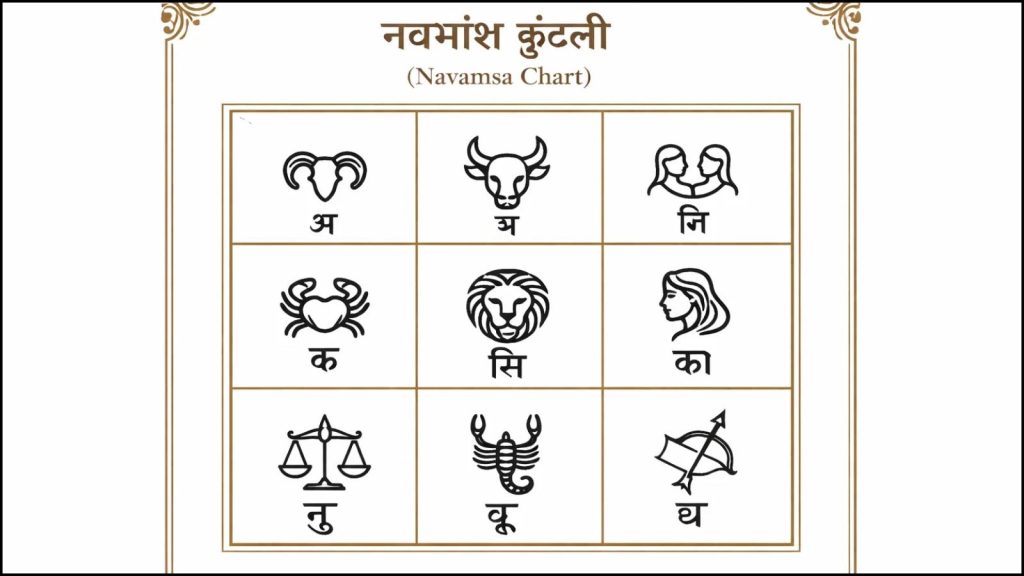
To truly understand Vedic astrology, you need to go beyond the main birth chart. This is where the navamsa chart becomes essential.
So, what is a navamsa chart exactly?
The word “Navamsa” comes from two Sanskrit terms: Nava (nine) and Amsa (division). This means each zodiac sign (30 degrees) is divided into nine equal parts of 3 degrees and 20 minutes each. These nine divisions create a separate divisional chart known as the D9 or chart.
While your birth chart (D1) shows the external structure of your life, the D9 chart reveals the deeper layer of your destiny. It highlights the true strength of planets, especially after maturity. In simple terms, a planet that appears strong in the birth chart but weak in the chart may not deliver full results over time.
Astrologers use this chart mainly to analyze marriage, spouse characteristics, long-term partnerships, and spiritual evolution. However, its role is not limited to relationships. It also indicates how your karma unfolds as you grow older.
Understanding the navamsa chart helps refine predictions and adds depth to overall horoscope interpretation.
Why the Navamsa Chart Is Important in Vedic Astrology
The chart holds a special place in Vedic astrology because it reveals the deeper truth behind planetary placements. While the birth chart shows potential, the D9 chart indicates how that potential actually manifests over time.
One of the primary reasons astrologers rely on the chart is for marriage and relationship analysis. The 7th house, Venus, and Jupiter are closely examined in D9 to understand marital harmony, spouse qualities, and long-term compatibility. Many astrologers even say that a strong D9 can improve the effects of a moderately placed planet in the birth chart.
Another major reason the chart is important is planetary strength. A planet placed in its own sign, exaltation sign, or friendly sign in D9 gains deeper power. Even if it looks average in the main chart, its placement in the D9 can enhance results, especially after the age of 30.
Beyond marriage, this chart is strongly connected to dharma (life purpose) and spiritual growth. The navamsa chart often shows how a person evolves their values, wisdom, and higher calling.
How the Navamsa Chart Is Calculated
Understanding the calculation helps you appreciate the depth behind this divisional chart.
Each zodiac sign contains 30 degrees. In the D9 system, every sign is divided into nine equal parts of 3°20′ each. These smaller divisions determine where a planet shifts in the D9 chart. The exact degree of a planet in your birth chart decides its placement here.
For example, if a planet is positioned at 10° in Aries in the birth chart, that specific degree range will map it into a corresponding sign in the D9 structure. This is why even a small difference in birth time can change the entire divisional chart.
Because the calculation depends heavily on accurate planetary degrees, having the correct birth time is crucial. A difference of just a few minutes may alter the Ascendant in D9 and shift important house placements.
Today, many people use a navamsa chart calculator to generate this chart instantly. These online tools automatically divide the degrees and assign planetary positions correctly. However, interpretation still requires knowledge and careful comparison with the birth chart.
The key takeaway: precise birth data + correct degree division = accurate D9 insights.
How to Read Navamsa Chart (Step-by-Step Guide)
Once you generate the D9 chart, the next step is interpretation. Many beginners search for how to read a navamsa chart properly because it can feel confusing at first. The key is to follow a structured approach instead of jumping to conclusions.
1. Start with the Navamsa Lagna (Ascendant)
Just like the birth chart, the Ascendant sets the foundation. The sign rising in D9 reflects your inner nature, maturity, and how life unfolds after marriage or in later years. Check which planet rules this sign and where that ruler is placed.
2. Examine the 7th House
The 7th house in D9 is crucial for marriage and partnerships. Observe:
- Which sign is placed there
- Whether any planets occupy it
- The strength and dignity of the 7th house lord
This gives insights into relationship stability and spouse characteristics.
3. Analyze Venus and Jupiter
Venus represents love, harmony, and marital happiness, especially in a man’s chart. Jupiter reflects wisdom and spouse-related blessings, particularly in a woman’s chart. Their placement, aspects, and dignity in D9 are very important for navamsa chart analysis.
4. Compare with the Birth Chart
Never interpret D9 in isolation. Always compare planetary strength in D1 and D9.
- A planet strong in both charts becomes highly reliable.
- Weak in both may struggle to deliver results.
- Weak in D1 but strong in D9 can improve over time.
5. Check for Vargottama Planets
If a planet occupies the same sign in both D1 and D9, it becomes “Vargottama,” which enhances its strength significantly.
Learning how to read navamsa chart step by step makes interpretation much clearer. Instead of focusing on one single planet, always evaluate the overall pattern.
Navamsa Chart Analysis for Marriage
When it comes to marriage and long-term partnerships, the D9 chart becomes especially significant. Astrologers rely on it to understand not just whether marriage will happen, but the quality, stability, and spiritual depth of the relationship.
1. The 7th House in D9
The 7th house represents spouse, partnerships, and marital harmony. In D9, this house reveals how marriage functions over time rather than just the timing of it.
Look at:
- The sign placed in the 7th house
- Planets occupying the house
- The condition of the 7th house lord
A well-placed and strong 7th lord generally indicates stability and mutual understanding.
2. Venus and Its Condition
Venus plays a central role in marriage, romance, and emotional bonding. If Venus is placed in its own sign, exaltation sign, or a friendly sign in D9, it often indicates smoother relationships.
Afflictions from malefic planets may suggest challenges that require maturity and effort.
3. Jupiter’s Role
Jupiter represents wisdom, blessings, and guidance. Its placement shows how supportive and growth-oriented the marriage may become. A strong Jupiter in D9 often supports long-term commitment and mutual respect.
4. Planetary Dignity and Strength
A planet that appears weak in the birth chart but strong in the chart can improve marital outcomes over time. This is why astrologers never judge marriage from the birth chart alone.
5. Overall Harmony
Navamsa chart analysis for marriage is not about one single placement. It’s about balancing the interaction between the Ascendant, 7th house, Venus, Jupiter, and supporting planets.
When interpreted correctly, the chart provides deeper clarity about marital compatibility, emotional growth, and the long-term direction of a relationship.
Navamsa vs Birth Chart (D1 vs D9 Comparison)
One of the biggest mistakes beginners make is treating the birth chart and D9 chart as separate systems. In reality, they work together.
The birth chart (D1) represents the outer structure of life, personality, career direction, health patterns, and general life events. It shows your visible karma and life circumstances.
The D9 chart, on the other hand, reflects inner strength, maturity, and how planetary promises unfold over time. If the birth chart shows potential, the D9 often shows sustainability.
Key Differences
1. Surface vs Depth
D1 shows external events.
D9 reveals the deeper foundation behind those events.
2. Early Life vs Mature Phase
The birth chart tends to reflect early life more strongly.
The D9 becomes increasingly relevant after marriage or after the age of 30.
3. Promise vs Fulfillment
A strong planet in D1 makes promises.
Its placement in the navamsa chart indicates whether those promises will fully materialize.
Why Comparison Matters
If a planet is powerful in both charts, its results are stable and dependable.
If it is strong in D1 but weak in D9, results may fluctuate.
If weak in D1 but strong in D9, improvement often comes with time and maturity.
Astrologers always cross-check both charts before making major predictions. The real insight comes from their combined interpretation.
Get Expert Guidance Through AstroLive

Understanding divisional charts can be confusing, especially if you’re trying to interpret marriage, planetary strength, and long-term destiny on your own. While tools like a navamsa chart calculator can generate your chart instantly, proper interpretation requires experience and deeper knowledge of Vedic astrology.
This is where astrologers on AstroLive can truly help.
Instead of just listing planetary placements, astrologers on AstroLive carefully study both your birth chart and D9 chart together. They analyze patterns, check planetary dignity, and explain how your karmic influences may unfold over time.
With guidance from AstroLive astrologers, you can:
- Gain clarity about marriage and relationship stability
- Understand the strength of Venus, Jupiter, and the 7th house
- Get a detailed navamsa chart analysis tailored to your life
- Ask specific questions about compatibility, timing, and long-term outcomes
Rather than relying only on automated interpretations, consulting an expert helps you understand the deeper meaning behind your chart placements. If you’re looking for personalized insights and practical guidance, astrologers on AstroLive can make the process much clearer and more meaningful.
Conclusion
The Navamsa chart is one of the most powerful tools in Vedic astrology for understanding deeper life patterns. While the birth chart shows your outer personality and life events, the D9 chart reveals how those promises mature over time, especially in areas like marriage, commitment, and spiritual growth.
By learning what a chart is and how it functions, you gain a clearer perspective on planetary strength and long-term outcomes. Whether you use a chart calculator for quick generation or consult an expert for detailed guidance, the key lies in correct interpretation.
If you truly want to understand how to read a chart effectively, remember this: never analyze it in isolation. Always compare it with your birth chart, observe planetary dignity, and look at the overall pattern rather than one single placement.
When interpreted properly, the chart adds depth, confirmation, and clarity to astrological predictions. It transforms surface-level readings into meaningful life insights.

FAQs
1. What is the D9 chart used for in Vedic astrology?
The D9 chart is mainly used to analyze marriage, spouse characteristics, relationship stability, and spiritual growth. It also helps determine the true strength of planets beyond what is visible in the birth chart.
2. Is this chart only related to marriage?
No. While it is strongly connected to marriage and partnerships, it also reflects dharma (life purpose), inner maturity, and how planetary results unfold over time.
3. Why is an accurate birth time important for divisional charts?
Even a small difference in birth time can change house placements and the Ascendant in divisional charts. Since these charts are calculated based on exact planetary degrees, accuracy is crucial for correct interpretation.