




Ugadi 2026 is on Sunday, March 29 (Chaitra Shukla Pratipada), the sunrise-aligned start of the Parabhava Samvatsara, your complete guide ugadi starts here. Celebrate with an early Abhyanga Snanam, mango-leaf toran, the six-taste Ugadi Pachadi, full Panchanga Sravanam, and morning puja; if needed, use Abhijit muhurat around local midday. For new starts, avoid Rahu Kalam, Yamaganda, and Gulika, and follow your city’s panchang for exact tithi and nakshatra timings.
**Download Free Astrology App →
Why This Guide Matters
As noted, Ugadi 2026 is on Sunday, March 29. This article is your complete guide ugadi for 2026, date, rituals, panchanga, and meaning, so you can observe it with heart and clarity.
As someone who grew up with the scent of neem and jaggery in the air, I know the joy and the care that this day holds.
However, it’s easy to feel unsure about the right time for Abhyanga Snanam, how to listen to Panchanga Sravanam, or which ingredients truly belong in Ugadi Pachadi. Therefore, I’ll walk you through what matters, why we do it, and how to set your family up for a calm, auspicious start to the new year.
In 2026, Ugadi marks Chaitra Shukla Pratipada, the first bright lunar day, when we welcome a new Samvatsara in the 60-year cycle. Moreover, for Telugu and Kannada households across Andhra Pradesh, Telangana, and Karnataka, the new year is as much about mindful living as it is about festive meals. In fact, each step, from the oil bath at dawn to the first spoon of Pachadi, teaches us how to greet change with grace.
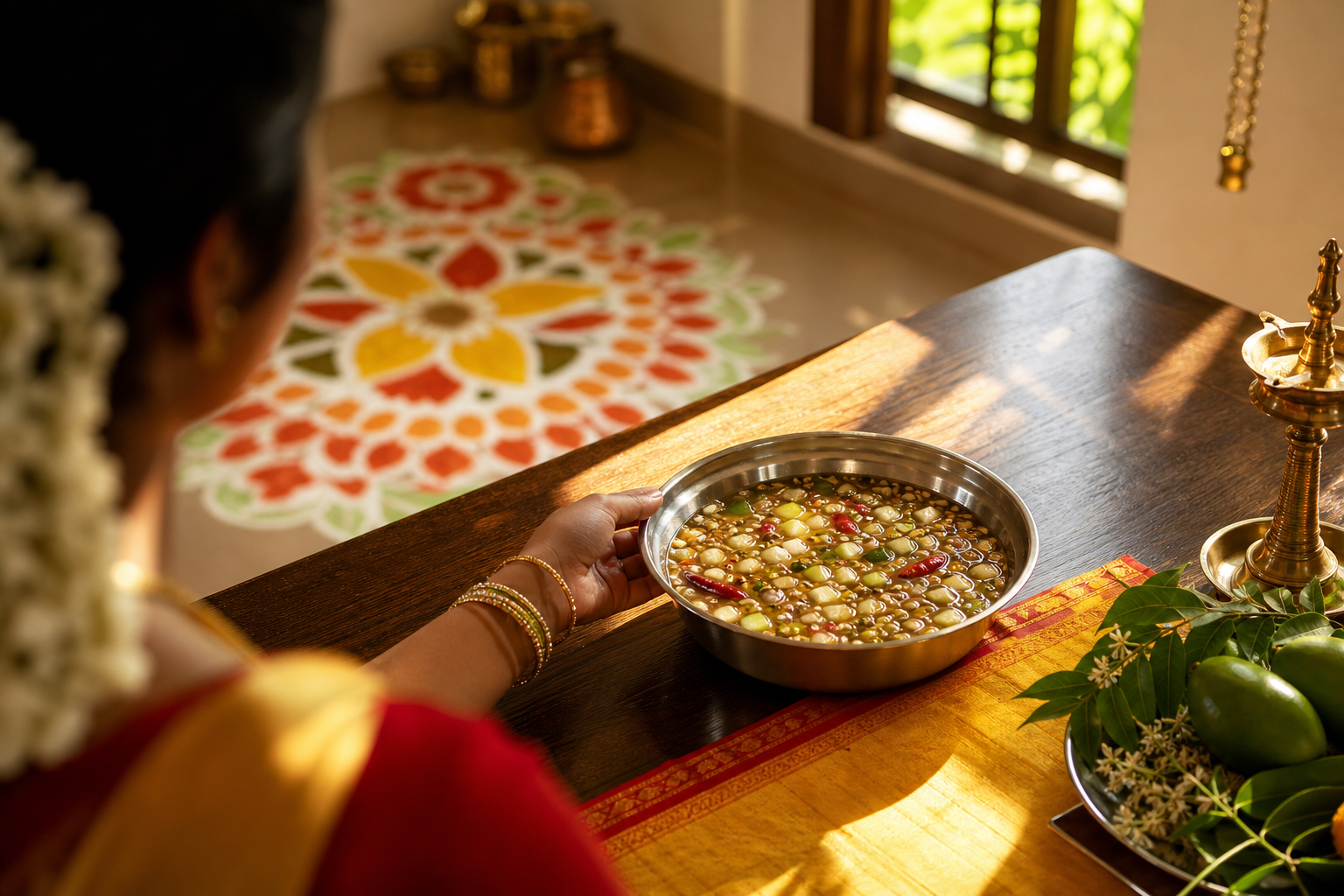 on a banana leaf; fresh mango leaf toran hanging on a wooden door; a copper kalash with coconut; lit diyas; subtle rangoli; natural window light; festive yet serene)
When Is Ugadi 2026 and What Does It Signify?
Ugadi 2026 is on March 29, a Sunday, observed on Chaitra Shukla Pratipada, the start of the waxing lunar fortnight. Specifically, this is the day the new Samvatsara begins; in 2026, it is Parabhava, following Vishvavasu in the traditional 60-year cycle. As a result, families mark a fresh turn of time with prayers for health, harmony, and right action.
Significance and Regional Notes
For Telugu and Kannada communities, Ugadi is the lunar new year. In addition, Konkani households in coastal Karnataka also celebrate it as the start of the spring cycle. Although Maharashtra celebrates Gudi Padwa on the same tithi, its home symbols differ. Therefore, it helps to honor your regional practice while understanding the shared core, gratitude, renewal, and readiness for the year ahead.
Spiritually, Chaitra ushers in new growth. Furthermore, Panchanga Sravanam on this day helps you understand the year’s trends through five limbs of the calendar: tithi (lunar day), nakshatra (lunar mansion), yoga, karana, and vara (weekday). Because these vary by place and sunrise, you should check a daily panchang for your city. For background on the festival’s roots and broad observance, see this overview of Ugadi.
Panchang Basics for the Day
Tithi is Chaitra Shukla Pratipada, so perform key rites after sunrise while Pratipada remains in force. For nakshatra, yoga, and karana, consult a city-specific daily panchang to fine-tune muhurats. If the morning feels tight, use Abhijit muhurat around local midday for sankalpam. Avoid Rahu Kalam, Yamaganda, and Gulika for any “start” actions. Tip: save your exact city chart the night before to prevent day-of rush.
Importantly, your complete guide ugadi should place meaning before mechanics. So, align your time with your elders’ advice and your local temple’s schedule, then follow with faith.
Also Read!
How to Talk to an Astrologer Online in Hindi: A Complete Guide
How to Make and Match Kundli for Marriage Compatibility: A Complete Guide for Couples
Step-by-Step Ugadi 2026 Rituals and Celebrations
Ugadi shines when you keep the steps simple and sincere. Therefore, here’s a clear, numbered path you can follow on March 29, 2026.
- Abhyanga Snanam (oil bath)
- Start before or soon after sunrise, while Pratipada is active.
- Warm sesame oil is traditional; apply on head and body, then bathe.
- As a result, you mark a clean start and invite sattva (clarity) into the day.
- Decorate with mango leaves (toranalu/torana)
- Tie fresh, five-leaf clusters on the main door.
- In addition, add a simple rangoli and a kalash at your puja space.
- Meanwhile, light diyas to set a calm tone before puja.
- Prepare Ugadi Pachadi (six tastes)
- Ingredients: neem flowers/leaves (bitter), jaggery (sweet), tamarind (sour), green chili (spicy), raw mango (tangy/astringent), and salt (salty).
- The six tastes remind you that the year will bring a mix of joy, tests, and learning.
- Therefore, offer it to the deity, then share a spoon with everyone at home.
- Panchanga Sravanam (listening to the almanac)
- Sit together and hear the year’s reading for the new Samvatsara, Parabhava.
- Focus on the five limbs—tithi, nakshatra, yoga, karana, vara—and general forecasts.
- Moreover, note guidelines for travel, health, finance, and learning.
- Temple visits and prayers
- Visit your family temple or join a community Panchanga Sravanam.
- Offer fruits, flowers, and a small daana as you can.
- On the other hand, if you stay home, chant simple mantras and read a short dharma text.
- Wear new clothes and share a meal
- After puja, change into new or freshly washed clothes.
- Then, serve a festive menu: pulihora, bobbatlu/obbattu/holige, payasam, and a light vegetable curry.
- Finally, deliver Pachadi to neighbors as a sweet act of goodwill.
Timing Tips at a Glance
Plan the oil bath before or just after sunrise while Pratipada holds in your city, then complete puja and sankalpam in the morning. If schedules compress, use Abhijit muhurat near local midday as a safe, focused window. Steer clear of Rahu Kalam, Yamaganda, and Gulika for new undertakings. Hold Panchanga Sravanam in late morning or early evening when everyone can listen without rush.
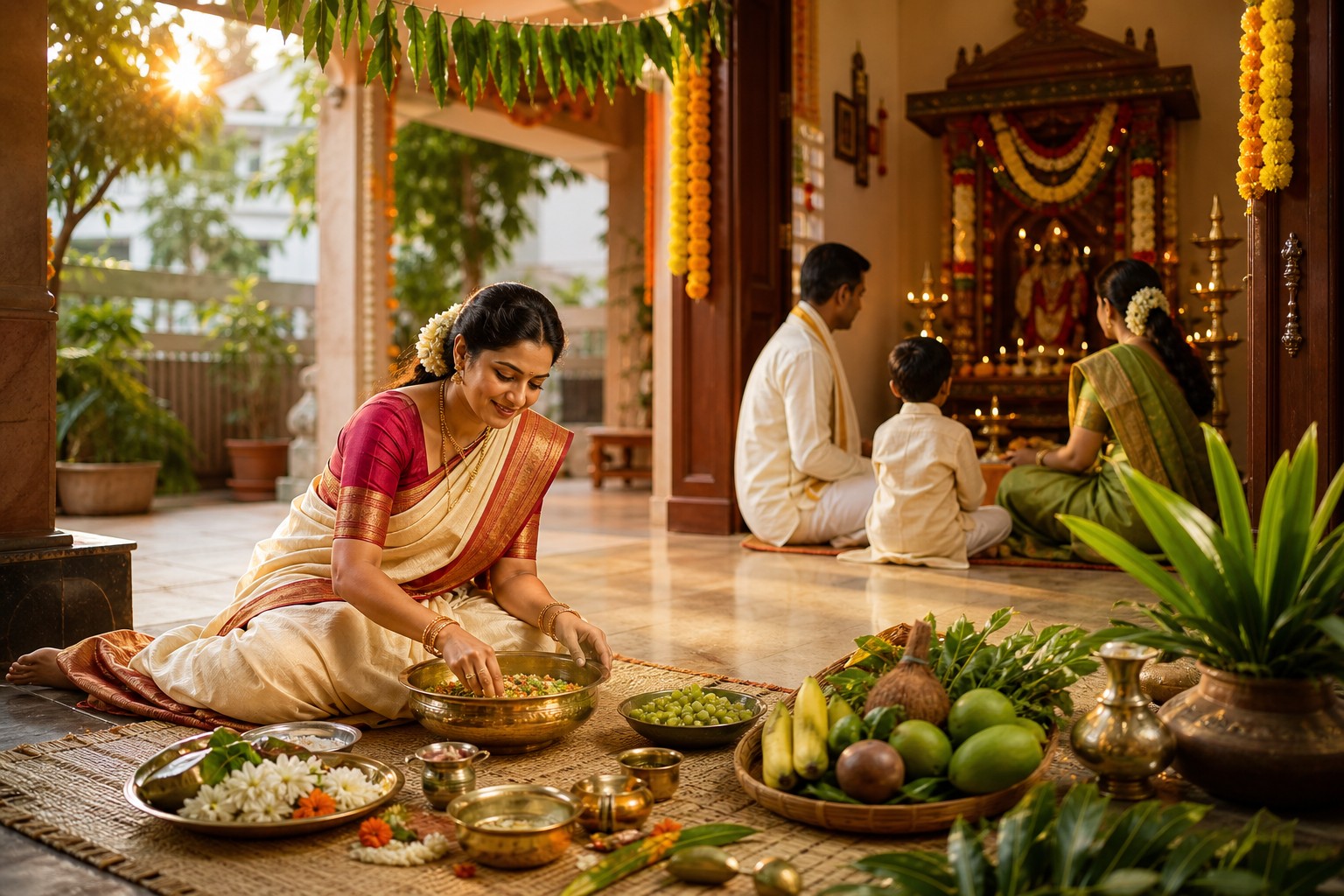
Because your complete guide ugadi centers on right order and right mind, treat timings as a guide and intention as the heart.
Common Mistakes People Make During Ugadi Celebrations
Even seasoned families can slip on small points that dull the day’s meaning. However, a few mindful tweaks fix most issues fast.
- Skipping the bitter in Pachadi: Neem is hard to like, but it teaches acceptance. Therefore, add at least a pinch of fresh neem flowers or tender leaves.
- Ignoring a shubh muhurat: Starting puja in a caution window adds friction. In addition, check your local panchang for Rahu Kalam and avoid it for new starts.
- Mixing up Gudi Padwa symbols: A gudi flag on a bamboo staff belongs to Maharashtrian homes. Telugu/Kannada homes favor mango toran and Pachadi instead.
- Rushing Panchanga Sravanam: Only hearing “good bits” misses the guidance. So, listen to all five limbs and note key dates that matter to your family.
- Letting the feast drown the spirit: Food is joy, not the goal. Moreover, begin with gratitude, a short prayer, and a calm mind before you serve.
How to Avoid Them
Prep the Pachadi mise-en-place a day ahead, wash neem and dice raw mango in advance, so the morning stays unhurried. Save a screenshot of your city’s panchang the previous night and block a 20-minute, phone-free slot for Panchanga Sravanam. Keep the menu balanced so cooking doesn’t eclipse puja, and share one clear line of intention with each family member before the first spoon.
As a result, your complete guide ugadi becomes a steady practice, not a checklist.
Tools and Resources for Ugadi 2026 Panchang and Horoscopes
You have three strong sources for the day’s details. First, use a trusted traditional panchangam in your language, many families keep the same almanac each year. Second, check your local temple’s Panchanga Sravanam event times; priests align readings to your city’s sunrise. Third, use a digital tool as a quick cross-check for tithi, nakshatra, yoga, karana, and auspicious and inauspicious timings.
As one option among several, tools like Astrolive bring daily panchang details (tithi, nakshatra, yoga, karana), show auspicious and inauspicious timings, and offer Daily, Monthly, and Yearly Horoscopes. In addition, you can get personalized insights based on planetary alignments, and even consult in English, Hindi, Telugu, Tamil, Bengali, and Gujarati. If you want live help around Ugadi, the app offers chat at ₹10/min and calls at ₹15/min with experienced astrologers. Moreover, it’s trusted by millions for accurate astrology tools, which gives peace of mind on a time-sensitive day.
"AstroLive has quickly become my favorite astrology platform. The variety of astrologers and their expertise is truly impressive. I consulted for a career-related query, and the guidance I received was spot on. Despite being a new platform, it operates smoothly and efficiently. Kudos to the AstroLive team for creating such a fantastic service!" — Rajesh Kumar, Delhi
What to Look For in a Digital Panchang
Choose an app that shows city-specific sunrise and tithi end times with clear notes on Rahu Kalam, Yamaganda, and Gulika. Abhijit muhurat and other midday windows should be highlighted for quick planning. A simple 2026 Samvatsara (Parabhava) overview helps with year-level context. Finally, make sure you can switch easily between English and your mother tongue.
Because your complete guide ugadi should be practical, keep one printed panchangam on the puja shelf and one app in your pocket.
**Chat Instantly With Astrologer →
Also Read!
Jagran Meaning: A Complete Guide to Understanding Jagran and Its Spiritual Significance
Best Tarot Reading and Numerology for Career Guidance in 2026
What to Do Next: Making Ugadi 2026 Meaningful
A beautiful Ugadi comes from small, planned acts done with care. Therefore, start now so March 29 feels easy and full of grace.
- Plan your menu: List ingredients for Pachadi’s six tastes—neem, jaggery, tamarind, raw mango, chili, salt—plus a simple lunch (pulihora, bobbatlu/obbattu/holige, payasam). As a result, you shop once and relax the day before.
- Set your home: Clean the puja space, lay out a fresh cloth, keep diyas, wicks, and oil ready. In addition, prep a mango leaf toran or arrange to buy fresh leaves on March 28.
- Learn the year’s tone: Note that 2026 opens Parabhava. Furthermore, ask a priest or check a panchang for key trends in health, travel, study, and charity in your region.
- Write your sankalpa: Keep it short and clear—three lines for family health, right action, and service.
- Share and serve: Make a small box of Pachadi for a neighbor or a friend who is away from family. Therefore, you spread the day’s true sweetness.
- Reflect on the six tastes: After your first spoon, ask each person what taste stood out and what that teaches them for the year.

Because your complete guide ugadi is also a life guide, let the six tastes become six habits: accept, rejoice, learn, act, balance, and speak kindly.
Key Takeaways
A calm Ugadi is simple to craft when you focus on meaning, the right windows, and shared joy. Moreover, the mix of tradition, time checks, and a short family sankalpa gives your 2026 a steady first step.
- Ugadi 2026 is Sunday, March 29, on Chaitra Shukla Pratipada; the new Samvatsara is Parabhava, which begins at this sunrise-aligned new year.
- Keep the six tastes in your Pachadi—bitter, sweet, sour, spicy, tangy/astringent, salty—so you honor the full range of life lessons.
- Use a daily panchang for your city to spot tithi, nakshatra, yoga, karana, and to avoid Rahu Kalam, Yamaganda, and Gulika for “start” actions.
- Listen to Panchanga Sravanam fully; write two or three notes per family priority, like health, study, giving, or travel, for the year 2026.
- Plan your home, menu, and toran one day ahead, then start with Abhyanga Snanam, puja, and a short sankalpa for a clear, happy first day.
As a result, your complete guide ugadi turns into a warm, living tradition you can hand to your children without stress.
What to Do This Week
This week, set the ground so Ugadi morning feels unhurried.
- First, pick your panchang sources, one printed, one app, and add a sticky note with March 29 timings for your city.
- Second, shop for Pachadi ingredients and dry goods for lunch, then prep jars on the 28th.
- Third, choose a time for Panchanga Sravanam when the whole family can attend, even if that means an early dinner and a quiet half hour after.
Midweek Touchpoints
Next, write your sankalpa draft today. Keep it clear and active: “We will guard our health, learn with patience, serve with joy.” In addition, call your local temple to confirm any Ugadi special pujas. Moreover, set a reminder to tie the mango toran before puja and to share a small box of Pachadi with one neighbor who might be far from their family.
Finally, print a one-page Ugadi plan and post it near your puja space:
- oil bath
- toran
- Pachadi
- puja
- Panchanga Sravanam
- temple visit
- new clothes
- festive meal
- share with neighbors
Therefore, you’ll wake on March 29 already calm, already ready.
**Call An Astrologer Now. Instant Help →
As you follow these steps, you’ll greet Ugadi 2026 with a clear mind, a kind heart, and a home that hums with light.